
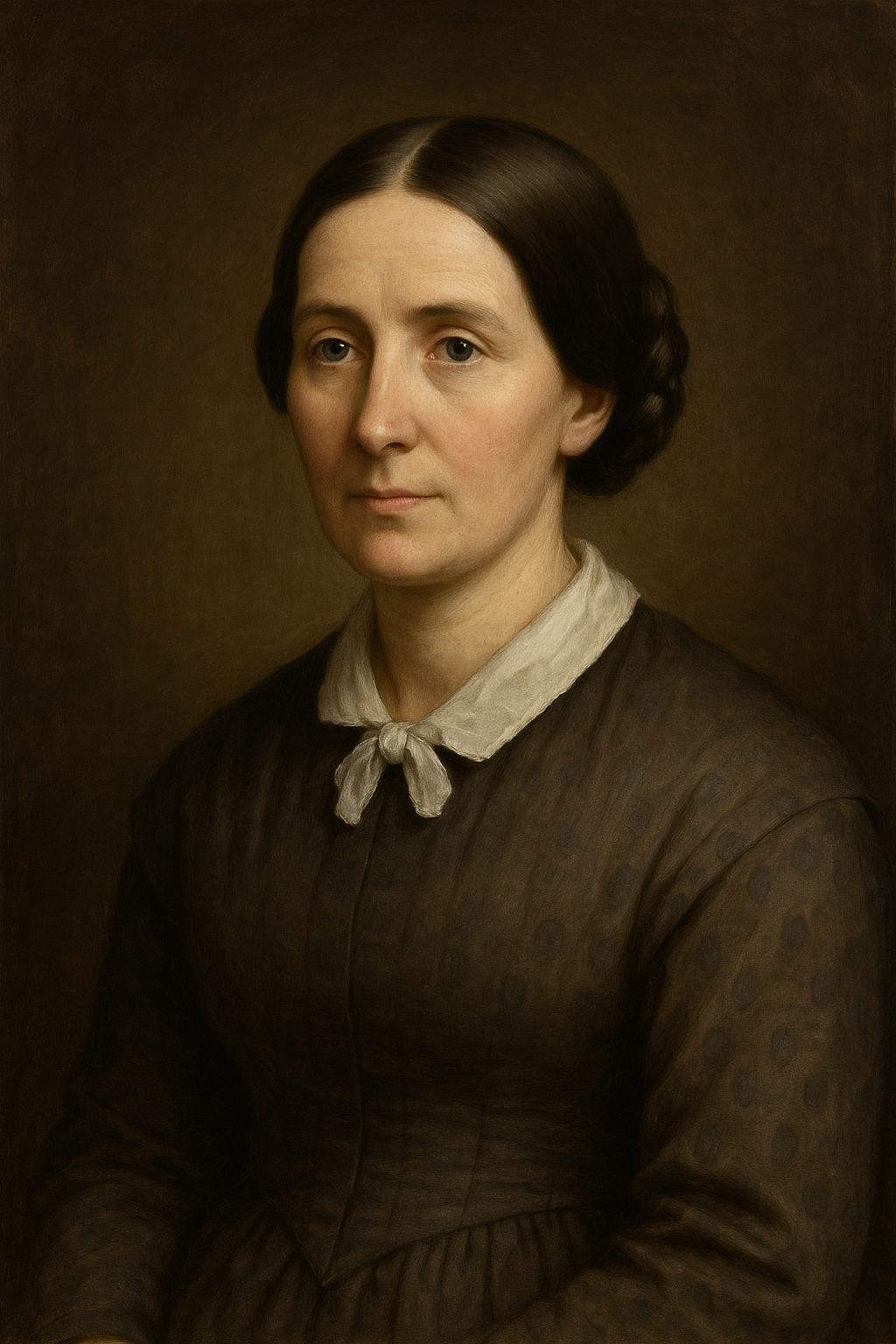
Mercy Rachel Fielding Thompson
Introduction
Among the many influential women of early Latter-day Saint history, Mercy Rachel Fielding Thompson stands out as a devoted disciple whose life intersected repeatedly with pivotal events of the Restoration. Although less widely known than her sister Mary Fielding Smith, Mercy’s experiences provide firsthand insight into persecution, temple building, plural marriage, early Church leadership, and the westward gathering of the Saints.
Family Background and Conversion
Mercy and her sister Mary were born in England. Both eventually accepted the restored gospel and emigrated to join the Saints.
Mercy in Kirtland
Mercy moved to Kirtland, Ohio, in May 1837.
She married Robert Blashell Thompson, performed by the Prophet Joseph Smith.
She received a patriarchal blessing from Joseph Smith Sr.
Robert soon became a trusted secretary to Joseph Smith, recording journals, correspondence, and administrative documents. Many historical sources from this period survive because of his careful work.
Missionary Service and Journey to Missouri
Soon after marriage:
- Mercy and Robert traveled to Canada, where Robert served as a missionary.
- In March 1838, they were assigned to travel with Hyrum Smith to Far West, Missouri, where persecution quickly escalated.
Missouri Persecution and Liberty Jail
Conditions in Missouri in 1838–1839 were devastating for Latter-day Saints. Mercy’s account highlights several key events.
Mob Violence and Separation
Her husband Robert fled into the wilderness to avoid mob threats, leaving Mercy alone with their infant daughter.
She endured three months without knowing whether her husband was alive.
Caring for Mary Fielding Smith
During this period:
- Mercy lived with her sister Mary, whose husband Hyrum Smith was imprisoned in Liberty Jail with Joseph Smith.
- Mary gave birth to Joseph F. Smith while Hyrum was imprisoned.
- Mary became gravely ill, so Mercy cared for Mary’s household in addition to her own baby.
- Mobs continuously threatened violence; Mercy feared leaving her baby even for a moment.
Visit to Liberty Jail
In February 1839:
- At Hyrum’s request, Mary—still very weak—was transported in bitter winter cold to Liberty Jail.
- Mercy accompanied her with both infants.
- They spent one night inside the jail with Joseph, Hyrum, and other prisoners.
Mercy later described this as “a night never to be forgotten,” marked by hardship yet spiritual gratitude.
Life in Nauvoo and the Death of Robert Thompson
After the Saints’ expulsion from Missouri:
- Mercy and Mary moved through Quincy to Nauvoo.
- Robert worked closely with Joseph Smith and Don Carlos Smith as editors of Times and Seasons.
In 1841, both Don Carlos and Robert died within weeks of each other, likely from illness.
Mercy became a widow with a young, frail daughter. She described:
- Living a “lonesome life,”
- Supporting herself by taking in boarders,
- Honoring Robert’s humility, dedication, and unpaid labor on behalf of Joseph Smith and the Church.
Call to Enter Plural Marriage With Hyrum Smith (1843)
On 11 August 1843, Mercy was informed she was called by revelation to become a plural wife of Hyrum Smith.
Mercy’s Own Words
She recorded:
- Initial emotional struggle and resistance to the principle.
- Later spiritual conviction that plural marriage was commanded by God.
Joseph Smith sealed her to Hyrum “for time,” while she remained eternally sealed to her first husband Robert.
Mercy moved into Hyrum’s home alongside her sister Mary. She and Mary often served as scribes for Hyrum’s patriarchal blessings.
Women’s Temple Fund: The Glass and Nails Subscription
Mercy felt inspired to help complete the Nauvoo Temple.
She recorded receiving a spiritual prompting:
“Try to get the sisters to subscribe one cent per week for the purpose of buying glass and nails for the temple.”
Joseph Smith approved the plan, promising blessings. Hyrum publicly supported the effort.
The Project Expanded
- About 1,000 Nauvoo women joined the weekly subscription.
- The program expanded to England via the Millennial Star.
- Mercy and Mary collected and recorded donations.
- Hundreds of dollars were raised—funds that arrived “just in time” for temple needs.
The Martyrdom of Joseph and Hyrum Smith
After the murders in Carthage Jail (June 1844), Mercy wrote emotional reflections about Hyrum.
She called him “an affectionate husband, a loving father, a faithful friend.”
She described the trauma of seeing him only as “a mangled, bleeding corpse.”
She and Mary remained together in Nauvoo following the tragedy.
Nauvoo Temple Service
When the Nauvoo Temple became ready for ordinance work:
- Brigham Young asked Mercy to move into the temple.
- She assisted day and night in administering rites in the “female department.”
- She kept her small child with her as she served.
Thousands received their endowments due to the labor of women like Mercy.
Exodus West and Life in the Salt Lake Valley
Mercy crossed the Mississippi shortly before mobs attacked Nauvoo.
She recorded:
- Traveling to Winter Quarters,
- Crossing the plains with Parley P. Pratt’s company,
- Eating thistle roots,
- Fighting crickets and grasshoppers,
- Enduring scarcity and exposure.
Yet she testified she did not recall murmuring.
She felt blessed to assist poor Saints in gathering to Zion.
Later, she remarried but ultimately chose independence due to difficult circumstances and Utah’s more flexible divorce laws.
Mercy’s Testimony of Plural Marriage and D&C 132
In the 1880s, when the RLDS Church claimed Joseph Smith never practiced plural marriage, Mercy became a crucial firsthand witness.
She testified:
- Hyrum Smith read the revelation (D&C 132) to the High Council.
- She personally handled the document for several days.
- She had been sealed to Hyrum by Joseph Smith and knew the circumstances intimately.
- Robert Thompson appeared to Joseph Smith after death, requesting that Mercy be sealed to Hyrum for time.
- Hyrum confirmed the revelation was accompanied by powerful spiritual manifestations.
Mercy wrote directly to Joseph Smith III, affirming these events with solemnity, willing to testify “in the presence of God, angels, and men.”
Final Testimony
In her later autobiographical sketch, Mercy declared:
- She would never give up her religion “for all the gold in America.”
- She had not followed “cunningly devised fables.”
- Salvation and celestial glory depended on living the gospel revealed through Joseph Smith.
- She prayed for her descendants to live righteously and meet departed loved ones again.
Legacy
Mercy Rachel Fielding Thompson’s life offers invaluable firsthand historical evidence of:
- The Missouri persecutions and Liberty Jail period
- Nauvoo Temple construction and ordinances
- The early practice of plural marriage under Joseph and Hyrum Smith
- Women’s leadership and sacrifice in the Restoration
- The westward migration and settlement of the Saints
Her writings remain one of the richest sources on early Latter-day Saint women’s experiences and faith.