
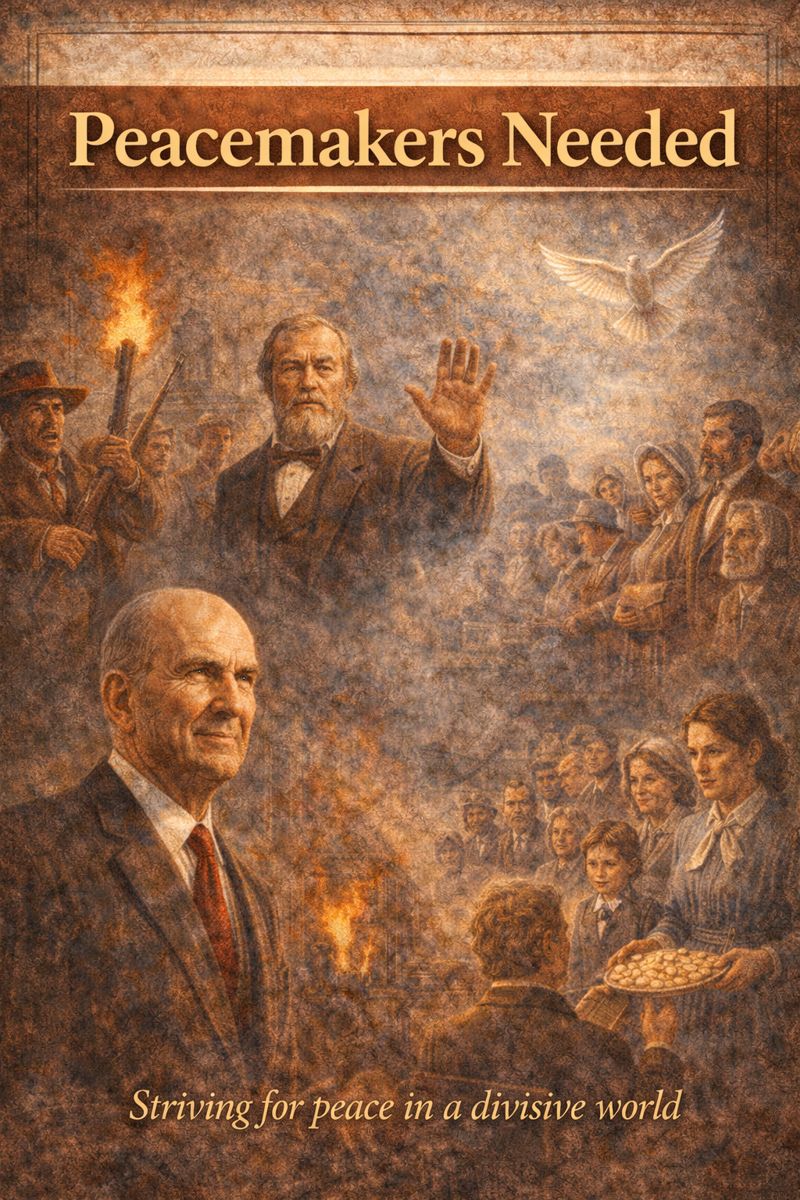
Anti-Mormonism in Colorado and Its Territorial Origins
Much of what is now Colorado was originally part of Utah Territory. When non-LDS settlers sought to create Colorado Territory, political leaders used anti-Mormon rhetoric to justify separating the region from Utah.
This produced a regional political culture in which anti-Mormon sentiment became normalized and persisted into the 20th and 21st centuries, appearing in civic life, academia, and local social attitudes.
Historical Patterns of Anti-Mormon Prejudice in the United States
Anti-Mormonism has appeared consistently across American history. Since the 1830s, hostility toward Latter-day Saints has been expressed in political speeches, religious arguments, popular culture, intellectual circles, and everyday public behavior.
This prejudice often included misrepresentations of LDS belief, derogatory language, and attempts to justify exclusion or oppression.
19th-Century Persecution of Latter-day Saints
The Latter-day Saints’ historical memory is shaped by violent episodes in Missouri in the 1830s, including mob attacks and the Extermination Order, as well as violence in Illinois during the 1840s that led to the murder of Joseph and Hyrum Smith.
These events created a strong internal awareness of religious persecution within the community.
Brigham Young’s Response in the 1845 Illinois Crisis
In 1845, anti-Mormon violence intensified in Illinois. Sheriff Jacob Backenstos sought Brigham Young’s help in assembling a militia force to confront hostile towns such as Warsaw and Carthage.
Although arson, killings, and threats escalated, Brigham Young refused to authorize an armed march, believing such a confrontation would cause severe bloodshed.
This incident stands as a significant historical example of Latter-day Saint leadership choosing restraint and peace under extreme provocation.
Historical Christian Debates About Christ and Salvation
The episode references historical Christian disputes about the nature of Christ and salvation.
Key doctrinal controversies in early Christianity produced the major creeds, including the Nicene Creed (A.D. 325) and the Chalcedonian Definition (A.D. 451).
Within later Christian history:
- Calvinist tradition taught a limited atonement for a predestined elect.
- Arminian and Methodist traditions taught that Christ’s atonement was intended for all humanity.
These frameworks illustrate the long-standing diversity of belief within Christianity about Christ’s nature and the scope of redemption.
Russell M. Nelson’s Role in Modern LDS Historical Initiatives
As an apostle, Russell M. Nelson served as a key advisory figure in the Joseph Smith Papers Project. His leadership helped accelerate major Church history transparency initiatives, including commissioning a new biography of Joseph Smith, updating D&C headings, expanding Church history curricula, and overseeing production of the Saints volumes.
His presidency has also been marked by significant temple expansion, continuing the global temple-building precedent begun under Gordon B. Hinckley.
Listen to the full podcast here:
Season 5, Episode 41 – Peacemakers Needed