
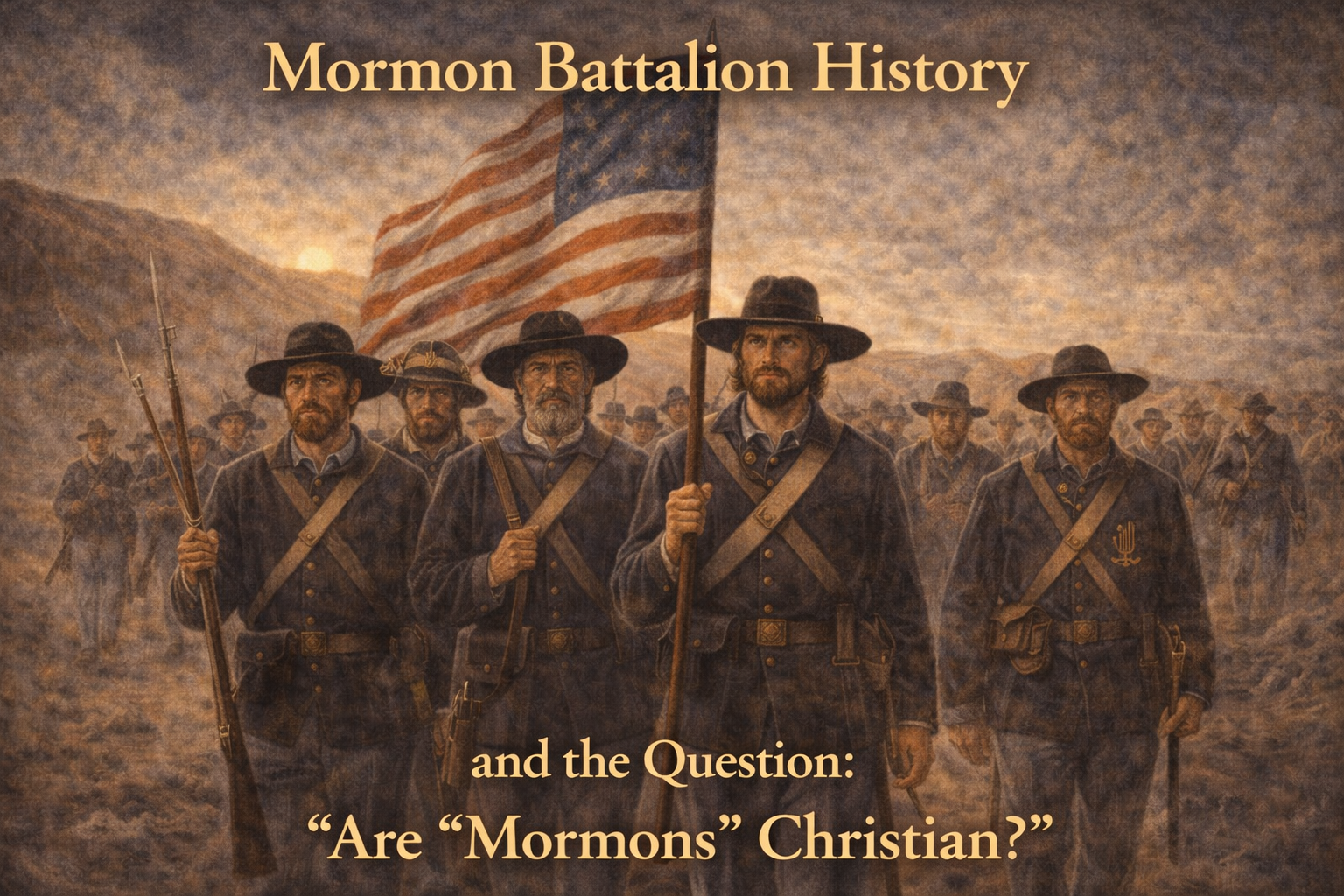
Are “Mormons” Christian? – Part 1
President Polk’s Motive for the Mormon Battalion
It was long assumed that President James K. Polk called for the Mormon Battalion out of military necessity and that the Saints responded patriotically. Traditional narratives describe this as mutually beneficial: the U.S. gained troops for the Mexican-American War, and the Saints received funds and favor.
Polk’s private journal contradicts this. He wrote that he did not trust the Latter-day Saints and feared they might become hostile after arriving in California. His motive for raising the Mormon Battalion was political: to conciliate, control, and prevent the Saints from becoming enemies of the United States.
Orders to Limit Mormon Influence
Polk privately instructed General Stephen W. Kearny that the Mormon volunteers must not exceed one quarter of his force to ensure the Saints could be subdued if they became rebellious. His public praise toward Jesse C. Little was contradicted by his private instructions and diary.
Captain James Allen’s Arrival in Iowa
When U.S. troops arrived at Latter-day Saint camps in Iowa, the Saints panicked, believing the army had come to destroy them. Because of persecution in Missouri and Illinois and reports that federal forces might intercept them, the request for a battalion caused confusion and fear. Leaders debated whether the request was a trap—refusal could justify labeling them enemies, while acceptance would weaken the migration.
Brigham Young Accepts the Call
Before receiving Jesse Little’s letter with Polk’s flattering statements, Brigham Young determined that the Saints would honor the request. Over 500 men enlisted, accompanied by several women serving as laundresses. The men signed over their pay and enlistment bounty to the Church, providing essential funds for impoverished Saints to migrate.
The Battalion’s March and Service
The Battalion marched from Council Bluffs through Kansas, New Mexico, Arizona, and into California—the longest infantry march in U.S. history. They saw no battle, consistent with a prophetic blessing. Some died of disease and exhaustion. Their arrival strengthened the American presence in California, though they did not engage in combat.
Temporal Benefits for the Saints
Despite Polk’s manipulative motives, the Battalion ultimately provided temporal blessings:
Essential funds for migration
Legitimacy to remain temporarily on Indian lands at Winter Quarters
Information about western regions
Brigham Young’s Condemnation of Polk
Brigham Young later declared that Polk would be condemned for his actions. He recognized that Polk acted for political advantage and used the Saints rather than aiding them.
Winter Quarters and Brigham Young’s Rebuke
Winter Quarters (1846–1847) was marked by severe suffering—disease, exposure, hunger, and death. The absence of many able-bodied men contributed to discouragement and murmuring.
In December 1846, Brigham Young rebuked the camp, condemning:
Swearing
Cheating
Lying
Stealing
Sexual immorality
Speaking evil of Church leaders
He warned that sin would destroy the camp and refused to tolerate corruption. He contrasted his approach with Joseph Smith’s patience, noting Joseph tolerated dissent “until it took his life.”
Central Themes of the Episode
Government mistrust and manipulation
Extraordinary obedience by Latter-day Saint men and women
Providential blessings emerging from sacrifice
Necessity of spiritual unity during trials
The Mormon Battalion exemplifies obedience, sacrifice, and faith in prophetic leadership.
Are “Mormons” Christian? – Part 2
Revisiting Mormon Battalion Assumptions
Traditional accounts portray Polk’s request as military necessity and mutual benefit. Polk’s diary shows otherwise: he sought to control and neutralize the Saints, not to honor their loyalty.
Polk’s Fear of Latter-day Saints
Polk wrote that the Battalion was raised to prevent the Saints from developing a hostile attitude in California. He feared they might ally with Mexico or Great Britain. His private commentary contradicted his flattering statements to Jesse Little.
Orders to Restrict Mormon Numbers
Polk instructed Colonel Kearny that Mormon volunteers must remain under one quarter of the total command to prevent them from overpowering U.S. forces.
Saints’ Fear When Troops Arrived
The Saints reacted with alarm at Captain Allen’s arrival because they believed the army intended to destroy them. The request for volunteers was unexpected and initially viewed with suspicion.
Decision to Accept the Call
Brigham Young accepted the request before receiving Little’s letter. The Saints believed that refusal might brand them as enemies. Over 500 men enlisted and surrendered their pay to assist the migration.
The March and Service
The Battalion marched the longest infantry route in U.S. history, fulfilling Brigham Young’s blessing that they would not fight in battle. Some died from illness, but none died in combat.
Temporal Benefits
Funds that enabled many Saints to migrate
Permission to remain temporarily on Indian lands near Winter Quarters
New knowledge of the West
Brigham Young’s Condemnation of Polk
Young recognized that Polk manipulated the Saints and declared he would be condemned for his actions.
Winter Quarters Hardships and Rebuke
Winter Quarters saw severe suffering, with disease, hunger, and exposure common. Brigham Young delivered a severe rebuke in December 1846 against dishonesty, immorality, and division, emphasizing the need for spiritual unity.
Key Themes
Government’s manipulation
Obedience despite distrust
Temporal blessings via sacrifice
Unity and faithfulness as essential for building Zion
Are “Mormons” Christian? – Part 3
Traditional vs. Actual Motives
Traditional narratives claim Polk needed troops and trusted the Saints. Polk’s diary states he feared they would become hostile in California and sought to control them.
Polk’s Political Strategy
Polk sought to prevent the Saints from aligning with Mexico or Britain. The Battalion was raised to pacify the Saints, not because of loyalty or military need.
Orders Limiting Mormon Control
Polk told Kearny that Mormon volunteers must remain less than 25% of the force to prevent rebellion.
Shock in Iowa Camps
The Saints initially feared destruction when U.S. troops arrived. With memories of Missouri and Illinois, the request for volunteers caused alarm.
Brigham Young’s Decision
Before receiving Little’s reassurances, Young accepted the call. Over 500 men enlisted, signing over wages to help impoverished Saints.
The March
The Battalion journeyed more than 2,000 miles—the longest infantry march in U.S. history.
No combat
Some deaths from disease
Strengthened U.S. position in California
Temporal Blessings
Migration funding
Permission to remain on Indian land
Geographic knowledge for future migration
Brigham Young on Polk
Young declared Polk would be condemned for manipulation through false pretenses.
Winter Quarters Suffering and Call to Repentance
Winter Quarters brought disease, hunger, exposure, and death.
Brigham Young rebuked sin and division, warning that corruption threatened the destiny of Zion.
Enduring Themes
Government mistrust
Obedience and prophetic loyalty
Sacrifice producing divine blessings
Spiritual unity as essential to survival and success
Listen to the full podcast here:
https://www.youtube.com/@standardoftruthpodcastllc
https://app20602.cloudwayssites.com/mormon-battalion-part-1-history/