
Translation Order of the Book of Mormon
The episode opens with a question about how we know the order in which Joseph Smith translated the Book of Mormon. No formal statement survives in which Joseph directly explains the sequence. Instead, historians reconstruct it from contextual evidence—most importantly, the revelation now known as Doctrine and Covenants 10. After the loss of the 116 pages, the Lord instructed Joseph not to retranslate the Book of Lehi. Instead, He directed him to use the Small Plates of Nephi, which contained their own account of the same early period of Nephite history.
The historical clues align consistently. The questions Joseph and Oliver asked during translation correspond to later portions of the record—John the Beloved in Revelation connected to D&C 7, or baptism in 3 Nephi leading into D&C 13. These connections reveal that they began not with 1 Nephi, but with Mosiah. The translation unfolded from Mosiah to Moroni, only turning back at the end to render 1 Nephi through Omni. Thus the opening books of the Book of Mormon were, in fact, the last to be translated and were placed at the front of the volume only after the narrative was complete.
Accounts of the Three Nephites
From there the discussion turns to the long-standing fascination surrounding the Three Nephites. Many Saints through the decades have told stories of mysterious helpers, miraculous interventions, or warnings in moments of danger. Yet almost all such stories surface only in late reminiscences, often decades removed from the events they describe.
One example comes from the 1881 transcription of Addison Everett’s recollections, recounting Joseph Smith seeing one of the Three Nephites during the Missouri conflicts. But the account is third-hand, written forty years after the alleged event, and lacks contemporary corroboration. It fits within the pattern of faith-promoting folklore rather than verifiable historical data.
Historians cannot confirm such accounts, but neither can they prove they did not occur. Responsible historical method demands attention to proximity, documentation, and corroboration, and none of those are present here. As inspiring as these stories may be, they remain part of the devotional culture of the Saints rather than historically established events.
What Do We Actually Know About the Lost 116 Pages?
The conversation then returns to the lost manuscript. The only clear, authoritative information comes from Doctrine and Covenants 10, where the Lord explains that the pages contained the Book of Lehi. Nothing more specific is preserved. Later comments from individuals such as Erastus Snow suggest details they believed might have come from the lost text, but these statements are not presented as quotations from the manuscript and cannot be verified.
An important illustration of this uncertainty concerns the name of the brother of Jared. The name “Moriancumer” appears nowhere in the surviving Book of Mormon text. Instead, a Kirtland-era blessing reports Joseph saying the Lord revealed the name during the ordinance itself. The name thus appears in late sources not connected to the translation event and does not come from the plates at all.
What we know is remarkably simple: the lost manuscript was the Book of Lehi, and its content overlapped with the more spiritually focused Small Plates. The Lord foreknew the loss and had already prepared a parallel record to replace it.
Why the Church Has an Unpaid Ministry
The episode concludes with a thoughtful discussion about the nature of Church leadership. A listener wonders why the Church does not employ a full-time professional clergy, pointing out that other Christian denominations use trained ministers for counseling, teaching, and administration.
The answer rests not in efficiency but in revelation. The unpaid ministry is part of the restored pattern. Leaders are called from among the Saints, not hired from outside. Their service cultivates spiritual growth, unity, and reliance on personal revelation. Although some assume professional clergy automatically produce more refined sermons or better pastoral care, studies show wide variation in the quality of preaching even among trained ministers. Meanwhile, many denominations face critical shortages of clergy and rising average ages among pastors.
The restored Church stands apart in its revealed structure. Bishops, Relief Society presidents, Primary teachers, stake leaders—none are hired professionals. They are disciples serving where the Lord places them. This model shapes the whole community, teaching that discipleship is not an occupation but a covenantal offering.
Summary of Core Historical Insights
The translation likely proceeded from Mosiah through Moroni before circling back to the Small Plates.
Stories of the Three Nephites remain inspirational but cannot be historically verified.
The contents of the 116 pages remain largely unknown beyond their identity as the Book of Lehi.
The unpaid ministry is a revealed structure central to the restored Church, not a financial convenience.
Listen to the full podcast here:
https://www.youtube.com/@standardoftruthpodcastllc
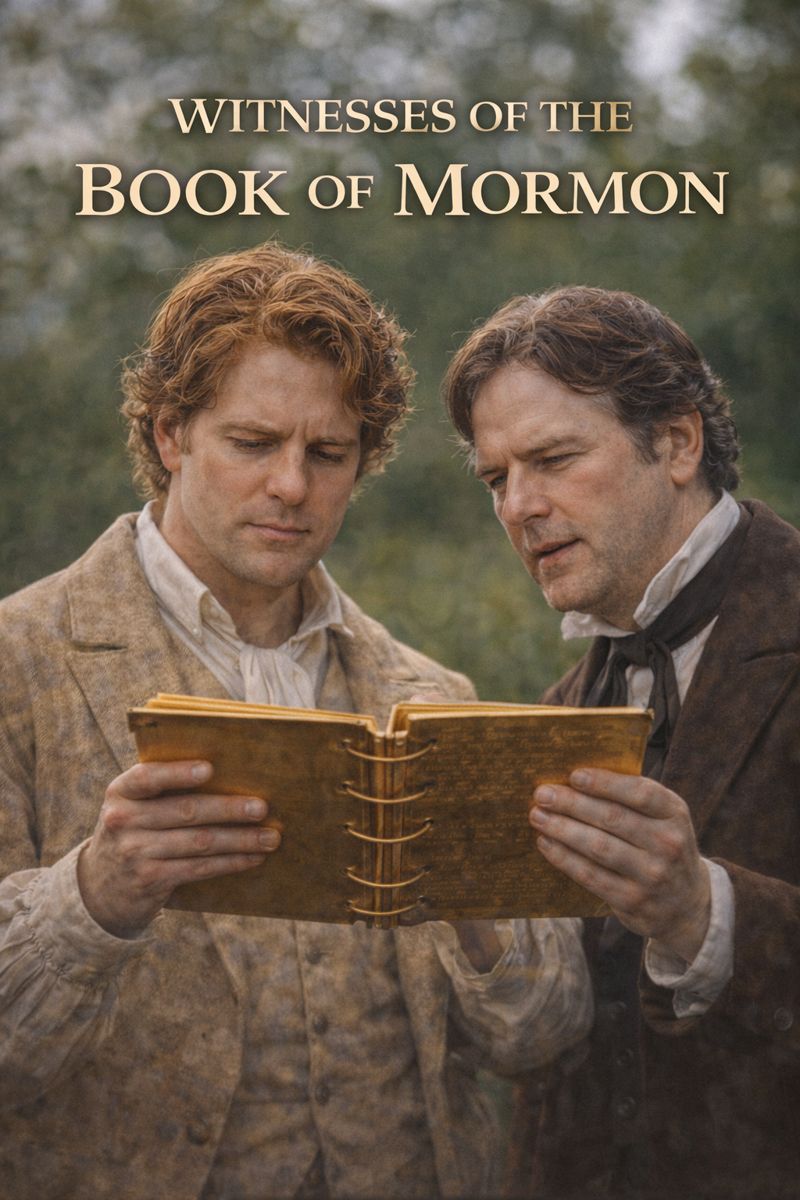
Season 4, Episode 11 – Witnesses of the Book of Mormon Part 5 (we finally get to it)