
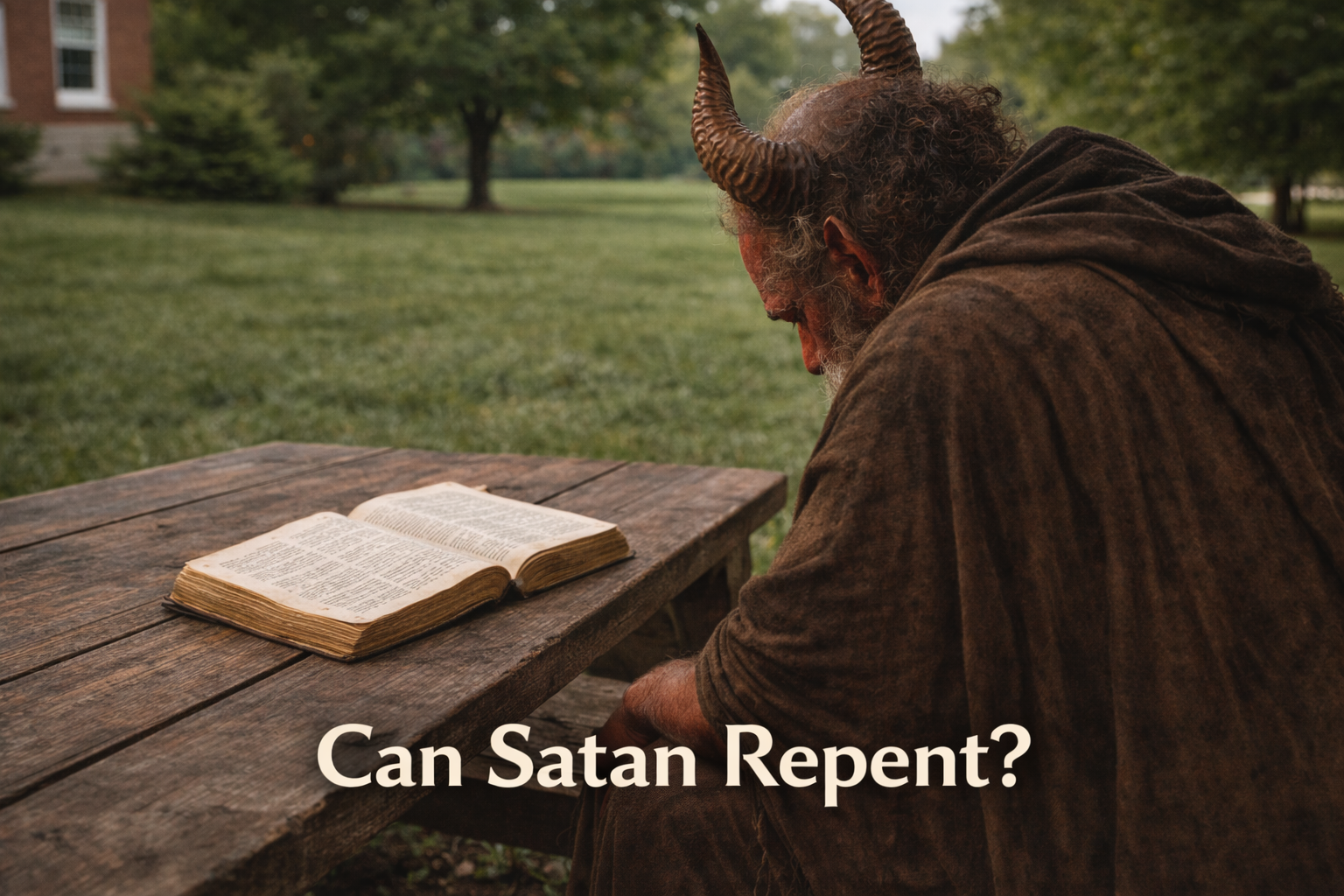
Can Satan Repent? – Early Christian Theology and Latter-day Saint Revelation
The question of whether Satan can repent has shaped theological discussions for centuries and continues to be explored in Latter-day Saint thought. Early Christianity and modern revelation approach the subject differently yet arrive at a unified conclusion about the nature of Lucifer’s choice and its eternal consequences.
Early Christian Debates About Whether Satan Could Repent
For many centuries Christian theologians wrestled with whether the fallen angels could ever return to God. These debates were rooted in the belief that angels were a unique order of created beings fundamentally different from mortals.
Angels and Perfect Knowledge in Early Christianity
Theologians such as Augustine and Thomas Aquinas taught that angels were created without a veil of forgetfulness and saw God with perfect clarity. Their decisions were fully informed and made in the complete light of divine knowledge. Because Lucifer understood God perfectly when he rebelled, early Christians concluded that a choice made with perfect knowledge is final and unchangeable. Aquinas added that fallen angels retain intelligence but are fixed in their chosen opposition to God, making repentance impossible.
The Restoration View: A Different Origin Story
Latter-day Saint doctrine introduced concepts unknown to earlier Christian theology. Angels are humans in another stage of existence, and all spirits, including Lucifer, were premortal children of God. Although this expands the scope of salvation significantly, it also affirms that the same principle applies to Lucifer: his rebellion was informed, deliberate, and final.
Joseph Smith’s 1833 Letter Clarifying False Doctrine
In June 1833 Joseph Smith corrected a false teaching circulating among members in Jackson County, Missouri, that the devil and his angels would eventually be redeemed. Joseph declared firmly that such a doctrine was false, unsupported by revelation, and should not be taught. He added that the final state of the devil and his angels would not be revealed except to those who experience it themselves.
Doctrine and Covenants 76: The Vision of Eternity
In 1832 Joseph Smith and Sidney Rigdon received a sweeping revelation describing the degrees of glory and the fate of souls. The revelation teaches that Lucifer rebelled against Christ and became a son of perdition. Mortals who become sons of perdition do so after receiving perfect knowledge, seeing heavenly visions, and openly rejecting truth. The text states they cannot repentance renew, and they will share the fate of the devil and his angels. The poetic version of the vision confirms that all beings will eventually be redeemed except the sons of perdition.
Joseph Smith’s King Follett Sermon: The Most Detailed Explanation
In 1844 Joseph Smith gave the King Follett Sermon, expanding on the nature of the unpardonable sin. He taught that no one becomes a son of perdition accidentally. A person must receive the Holy Ghost, have perfect knowledge of Christ, witness heavenly realities, and then intentionally rebel. Joseph explained that Lucifer declared himself a savior and knowingly rebelled against God. Christ will save all except the sons of perdition because their rejection is fully informed and eternally binding.
Brigham Young’s Teachings on Repentance and Perdition
Brigham Young reaffirmed Joseph Smith’s teachings, stating that the sons of perdition cannot repent and the devil and his angels cannot be reclaimed. He taught that prayers should be offered for all people except those who have crossed that eternal boundary. These teachings align completely with Doctrine and Covenants 76.
Unified Conclusion Across Christian History and Latter-day Saint Revelation
Despite differences between early Christian theology and Restoration doctrine, both traditions arrive at the same essential conclusion. Lucifer and the fallen angels cannot repent because their rebellion was made with perfect knowledge and total awareness. Latter-day Saint revelation adds greater depth by teaching that all spirits are children of God and that salvation is nearly universal, with only those who knowingly reject Christ remaining outside redemption. Joseph Smith corrected misunderstandings on this subject early in the Church’s history, showing that the question mattered profoundly to early Saints.