
Infographic Overview
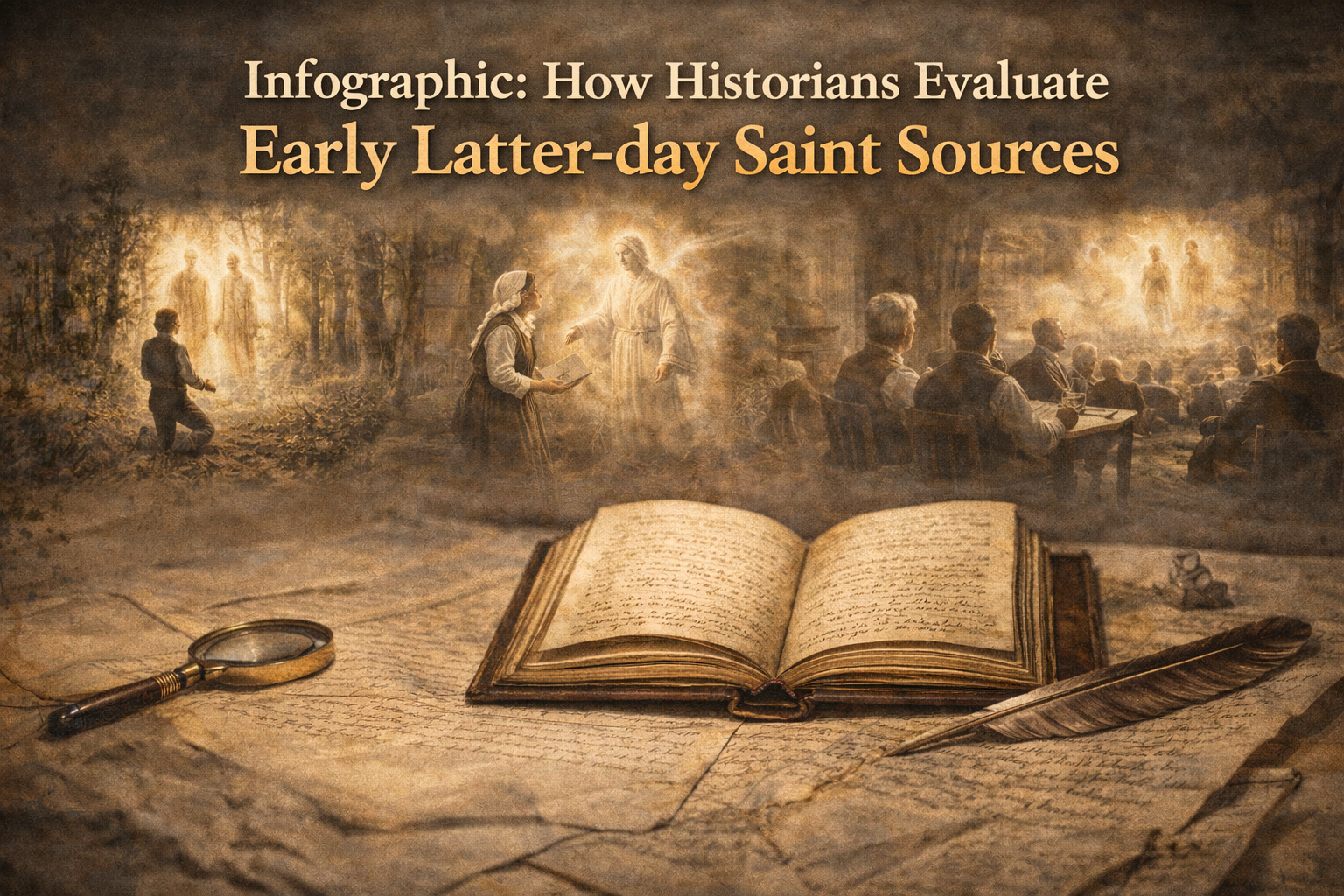
Infographic explaining how historians evaluate early Latter-day Saint sources. The infographic features multiple sections organized into clear categories, including Joseph Smith’s First Vision, Mary Whitmer’s angelic visitation, the 1833 School of the Prophets vision, and the criteria historians use to assess reliability. The design uses beige tones, structured text blocks, and bullet points to visually organize information and guide the viewer through the historical methodology.
Joseph Smith’s First Vision
This section highlights that the First Vision is supported by multiple firsthand accounts written by Joseph Smith himself, along with secondhand and corroborating contemporary references.
Mary Whitmer’s Angelic Visitation
This part explains that Mary Whitmer’s experience is known primarily through later secondhand accounts from David Whitmer, making it less historically verifiable but still meaningful within Latter-day Saint tradition.
1833 School of the Prophets Vision
This section notes that contemporary minutes recorded by Frederick G. Williams document that several participants reported seeing heavenly visions and angels. These minutes provide unusually strong historical grounding for a miraculous event.
Criteria Historians Use to Assess Reliability
This segment outlines tools historians apply when evaluating early Latter-day Saint sources, including:
- Proximity of the account to the event
- Whether it is firsthand, secondhand, or thirdhand
- Corroboration across multiple sources
- Purpose and audience of the document
- Memory limitations in late reminiscences
- Consistency with other contemporary records
Conclusion
Overall, the infographic presents a clear, visually appealing overview of how historians examine religious claims, distinguishing between what can be historically verified and what remains a matter of faith.