
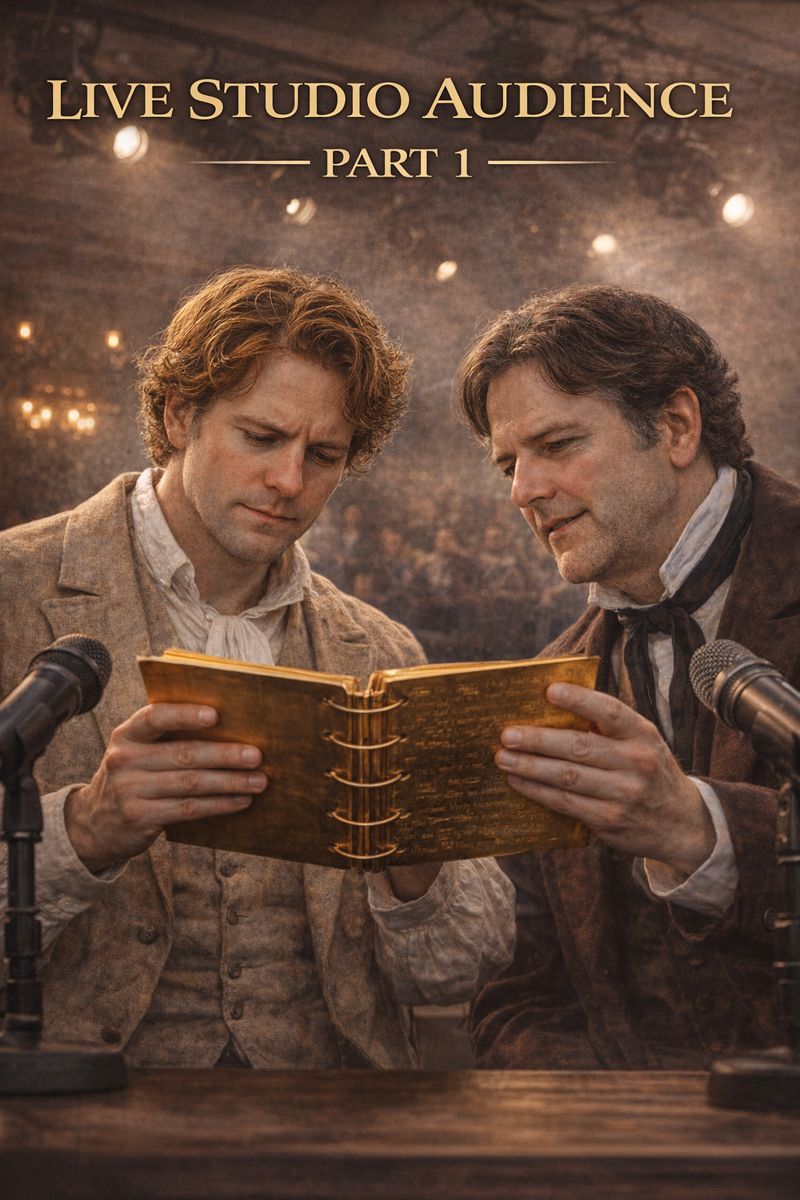
The Translation Sequence of the Book of Mormon
During the live discussion, one of the first questions concerned the order in which Joseph Smith translated the Book of Mormon. Aside from Words of Mormon, is there any source that explicitly states that 1 Nephi through Omni were translated last and then placed at the beginning of the record? The answer begins with acknowledging what we lack: Joseph Smith never wrote a direct statement explaining his translation sequence. Instead, the order emerges indirectly—through revelation, context, and the natural byproducts of the translation itself.
Doctrine and Covenants 10 stands at the center of this reconstruction. The Joseph Smith Papers project notes that this revelation consists of two separate portions—one from 1828, and a second part received in April 1829, after Oliver Cowdery had already joined the work as scribe. By the spring of 1829 the translation had resumed and was progressing rapidly, but Joseph and Oliver were not working in 1 Nephi—they were deep in the abridged record, somewhere in Mosiah or beyond.
This becomes clear when noticing how their questions to the Lord directly reflect the material they were reading. When Alma seems to vanish from the narrative, they wonder whether John the Beloved is still alive, and the answer comes through revelation now known as Doctrine and Covenants 7. When Jesus commands baptism in 3 Nephi, they seek out baptism and are granted priesthood authority, resulting in Doctrine and Covenants 13. When they finally reach the prophecy of the Three Witnesses in 2 Nephi, their request to be those witnesses immediately follows. The text itself continually provokes questions, and the revelations trace their movement through the record.
Doctrine and Covenants 10 then instructs Joseph to translate the Small Plates “until you come to that which you have translated,” making clear that the Small Plates—1 Nephi through Omni—were rendered last. Only when the translation was complete were these books inserted at the beginning of the Book of Mormon.
Stories of the Three Nephites
Another question from the audience turned to the perennial fascination with the Three Nephites. Is there any historically verifiable documentation of their appearances? The answer blends both caution and openness. Many stories exist, but most arrive to us as reminiscences written decades after the fact, secondhand or even thirdhand accounts that expand within the memory of the Saints and become part of the devotional culture of early Latter-day Saint life.
One of the more detailed examples comes from an 1881 journal entry by Oliver B. Huntington, who copied a letter written by Addison Everett. Everett recounts stories that he says he heard years earlier, including Joseph Smith’s encounter with a mysterious stranger during Zion’s Camp in 1834. According to Everett, Joseph later said the man was John the Beloved, traveling to gather the Lost Ten Tribes. But Joseph himself left no written record of such an event, and Everett’s recollection surfaces more than forty years after the fact.
Another of Everett’s accounts places the Three Nephites at Far West in 1838, during the tense moments when Governor Boggs’s militia approached the settlement. Everett claims Joseph drew a line and declared that no mob could cross it—and that the militia suddenly retreated in terror. Joseph allegedly later said he had seen one of the Three Nephites with a drawn sword, and afterward saw all three accompanied by a heavenly host. Again, the story fits within the culture of belief among the early Saints, but it is chronologically distant, thirdhand, and uncorroborated.
Historians therefore treat such accounts with appropriate restraint. They cannot be confirmed through contemporary documents, but neither can they be ruled out with certainty. They remain spiritual narratives cherished by believers, not established historical records.
What We Actually Know About the Lost 116 Pages
The conversation then returned to the lost manuscript. Did Joseph ever explain what was on the 116 pages besides calling it the Book of Lehi? The surviving evidence is strikingly limited. Joseph never supplied a detailed description. Doctrine and Covenants 10 remains the principal source, affirming that the manuscript consisted of the Book of Lehi and that the Lord had provided a replacement record—the Small Plates of Nephi—because He knew the manuscript would be stolen.
Much that later generations believed about the lost pages rests on speculation. Some tried to reconstruct its contents by connecting later statements of Joseph to the possibility of earlier material, but nothing authoritative survives. Even the name Moriancumer, often pointed to as evidence of a lost narrative, does not come from the translation at all. Its earliest form appears gradually—first partially in the 1835 Oliver Cowdery “Letter VII” series, later in George Reynolds’s writings, and finally in the story of Joseph blessing a child of William Cahoon and declaring by revelation that the brother of Jared’s name was Mahanri Moriancumer. The name appears through revelation, not through a recovered memory of the destroyed pages.
Thus, we cannot reconstruct the lost manuscript. All that can be confidently stated is what the Lord declared: that the Book of Lehi was taken, that conspirators intended to alter it, and that the Small Plates provided the divinely designed replacement.
Why the Church’s Ministry Remains Unpaid
The final question raised during this portion of the live event addressed the structure of Church leadership. Why does the Church not establish a paid clergy, especially given its resources? Would professional training not improve pastoral counseling, administration, and doctrinal instruction?
The answer begins by acknowledging that many Christian denominations do, in fact, rely on paid clergy—and they simultaneously face profound challenges. Studies show that congregants regularly rate sermons as average or inconsistent, that fewer members of rising generations aspire to pastoral careers, and that the average age of pastors in America now exceeds fifty, signaling a significant clergy shortage. Professionalization has not solved every problem, nor has it ensured uniformly excellent preaching or pastoral care.
But the more fundamental answer is doctrinal rather than practical. The Church of Jesus Christ of Latter-day Saints employs an unpaid ministry because that is the revealed pattern of the restored Church. Leaders are called from among the Saints, not hired as specialists; they hold regular occupations, live among those they serve, and receive callings through inspiration rather than through résumés or academic qualifications.
This model fosters a shared spiritual burden. It encourages members to rely on revelation, to grow through service, and to receive leadership from people who understand their daily lives. The unpaid ministry is not an efficiency measure—it is a defining feature of restored Christianity.
Live Studio Audience Part 2 (Politics and Polygamy)
Utah’s Political Shift from Democratic to Republican
During the live audience discussion, the conversation opened with a surprising historical reality: throughout the entire 19th century, Latter-day Saints overwhelmingly aligned with the Democratic Party. This may seem strange from a modern perspective, but within the political climate of the 1800s, the Saints’ loyalty to the Democrats made perfect sense.
The Whig Party—made up largely of evangelical Protestants—represented a religious and cultural world that was openly hostile to the Saints from the very beginning. The Democratic Party, by contrast, was more welcoming to religious minorities, more supportive of immigration, and aligned with the interests of small farmers, which described the majority of early Latter-day Saints.
This tension played out dramatically in Missouri in 1838, where the Saints’ Democratic voting habits contributed to the Election Day Battle. Anti-Mormon Whigs attempted to prevent Latter-day Saints from voting, sparking violence and escalating the conflict that led to expulsion from the state.
Even in Nauvoo, Democratic identity remained strong. Only near the end of his life did Joseph Smith briefly support Henry Clay—a Whig—and newspapers immediately shifted how they wrote about him, demonstrating how deeply political identity shaped public opinion.
The relationship between Latter-day Saints and the Republican Party was even more fraught. When the Republican Party emerged in the 1850s, its official platform declared slavery and polygamy the “twin relics of barbarism,” placing the Saints directly in their crosshairs. Suspicion lingered until after the 1890 Manifesto, when Church leaders worked to normalize national relations.
A turning point came in the early 20th century, when the Church’s heavy investment in sugar beet production aligned their economic interests with Republican tariff policies. President Theodore Roosevelt—an admirer of Latter-day Saint industry—further mended national relations by supporting Apostle Reed Smoot during the contentious Senate hearings of 1903–1907. Over time Utah shifted politically, eventually becoming one of the most consistently Republican states in the modern era.
Immigration Oaths: “Anarchists” and “Polygamists”
Audience questions then shifted to immigration forms from the early 1900s, which required immigrants to swear that they were neither anarchists nor polygamists. These forms grew out of the 1906 Naturalization Act, passed during a period of national anxiety following President McKinley’s assassination by an anarchist in 1901.
Although plural marriage had officially ended in 1890, suspicion of the Saints persisted, and the requirement to deny belief in polygamy was partially designed with Latter-day Saints in mind. Still, by this time, relatively few Latter-day Saints were emigrating to the United States, and the Saints were not broadly barred from naturalization.
While the term “anarchist” was not officially applied to Latter-day Saints, hostile newspapers frequently portrayed them as socially dangerous, disloyal, or un-American. Political cartoons grouped them with other supposedly “undesirable” groups, using imagery that today appears transparently discriminatory.
Anti-Mormon Racialization and Public Hostility
The late 19th century saw a flourishing of anti-Mormon political cartoons that used explicitly racialized imagery. Artists attempted to portray the Saints as foreign, nonwhite, or culturally dangerous, linking them with broader anti-immigrant anxieties. The practice of polygamy was exaggerated into a symbol of moral corruption, reinforcing the idea that Latter-day Saints were outside the boundaries of respectable American society.
These depictions reveal the depth of hostility the Church faced during these decades—hostility that shaped legislation, court rulings, and social attitudes throughout the country.
Idaho’s Anti-Mormon Legislation
The hostility became especially severe in Idaho, where the territorial legislature passed some of the harshest anti-Mormon laws in American history. When Idaho drafted its constitution in 1889, it barred all Latter-day Saints—not just polygamists—from voting, serving on juries, or holding office.
The legislation used sweeping language to define prohibited individuals as anyone who belonged to, donated to, or even assisted an organization that taught or encouraged polygamy. Since the Church itself once taught plural marriage, nearly all Saints were disenfranchised.
The U.S. Supreme Court affirmed Idaho’s law in the 1890 case Davis v. Beason. Justice Stephen J. Field compared Mormonism to extreme criminal cults and argued that such religious practices were subject to punitive legislation. This ruling stands as a stark reminder of the prejudice the Saints confronted.
Understanding Plural Marriage in Historical Context
The discussion then turned briefly to plural marriage itself. While the practice ended well over a century ago, its historical complexity remains. Nineteenth-century plural marriages varied widely—some were stable and loving, others troubled or unsuccessful, and some deeply shaped by sacrifice and devotion.
Women in Utah had more legal freedom to initiate divorce than women in the eastern states, contradicting common stereotypes about helplessness. Still, polygamy clashed intensely with mainstream American social values, making it one of the primary catalysts behind federal anti-Mormon legislation.
Joseph Smith’s Heartache When Friends Left the Church
An audience member asked whether Joseph Smith ever expressed personal feelings about friends leaving the Church. The record shows that he did—and deeply. Whenever Oliver Cowdery, Martin Harris, David Whitmer, Sidney Rigdon, or other close associates separated themselves from the Church, Joseph felt genuine sorrow.
Reports from Nauvoo describe Joseph lowering his head when Oliver Cowdery’s name was mentioned, grieving the rift between them. Even near the end of his life, Joseph continued reaching out, hoping Oliver would return to full fellowship.
His pattern was remarkably consistent: despite betrayal or disappointment, Joseph showed extraordinary willingness to forgive, restore, and reconcile. Numerous individuals who had opposed him were welcomed back after sincere repentance. Joseph’s leadership revealed a conviction that mercy reflects the character of God—and must therefore shape the actions of His servants.
Joseph Smith’s Testimony of Jesus Christ
The evening concluded with reflections on Joseph Smith’s testimony of Jesus Christ. Whatever controversies surrounded the Church—political conflict, legal battles, or social prejudice—the heart of Joseph’s message remained the same. He taught that he had seen the resurrected Savior, that Christ personally instructed him, and that the Restoration’s revelations flowed directly from Jesus Christ.
Joseph’s visions and teachings created a doctrinal foundation that continues to shape Latter-day Saint belief: a living Christ who speaks, forgives, ministers, and reveals truth. The power of that testimony remains central to understanding the Restoration and the faith of the early Saints.
Listen to the full podcast here:
https://www.youtube.com/@standardoftruthpodcastllc
Season 4, Episode 12 – Live Studio Audience Part 1 (Phebe Draper Mail Bag)
Season 4, Episode 13 – Live Studio Audience Part 2 (Politics and Polygamy)