Mormon Hell versus traditional doctrine
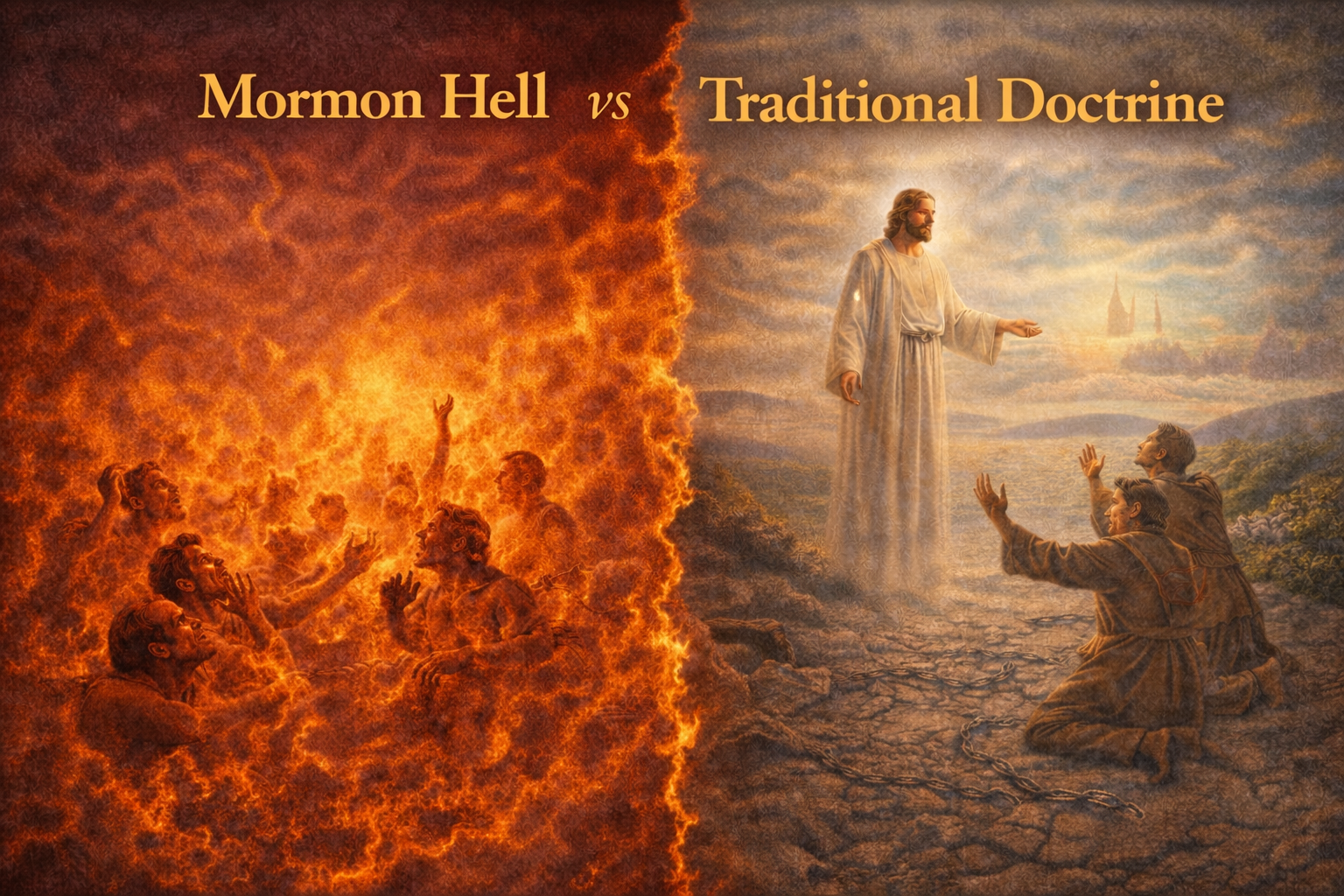
Latter-day Saint Doctrine of Hell (Mormon Hell)

Introduction: Hell as a Central Theological Question This episode examines the Latter-day Saint doctrine of hell and how it differs sharply from traditional Christian theology. For centuries, Christian thinkers—especially within Catholic and Protestant traditions—taught that every soul is created out of nothing at birth, that each soul has an immortal spirit, and that salvation depends … Read more
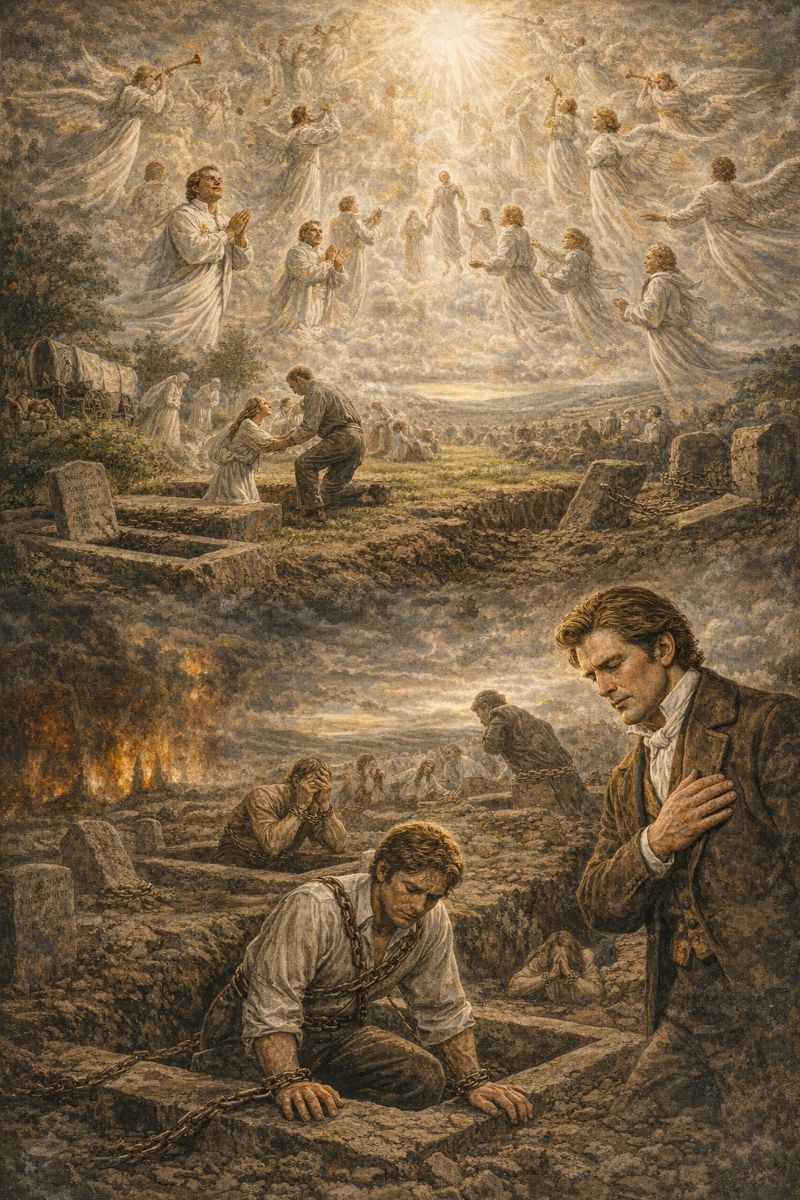

Joseph Smith on Resurrection and Eternal Expectations (Dreadful Resurrection)

Dreadful Resurrection: Symbolic illustration of the resurrection showing joy for the righteous and sorrow for the unprepared, with Joseph Smith observing the contrast between exaltation and dreadful disappointment in eternal judgment.

The Question A listener asked about a statement quoted by Marion G. Romney in the October 1949 General Conference. Elder Romney said that Joseph Smith once described: “One of the saddest things he had ever witnessed was the sorrow of members of the Church who came forth to a resurrection below that which they had … Read more

Bad Sources and Animal Sacrifice

Debunking Joseph Smith Animal Sacrifice Accusations

The examination of unreliable sources reveals significant misconceptions surrounding the practice of animal sacrifice, necessitating a critical evaluation of the cultural and ethical implications associated with this ritual. Origin of the Accusations Against the Smith Family Rumors that Joseph Smith or his family engaged in ritual or “satanic” practices trace back mainly to hostile 19th-century … Read more

Joseph Smith’s Commentary on the Sermon on the Mount 

Joseph Smith on the Sermon on the Mount: Scripture, JST,

The Question of “Lead Us Not Into Temptation” A listener asked why the Book of Mormon retains the King James phrase “lead us not into temptation,” while the Joseph Smith Translation revises it to “suffer us not to be led into temptation.” This reflects a deeper issue: many Christians assume scripture must be fixed and … Read more

Men (Quakers) on the Moon

Men (Quakers) on the Moon

The “Men on the Moon” Question A listener asked whether Joseph Smith ever taught that the moon was inhabited by people dressed “like Quakers.” The episode uses this question to illustrate how to evaluate historical claims about prophets and doctrine. Many critical arguments follow a familiar pattern: Assert: “Joseph Smith said X.” Quote a late … Read more

The Trinity and the Nature of God

The Trinity and the Nature of God

Traditional Christian Teaching on the Trinity In mainstream Christian theology developed through the early creeds, God is understood as one divine being who eternally exists as three distinct persons: the Father, the Son, and the Holy Spirit. These three persons are not interchangeable and are not manifestations of a single role, yet they share one … Read more

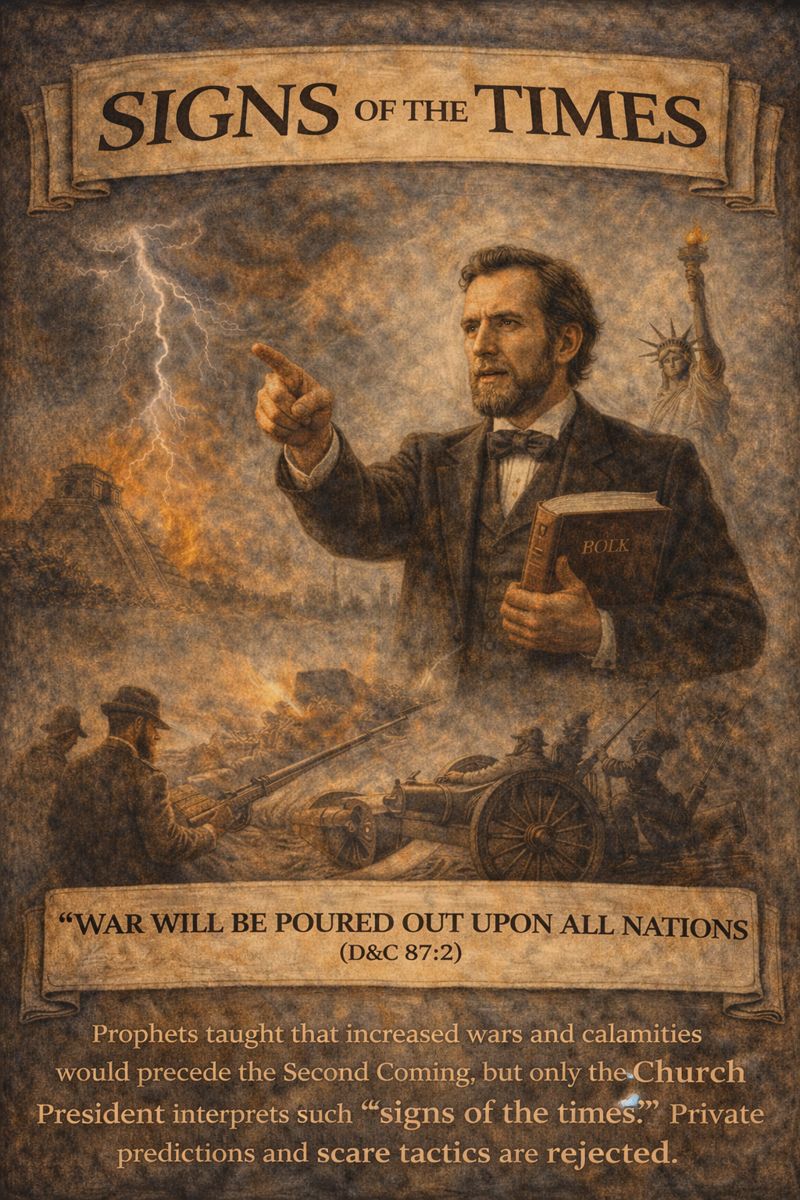
SIGNS OF THE TIMES Parte 1, 2 and 3

SIGNS OF THE TIMES of conflict and prophecy

Overview of Postmaster General Amos Kendall Amos Kendall and Political Power in the Postal System Amos Kendall served as Postmaster General under President Andrew Jackson. During the 19th century, the Postmaster General held vast national power because the postal system was one of the few large federal structures. Kendall became widely known for using the … Read more

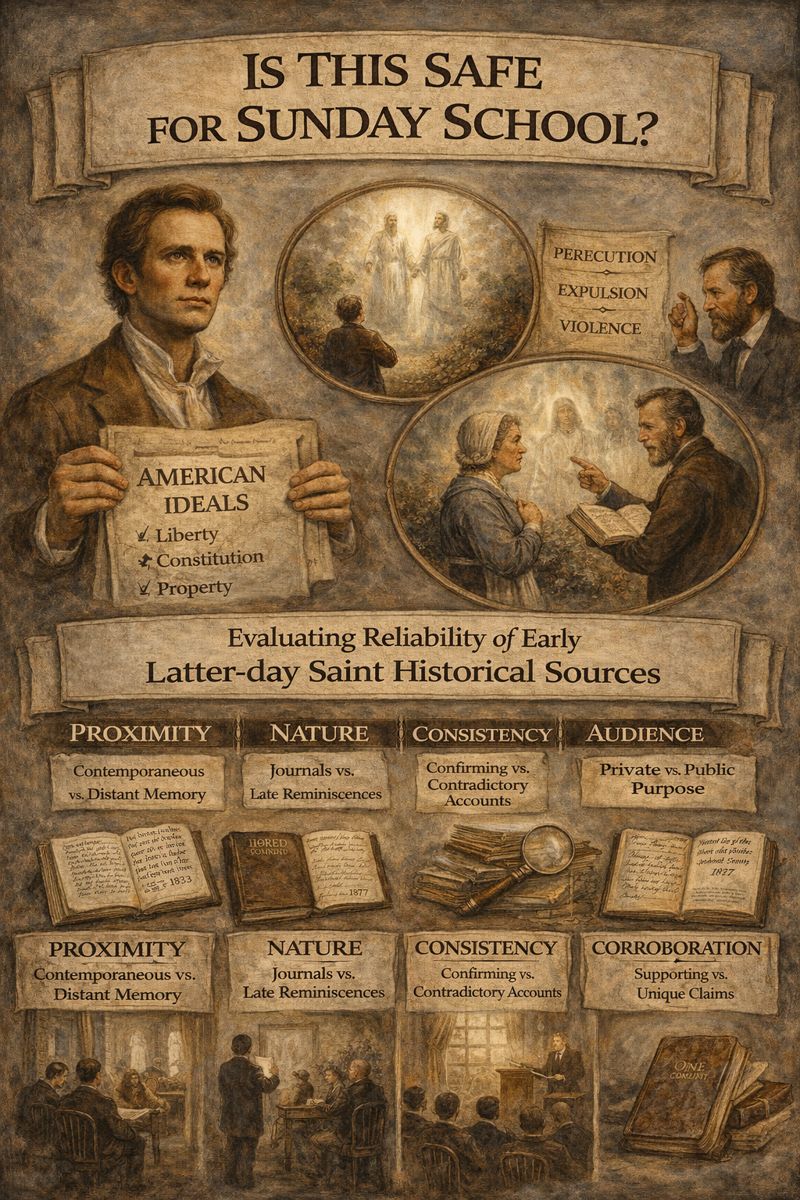
Is This Safe For Sunday School

Sunday School: Evaluating early Latter-day Saint history

Evaluating Safety and Reliability of Early Latter-day Saint Historical Sources Historians distinguish between what can be verified through evidence and what belongs to the realm of faith. Religious claims often involve miraculous events that lie outside the limits of historical methodology, which relies on documents, eyewitness accounts, and material evidence. For example, Christians universally affirm … Read more

The Word of Wisdom Part 2 

The word of Wisdom

Early Church Discipline Systems (1830s–1840s) In the early Church of Jesus Christ of Latter-day Saints, disciplinary systems were far simpler than today. During the 1830s and 1840s, church members were either “in fellowship” or “cut off.” There were no formal stages such as probation or disfellowshipment. Because of this, individuals could be excommunicated and later … Read more

Doctrine and Covenants 49: Revelation to a Radical Christian Group

Doctrine and Covenants 49 and the Shakers – Revelation to a Radical Christian Group

Introduction Doctrine and Covenants 49 is one of the more unusual sections of the Doctrine and Covenants because it directly addresses another specific religious group: the Shakers. Most revelations in the Doctrine and Covenants present teachings without naming other churches, though Joseph Smith’s First Vision accounts include the instruction not to join other churches and, … Read more