
Introduction
This episode turns again to the early years of the Restoration, tracing Joseph Smith’s travels, the revelations connected to those journeys, the attitudes of various communities toward the Saints, and the appearance of angelic beings who declared their dispensations and priesthood keys. By examining historical accounts, including Joseph Smith’s own writings, the Doctrine and Covenants, and letters from the period, the episode highlights the evolving relationship between the growing Church and the broader American public, as well as Joseph Smith’s teachings about angels, priesthood authority, and the divine work unfolding through temples.
Cincinnati and the June 1831 Journey Toward Missouri
In June 1831 Joseph Smith traveled with Sidney Rigdon, Martin Harris, Edward Partridge, W. W. Phelps, Joseph Coe, Sidney Gilbert, and other elders as they moved westward from Kirtland in obedience to the Lord’s command to locate the land of Zion. Their route took them by wagon and canal boats until they eventually reached Cincinnati. Joseph described an encounter there with Reverend Walter Scott, one of the most influential Protestant leaders of the Campbellite movement. Scott rejected the Latter-day Saints’ teaching that the spiritual gifts promised in Mark 16—gifts such as healing, tongues, and divine manifestations—remained available to believers. Joseph recorded that Scott’s opposition was forceful and reflected a wider hostility toward the idea that God still worked miracles and revealed His will through prophets.
Leaving Cincinnati behind, the travelers continued down the Ohio River toward Louisville, then moved on to St. Louis and across Missouri to Jackson County, where they expected the Lord to reveal the place appointed for Zion.
Revelations Connected to Cincinnati: Doctrine and Covenants 60–61
After reaching Missouri, Joseph Smith received a revelation directing many of the elders to return to their respective congregations, but Joseph, Sidney Rigdon, and Oliver Cowdery were given a specific charge to make their return journey by way of Cincinnati. The revelation, now known as Doctrine and Covenants 60, commanded that they lift up their voices in that city and declare the word of the Lord.
Soon afterward, when a near-fatal incident occurred on the Missouri River, Joseph received another revelation, Doctrine and Covenants 61. In it, the Lord instructed that the elders should not preach along the riverbank among those whose hearts were hardened, but that Joseph, Sidney, and Oliver should reserve their testimonies until they arrived at Cincinnati. The revelation describes Cincinnati as a people whose wickedness had stirred divine displeasure, yet a place where testimony must be delivered. These instructions mark Cincinnati as a notable location in the early missionary travels of the Church.
Cincinnati’s Unexpected Defense of the Saints in 1839
By 1839 the Saints had endured catastrophic persecution in Missouri, including violence, expulsion, and the imprisonment of Church leaders. Many American cities echoed the accusations circulating from Missouri, but Cincinnati became a remarkable exception. When John P. Greene arrived there and spoke of the Saints’ sufferings, many citizens at first accepted the hostile reports they had heard. Yet as Greene shared the firsthand documents, testimonies, and printed accounts carried from Missouri, public opinion shifted dramatically.
A civic committee formed to investigate the matter. After reviewing the evidence, the citizens of Cincinnati issued a series of resolutions condemning the conduct of Missouri officials and mobs, expressing sympathy for the Saints, and urging that the truth be made known to the nation. Cincinnati newspapers published strong rebukes against Missouri’s actions and printed accounts defending the Latter-day Saints. Thus a city once associated with resistance to the Saints’ message became, in 1839, a surprising center of public support.
Angels, Priesthood Keys, and the Teachings of Joseph Smith
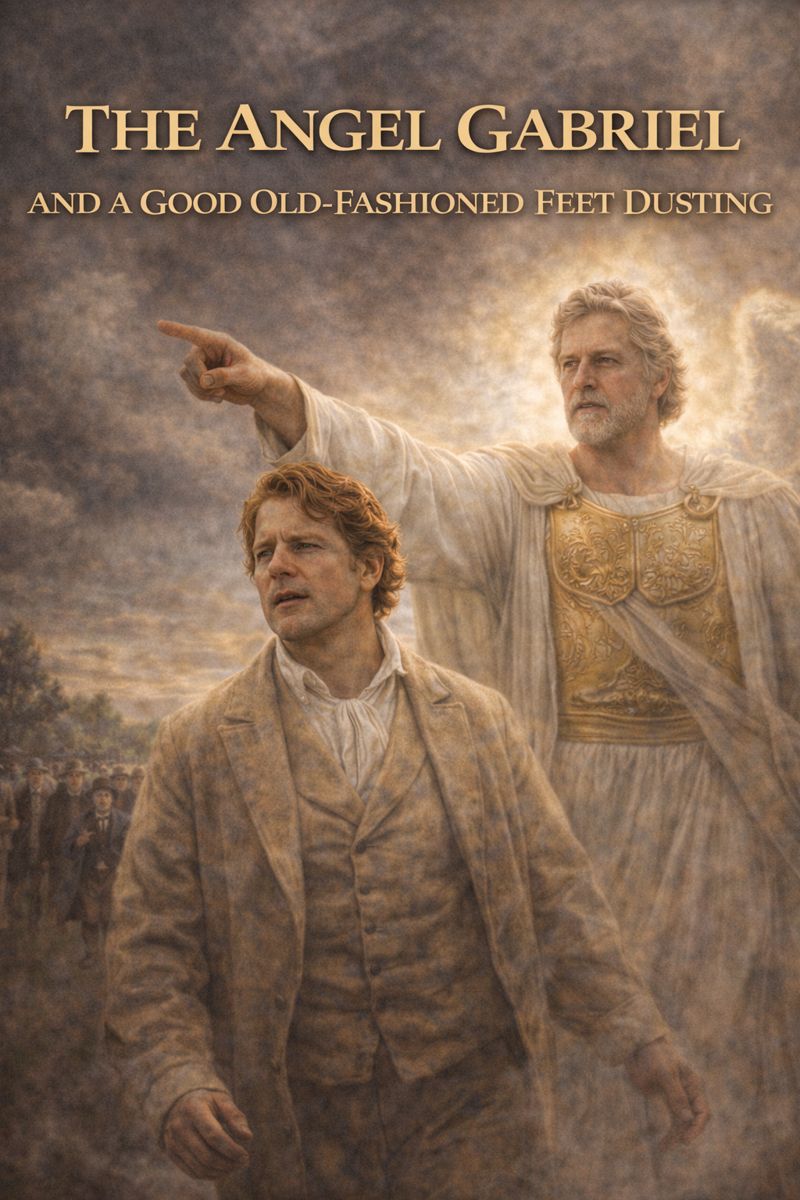
Joseph Smith’s letters and sermons from the Nauvoo period contain some of his clearest teachings about the ancient beings who appeared to him and restored priesthood authority. Among the most important of these teachings is found in Doctrine and Covenants 128:21, where Joseph lists angels who came to him: Michael, Gabriel, Raphael, and “diverse angels,” each declaring their keys and dispensations.
Joseph explained that Michael is Adam, the Ancient of Days, who presides over all priesthood dispensations. He taught further that Gabriel is Noah, the next great patriarch in priesthood authority. In his 1839 discourse on the priesthood, Joseph stated plainly, “Then to Noah, who is Gabriel; he stands next in authority to Adam in the Priesthood.” This identification comes directly from the Prophet and places Noah second only to Adam in ancient priesthood hierarchy.
Raphael is also named in Doctrine and Covenants 128, and although fewer details survive about him, Joseph includes him among the angels who ministered in the Restoration and who held keys in their own dispensations. Joseph stressed that all these ancient beings will one day participate in a great council at Adam’s direction, when priesthood holders will give an accounting of their stewardships. These teachings underscore the eternal nature of the priesthood, which Joseph described as existing “from eternity to eternity.”
The Eternal Significance of Priesthood Keys
The priesthood keys restored to Joseph Smith by these ancient beings constitute the central authority by which the Church of Jesus Christ performs saving ordinances. Without keys the Church might preach virtue, build community, or teach scripture, but it could not baptize with divine authority, seal on earth and in heaven, or bring the blessings of exaltation to God’s children. President Russell M. Nelson has emphasized that the distinguishing feature of the Lord’s true Church is precisely these priesthood keys, for they govern temple work, missionary efforts, and every saving ordinance.
Temples, whether in Kirtland, Nauvoo, or throughout the world today, operate under these keys. Through them, work is performed not only for the living but for the dead, opening the way for all of God’s children to receive the blessings offered through the Atonement of Jesus Christ. The appearance of angels such as Michael, Gabriel, and Raphael, and their declarations of priesthood authority, are therefore central moments in the unfolding of the Restoration.
Listen to the full podcast here:
https://www.youtube.com/@standardoftruthpodcastllc
Season 4, Episode 15 – The Angel Gabriel and a Good Old-Fashioned Feet Dusting