
Traditional Christian Teaching on the Trinity
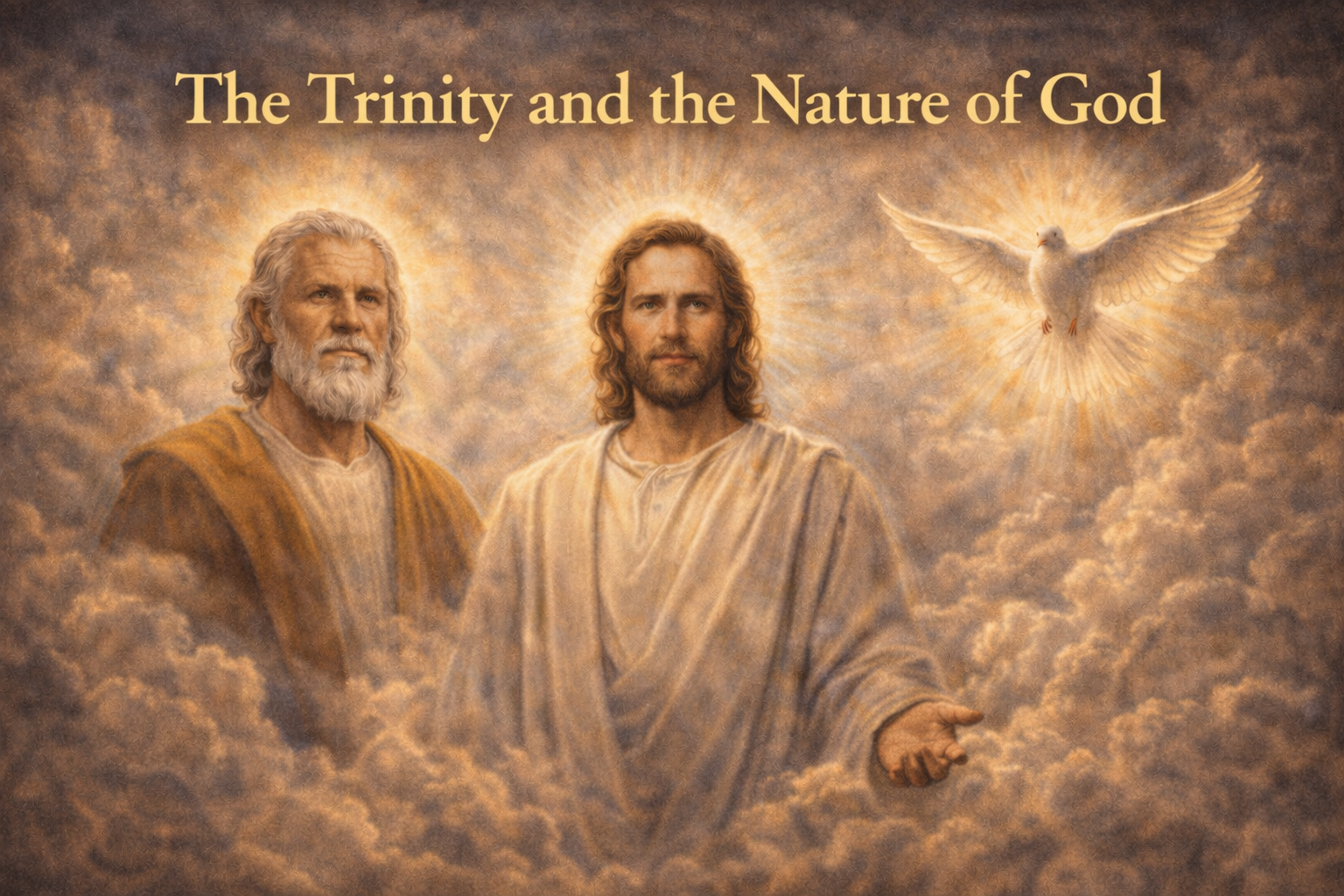
In mainstream Christian theology developed through the early creeds, God is understood as one divine being who eternally exists as three distinct persons: the Father, the Son, and the Holy Spirit. These three persons are not interchangeable and are not manifestations of a single role, yet they share one divine essence. This framework attempts to preserve both the unity of God and the real distinction between the divine persons.
Modalism and Its Rejection in Classical Christianity
An alternative view, known historically as modalism, describes God as one person who appears in different forms—sometimes as the Father, sometimes as the Son, sometimes as the Spirit. Early Christian writers and councils rejected this idea because it eliminated the personal distinctions affirmed in scripture and tradition. Classical Christianity insisted on distinguishing the persons without dividing the divine being.
Latter-day Saint View of the Godhead
Latter-day Saint doctrine teaches that the Father, the Son, and the Holy Ghost are three separate and individual beings. They are perfectly united in purpose and doctrine but do not share a single metaphysical essence. The Father and the Son possess glorified physical bodies, while the Holy Ghost is a spirit personage. This understanding differs fundamentally from traditional Trinitarian definitions and is often cited by other Christians as a basis for asserting that Latter-day Saints do not accept the historic creedal view of God.
The Reformation and the Nature of God
The Protestant Reformers challenged medieval Catholic practices surrounding salvation, authority, and the use of indulgences. However, they retained the earlier creedal statements concerning the nature of God and Christ. Reformers such as Luther and Calvin continued to accept the historic decisions of the ecumenical councils regarding the Trinity and the dual nature of Christ.
Early Ecumenical Councils and Christian Definitions of God and Christ
The major Christian councils shaped the foundational understanding of God and Christ:
Nicaea (325 AD)
Affirmed that the Son is fully divine and of the same substance as the Father.
Constantinople (381 AD)
Reaffirmed Nicene doctrine and gave formal recognition to the divinity of the Holy Spirit.
Chalcedon (451 AD)
Declared that Christ possesses both a complete divine nature and a complete human nature, united in one person without mixture or separation.
These councils established the doctrinal framework that became standard in most Christian traditions.
Differences Between Eastern and Western Christian Emphases
Both Eastern Orthodox and Roman Catholic traditions accept the Trinity, yet their explanations differ in emphasis. Western theology stresses the identical substance shared by the Father and the Son. Eastern theology often highlights the personal relationships within the Godhead and expresses the unity of the divine nature in ways that differ philosophically from Western formulations while remaining within Nicene boundaries.
Baptists and Doctrinal Variation Within Protestantism
Baptist congregations generally exercise local autonomy, resulting in considerable variation in teaching across different congregations. Despite differences in emphasis or interpretation, historic Baptist confessions affirm Trinitarian doctrine, acknowledging one God existing eternally as Father, Son, and Holy Spirit.
Jewish Origins of Early Christianity and Monotheism
The earliest Christians emerged from a Jewish context that affirmed strict monotheism. The claim that Jesus was divine created a theological challenge for these early believers, who needed to reconcile Jesus’s divinity with the foundational belief that there is one God. This tension drove many of the debates that eventually shaped the early Christian creeds.
New Testament Claims About Jesus’s Identity
Several New Testament passages present Jesus as possessing divine attributes or bearing divine titles. For example, Jesus’s statement “Before Abraham was, I am” draws upon language associated with God’s self-description in the Hebrew Bible. Such passages contributed strongly to early Christian beliefs about the divinity of Christ.
Polytheism and Monotheism in Historical Perspective
In the ancient Mediterranean world, belief in many gods was common, and monotheistic religions stood out as unusual. In the modern West, monotheism has become culturally dominant. Because of this shift, modern readers often interpret discussions of divine beings differently than people in antiquity would have done, influencing how various Christian traditions perceive one another’s teachings.
Divine Omniscience and the Problem of Evil in Traditional Christianity
Traditional Christian theology maintains that God is all-knowing and all-powerful. This raises challenging questions about human suffering and the Fall. Many theologians describe the full reasoning behind God’s decisions as beyond human comprehension and treat such questions as mysteries that exceed mortal understanding.
Distinctive Latter-day Saint Teachings About God
Teachings introduced through Joseph Smith differ substantially from traditional Christian metaphysics. Latter-day Saints believe:
God the Father is an exalted being with a physical body.
Human beings are of the same eternal species as God.
Spirits or intelligences existed before mortal birth.
God progressed to His divine status.
Exalted beings can achieve a divine nature comparable to the Father and the Son.
The Father, Son, and Holy Ghost are distinct individuals rather than one being.
These doctrines directly depart from the early creeds and frame Latter-day Saint theology as non-Trinitarian.
Shared Belief in the Saving Role of Jesus Christ
Despite major doctrinal differences concerning the nature of God, both Latter-day Saint tradition and historic Christianity affirm that salvation comes only through the atonement and resurrection of Jesus Christ. While their explanations of Christ’s identity and the mechanisms of salvation differ, both traditions ground redemption in the work of Jesus.