TL;DR — What Led to the Assassination of Joseph Smith and the Downfall of Nauvoo
Joseph Smith’s assassination on June 27, 1844, resulted from a convergence of political, religious, legal, and social pressures in Illinois. Tensions escalated after dissenters in Nauvoo published the Nauvoo Expositor on June 7, exposing and exaggerating allegations against Joseph. Acting as mayor, Joseph and the Nauvoo City Council ordered the press destroyed as a “public nuisance,” a decision legally defensible but widely viewed as tyrannical by non-Latter-day Saints.
This intensified pre-existing hostility from two groups:
-
External political enemies led by newspaper editor Thomas Sharp, who rallied militias against Nauvoo, and
-
Internal dissenters such as William Law, who had broken with Joseph and sought to remove him from church leadership.
Despite being twice acquitted in local courts, Joseph was pressured by Illinois Governor Thomas Ford to submit to arrest in Carthage to show obedience to state authority. After posting bail on riot charges, Joseph and Hyrum were unexpectedly charged with treason, largely because Joseph called out the Nauvoo Legion under Ford’s own advice.
Ford repeatedly promised state protection but then withdrew, disbanding reliable militia forces and leaving Joseph in the custody of the openly hostile Carthage Greys. He ignored multiple reports—including firsthand warnings from Dan Jones—that a mob intended to kill Joseph once Ford left town.
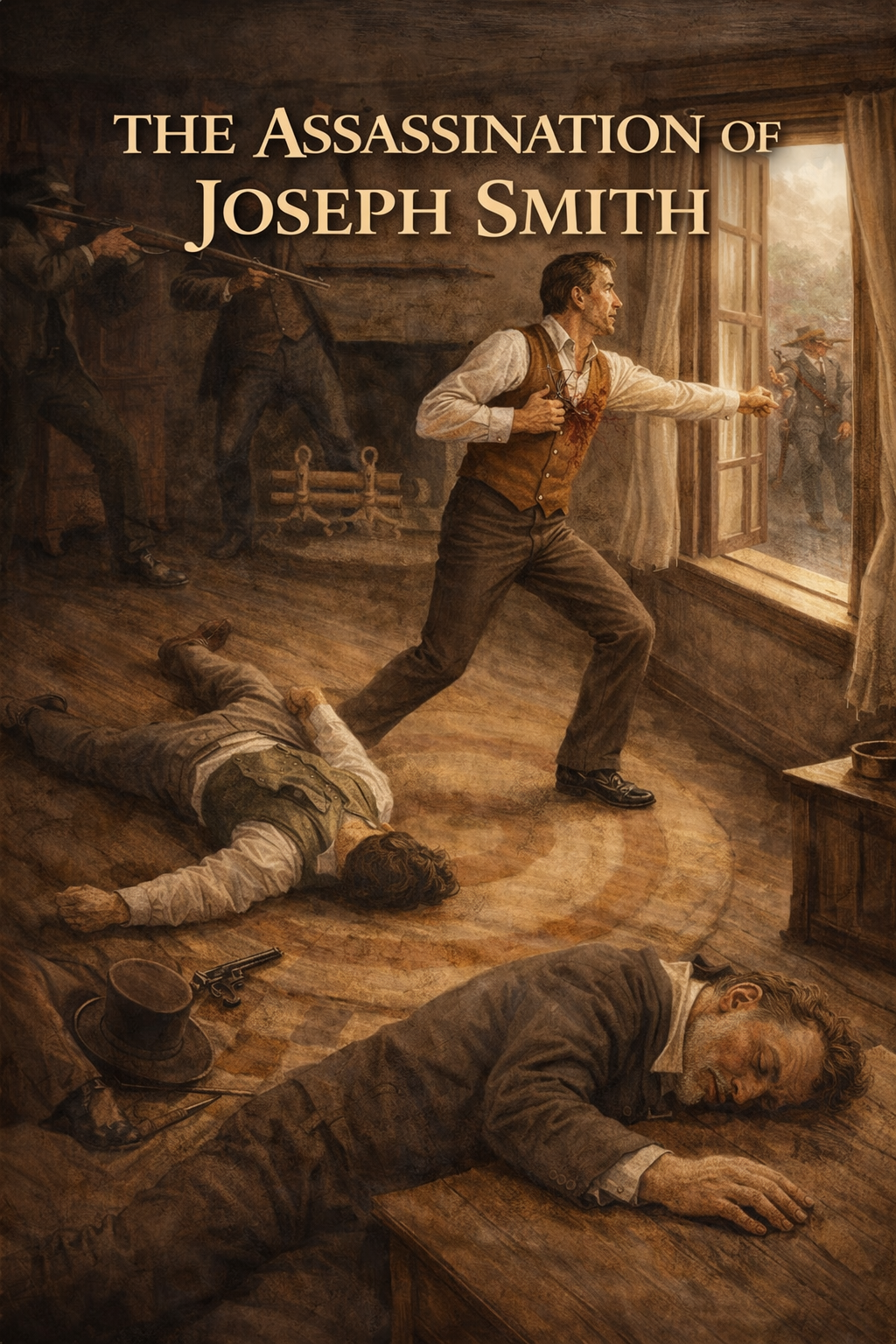
On June 27, while Ford was in Nauvoo, a coalition of anti-Mormon militias attacked Carthage Jail. Hyrum was shot first. Joseph returned fire in self-defense, likely wounding several attackers, then attempted to escape through a window before being shot and killed. Willard Richards survived; John Taylor was severely wounded.
Joseph’s death removed the unifying figure holding Nauvoo together. With leadership contested, legal pressures mounting, and anti-Mormon violence intensifying, the Saints abandoned Nauvoo in 1846. The combination of dissent, political fear, anti-Mormon agitation, legal maneuvering, and gubernatorial neglect ultimately led to both the Prophet’s assassination and the collapse of the Nauvoo settlement.
Timeline of Joseph Smith Martyrdom
January 1841 — Nauvoo Charter Granted
-
Illinois Legislature approves the Nauvoo Charter, giving Nauvoo:
- A city council
- A municipal court
- A university
- The Nauvoo Legion (a city militia)
-
Joseph Smith becomes Mayor and Lieutenant General of the Legion.
1841 — Joseph Appoints John C. Bennett
-
Joseph brings Dr. John C. Bennett into the highest civic roles:
- Assistant President of the Church (not in the First Presidency)
- Mayor of Nauvoo
- Major General of the Nauvoo Legion
-
Bennett enjoys enormous political influence and close access to Joseph Smith.
Late 1841 – Early 1842 — Bennett’s Secret “Spiritual Wifery” Begins
Historical sources confirm that the following men were directly involved with Bennett’s immoral circle during his actual period of influence:
1. John C. Bennett
- Originator of the false doctrine of “spiritual wifery.”
- Used it to persuade women to engage in illicit sexual relationships.
2. Chauncey L. Higbee
- Directly connected to Bennett.
- Used Bennett’s identical wording and methods to seduce women (e.g., that God permitted such relations).
- Multiple female witnesses testified that Higbee invoked Bennett’s teachings.
3. Francis M. Higbee
-
Brother of Chauncey.
-
While not as deeply tied as Chauncey, evidence shows Francis was part of the same social circle and participated in immoral associations influenced by Bennett.
-
Later became one of the most aggressive legal opponents of Joseph Smith.
4. A small group of unnamed associates
-
Several individuals testified that Bennett’s circle included “other men,” but the record definitively links only the Higbee brothers to Bennett’s actual sexual misconduct ring.
May 1842 — Bennett Exposed
-
Women testify that Bennett:
-
seduced them,
-
lied in Joseph Smith’s name,
-
taught “spiritual wifery,”
-
and performed or arranged abortions.
-
-
Bennett resigns as Mayor (May 11).
-
Bennett is excommunicated (June 1842).
-
Leaves Nauvoo and begins a national anti-Mormon campaign.
May 24, 1842 — Chauncey Higbee Tried and Excommunicated
-
Eleven women testify that Chauncey Higbee seduced them using the same false teachings Bennett used.
-
Chauncey excommunicated for:
-
Adultery
-
Seduction
-
Lying in the name of Joseph Smith
-
-
Contemporary sources confirm Higbee contracted venereal disease (“the pox”) from a prostitute during this period.
Mid–1842 — Bennett’s Apostasy Influences Others
-
Francis Higbee begins openly opposing Joseph Smith.
-
While not proven to engage in seductions like Chauncey, Francis embraced Bennett’s anti-Joseph rhetoric and later became one of Joseph’s most hostile litigants.
1843 — Rising Tensions with the Laws & Fosters (Not Bennett-Related)
While not connected to Bennett, the following events become foundational to the later Nauvoo Expositor crisis:
Early 1843
-
William Law begins doctrinal disputes with Joseph Smith.
Mid–1843 — William Law’s Adultery Confession
-
William Law falls seriously ill, believing he will die.
-
He confesses to Hyrum Smith that:
-
He had committed adultery,
-
He had wronged Joseph,
-
He desired reconciliation.
-
Late 1843 — Law Asks Joseph About Being Sealed to His Wife
-
William Law asks Joseph Smith when he can be sealed to Jane Law.
-
Joseph refuses, explaining the Lord had not authorized such non-plural sealings at that time.
-
This becomes a severe point of personal offense for Law.
Late 1843–Early 1844
-
Robert & Charles Foster, Nauvoo businessmen, become increasingly hostile to Joseph over:
-
Financial disputes
-
Accusations of adultery (documented in later church disciplinary proceedings)
-
Public opposition to the church
-
January 1844 — Law Removed from the First Presidency
-
Growing rebellion and doctrinal opposition leads to Joseph removing:
-
William Law
from the First Presidency.
-
April 18, 1844 — Excommunication of the Dissenters
The following individuals are cut off from the church:
-
William Law
-
Wilson Law
-
Francis Higbee
-
Robert & Charles Foster
-
Charles Ivins
Note:
Only the Higbee brothers have verified ties to John C. Bennett’s immoral circle.
The Law brothers, the Fosters, and Ivins did NOT participate in Bennett’s spiritual wifery teachings.
May–June 1844 — Nauvoo Expositor
-
The dissenters join forces as the Expositor company.
-
June 7: The only issue is published.
-
June 10: Press destroyed.
-
June 27: Joseph and Hyrum murdered.
1. John C. Bennett and the Rise of “Spiritual Wifery” in Nauvoo
A Detailed Narrative Section for Your Article
When the city of Nauvoo was organized under its new charter in early 1841, few men rose more quickly to prominence than Dr. John C. Bennett. Educated, charismatic, and politically experienced, Bennett arrived in Nauvoo at a moment when the Latter-day Saints desperately needed allies with legal and civic expertise. Joseph Smith, trusting his credentials and his apparent enthusiasm for the Church, elevated Bennett to several of the most influential positions in the city: Assistant President of the Church, Mayor of Nauvoo, and Major General of the Nauvoo Legion. At the time of his appointment, Bennett appeared indispensable. Within a year, he proved catastrophic.
The Secret Introduction of “Spiritual Wifery”
Unbeknownst to Church leaders, Bennett began leading a private double life soon after assuming power. Drawing on his political authority and reputation as a close confidant of Joseph Smith, he began to exploit women in Nauvoo through a fabricated doctrine he called “spiritual wifery.”
Bennett taught that:
-
illicit sexual relationships were permitted,
-
sin in such relationships could be “covered” by secrecy,
-
and that Joseph Smith sanctioned these acts.
These teachings were complete fabrications, bearing no connection to the actual, confidential introduction of plural marriage under priesthood authority. Bennett’s system was one of immorality, manipulation, coercion, and deception, and he used it to seduce multiple women in Nauvoo.
Spread of Bennett’s Influence
While Bennett maintained a respectable public face, he privately recruited a small circle of men to participate in or benefit from his illicit system. Documented evidence confirms that only two men among the later Nauvoo dissenters were directly tied to Bennett’s immoral activities during this period:
Chauncey L. Higbee
Chauncey Higbee became one of Bennett’s closest imitators.
Testimony from multiple women later revealed that Higbee:
-
used the same language and justifications Bennett taught,
-
promised spiritual favor in exchange for sexual relations,
-
and invoked Joseph Smith’s name to legitimize his actions.
Higbee repeated Bennett’s pattern nearly verbatim. His conduct was not merely immoral—it was deliberate religious deception.
Francis M. Higbee
Although not as deeply involved as his brother Chauncey, Francis Higbee was part of the same social sphere, absorbed Bennett’s anti-Joseph rhetoric, and later became one of Joseph Smith’s most aggressive legal adversaries.
Important note:
There is no historical evidence that William Law, Wilson Law, Robert Foster, Charles Foster, or Charles Ivins were associated with Bennett’s sexual misconduct or spiritual wifery teachings. Their rebellion arose later and for different reasons, primarily doctrinal disagreements and personal grievances.
Exposure and Collapse (March–June 1842)
By spring 1842, rumors and complaints began to reach Joseph Smith about Bennett’s private behavior. Investigating the matter, Joseph and the Nauvoo High Council uncovered a pattern of:
-
serial adultery,
-
seduction through religious manipulation,
-
and attempts to procure or arrange abortions.
When confronted, Bennett confessed privately but soon reverted to denial and blame-shifting. Joseph and the High Council moved quickly.
May 11, 1842
-
Bennett resigned as Mayor.
June 1842
-
Bennett was formally excommunicated from the Church.
Immediate Aftershocks: The Higbee Trials
Just weeks after Bennett’s downfall, the High Council turned to others who had participated in or benefited from his false teachings. Chief among them was Chauncey L. Higbee.
May 24, 1842 — Trial of Chauncey Higbee
Eleven women testified that Higbee had seduced them or attempted to seduce them using the same rationale Bennett promoted. The parallels were exact and undeniable.
Higbee was excommunicated for:
- adultery,
- seduction,
- misusing Joseph Smith’s name,
- and teaching false doctrine for immoral purposes.
Historical sources also indicate that around this same period Higbee contracted venereal disease (“the pox”) from a prostitute—corroborating his pattern of sexual misconduct.
Bennett’s National Campaign Against Joseph Smith
After his excommunication, Bennett left Nauvoo and immediately:
-
published inflammatory letters,
-
lectured across the country against Joseph Smith,
-
and conspired with existing critics of the Church.
His writings painted Joseph as the originator of Bennett’s own immoral system, a falsehood that deeply influenced later dissenters and anti-Mormon activists.
Although the Laws, Fosters, and Ivins were not involved in Bennett’s sexual misconduct, Bennett’s public attacks helped embolden them as they later organized the Nauvoo Expositor in 1844.
Legacy of the Bennett Scandal
Bennett’s actions had long-term consequences:
-
The scandal damaged trust in Nauvoo’s leadership structures.
-
It inspired imitators and encouraged moral rebellion in a few men like the Higbees.
-
Bennett’s published accusations fueled rising anti-Mormon sentiment in Illinois.
-
His betrayal set a precedent for internal dissent leading directly toward the events of 1844.
In short, John C. Bennett’s deception was the first major fracture in Nauvoo’s unity, laying groundwork for the later dissent that culminated in the martyrdom of Joseph and Hyrum Smith.
2. Formation of the Nauvoo Dissenters & Their Connection to John C. Bennett (Fact-Only Update)
Early 1841–1842: John C. Bennett’s Rise in Nauvoo
-
Fall 1840 – Early 1841 – John C. Bennett assists Joseph Smith in lobbying the Illinois legislature for the Nauvoo Charter, using his political connections in Springfield.
-
Dec 1840 – Nauvoo Charter passes.
-
Feb 1841 – Bennett becomes Mayor of Nauvoo, a Major General in the Nauvoo Legion, and a member of the First Presidency (Assistant President).
1841–1842: Bennett Secretly Teaches “Spiritual Wifery”
-
Bennett begins covert sexual misconduct in Nauvoo while pretending he speaks with Joseph Smith’s authority.
-
He promotes a false system called “spiritual wifery”:
-
sexual relations outside of marriage
-
no long-term commitment
-
done in secret
-
falsely claiming Joseph approved of it
-
Important:
Joseph Smith never taught or sanctioned spiritual wifery.
It was Bennett’s personal system, later condemned directly by Joseph from the stand.
Spring 1842: Bennett Exposed & Leaves Nauvoo
-
May 1842 – Bennett is confronted, admits his behavior, resigns as mayor, and abruptly leaves Nauvoo.
-
Summer 1842 – Bennett begins publishing anti-Mormon exposés, claiming Joseph taught illicit sexual practices (projecting his own misconduct onto Joseph).
Members of the Later Dissenting Group Who Were Directly Connected to Bennett
These individuals either participated in, were influenced by, or knew of Bennett’s “spiritual wifery” circle during 1841–1842. The record supports their involvement:
Chauncey L. Higbee
-
Early 1842 – Accused of adopting Bennett’s illicit sexual teachings and seducing multiple women using Bennett’s claims.
-
May 1842 – Tried before the Nauvoo High Council on charges of sexual misconduct.
-
May 1842 – Excommunicated.
-
His trial testimony explicitly shows he used Bennett’s language and Bennett’s authority.
Francis M. Higbee
-
Accused of sexual immorality, similar patterns to his brother.
-
Removed from fellowship in Nauvoo (precise date uncertain, but documented participation in Bennett-style misconduct).
-
By 1844 he became one of the main instigators against Joseph Smith.
Dr. Robert D. Foster
-
Foster was socially close to Bennett and connected through medical practice.
-
Although not charged with spiritual wifery, he became increasingly critical of Joseph after Bennett’s exposure.
-
April 1844 – Tried by the Nauvoo High Council for:
-
slander
-
disorderly conduct
-
unchristian behavior
-
-
April 18, 1844 – Excommunicated.
Charles A. Foster
-
Brother of Robert Foster; associated with Bennett’s circle socially and politically.
-
Not directly charged with adultery, but became openly hostile to Joseph Smith.
-
April 1844 – Excommunicated alongside Robert.
William Law
-
No evidence places William Law in Bennett’s “spiritual wifery” circle.
-
Important distinction:
-
Law rejected plural marriage entirely
-
His apostasy grew from personal grievances and theology
-
-
Late 1843 – On his sickbed, confesses privately to Hyrum Smith that he had committed adultery (no involvement with Bennett’s system).
-
After recovery, he did not remain repentant.
-
January 1844 – Removed as counselor in the First Presidency.
-
April 18, 1844 – Excommunicated for:
-
apostasy
-
accusing Joseph falsely
-
breaking moral commandments
-
-
Critical detail:
-
Law asked Joseph when he could be sealed to his wife, Jane.
-
Joseph refused because Law was unrepentant from adultery, not because monogamous sealings were unavailable.
-
Wilson Law
-
Brother of William Law.
-
Followed William in dissent.
-
April 18, 1844 – Excommunicated for apostasy.
Summary: Verified Connections to Bennett
Directly tied to Bennett’s immoral system
-
Chauncey Higbee
-
Francis Higbee
-
(socially/loosely) the Foster brothers
Not part of Bennett’s sexual circle but later united with him in opposition
-
William Law
-
Wilson Law
How These Men Later United (1844)
Although their motivations differed:
-
Bennett wanted revenge and publicity
-
The Higbees were disgraced and angry
-
The Fosters felt humiliated by discipline
-
William Law wanted to dethrone Joseph as prophet
-
Wilson Law followed his brother
They joined forces in early 1844, forming a cohesive dissenting faction.
Their collaboration resulted in:
-
March–April 1844 – secret meetings
-
April 1844 – censure and excommunications
-
June 7, 1844 – publication of the Nauvoo Expositor
-
June 10, 1844 – destruction of the Expositor press
-
June 27, 1844 – assassination of Joseph and Hyrum Smith
3. Internal Crises: Adultery, Apostasy, and the Moral Schism Inside Nauvoo
By 1841–1844, a cluster of Nauvoo dissenters—many formerly trusted leaders—became entangled in moral transgression, resentment, and open rebellion against Joseph Smith. Their misconduct, disciplinary hearings, and subsequent grievances formed the nucleus of the conspiracy that would ultimately lead to Joseph Smith’s assassination.
This section outlines the verified moral crises and ecclesiastical consequences that fractured Nauvoo from within.
Chauncey L. Higbee: Seductions, Disease, and High Council Discipline (1841–1842)
Summer 1841: Chauncey Higbee contracted “the pox” (likely syphilis) from a prostitute visiting Nauvoo from Warsaw. At the same time he boasted to John C. Bennett of seducing young women.
May 1842: Testimonies from multiple women revealed that Chauncey had used Bennett’s false doctrine of “spiritual wifery” to deceive them into sexual relations.
May 24, 1842: The Nauvoo High Council tried Chauncey Higbee for unchaste and adulterous conduct. He was excommunicated.
This marked one of the earliest cracks in Nauvoo’s internal unity, directly tied to Bennett’s secret teachings.
Francis M. Higbee: Immorality, Litigation, and Escalation (1841–1844)
Francis Higbee, Chauncey’s brother, had also been disciplined for immoral conduct. Records show he had contracted a venereal disease by 1841 (“from a French lady”).
While the details differ from Chauncey’s case, both brothers had reputations for sexual misconduct.
1842–1844: Francis became increasingly hostile toward Joseph Smith, filing lawsuits against him. His legal actions were later used strategically by anti-Mormon conspirators to force Joseph into court at Carthage.
His grievances, mixed with his moral resentments, made him a core member of the dissenting coalition.
Dr. John C. Bennett: Spiritual Wifery, Seductions, and Expulsion (1841–1842)
1841: Bennett entered Nauvoo’s leadership with prestige—Mayor, Major-General of the Nauvoo Legion, and counselor to the First Presidency. Privately, he advanced “spiritual wifery,” a counterfeit version of plural marriage involving:
-
secret seductions
-
promises of “no sin”
-
abortions performed to cover pregnancies
-
invoking Joseph’s name fraudulently
May 1842: Church leaders exposed the scheme. Bennett confessed privately but refused to reform.
June 1842: Bennett was disfellowshipped, then withdrew, and immediately turned against Joseph Smith.
He published salacious accusations, collaborated with enemies, and traveled widely to incite hostility against Nauvoo.
Bennett’s influence formed the philosophical and operational blueprint for later dissenters.
Robert D. Foster: Adultery Accusation, Church Discipline, and Alienation (1843–1844)
Winter 1843–1844: Robert Foster was accused of an adulterous relationship. Joseph attempted to settle the issue privately, urging repentance.
When Foster refused correction, he grew hostile.
April 18, 1844: Foster was excommunicated for:
-
immoral conduct
-
refusal to accept reconciliation
-
apostasy
-
participating in anti-Joseph meetings
Foster later admitted he joined the conspirators who sought to destroy Joseph politically and religiously.
William Law: Adultery Confession, Refusal to Repent, and Open Rebellion (1843–1844)
William Law had been Second Counselor in the First Presidency and one of Joseph’s closest associates.
Late 1843: While gravely ill and believing he might die, Law confessed adultery to Hyrum Smith and acknowledged his wrongdoing.
After recovering, however, he rejected Joseph’s call to repentance.
Early 1844: Law asked to be sealed to his wife, Jane. Joseph refused— because Law was not morally eligible after unrepented adultery.
January 1844: Law was removed from the First Presidency.
April 18, 1844: William Law was excommunicated for:
-
adultery
-
teaching false doctrine
-
rebellion against Joseph Smith
-
organizing opposition meetings
William Law quickly became the dissenters’ leader, convinced Joseph was a fallen prophet and determined to remove him.
The Growing Alliance of Dissenters (1843–1844)
By early 1844, the previously separate grievances of Bennett, the Higbees, Foster, and Law had merged into a unified movement. Their shared characteristics:
-
resentment against Joseph’s disciplinary actions
-
prior involvement with Bennett’s immoral teachings
-
disputes over doctrine, authority, and personal sin
-
ambition for leadership or influence
-
belief that Joseph needed to be removed—politically, ecclesiastically, or both
This coalition met repeatedly in 1844, openly discussing plans to:
-
discredit Joseph,
-
organize a rival church,
-
or bring him down through civil courts.
Their hostility culminated in the creation of the Nauvoo Expositor, the publication that ignited the chain of events leading directly to Joseph and Hyrum Smith’s murders.
4. The Rise of the Conspiracy: The Nauvoo Expositor and the Final Break
By the spring of 1844, the dissenters’ grievances had cohered into an organized movement intent on destroying Joseph Smith’s political and religious influence. The coalition—led by William Law, Wilson Law, Robert and Charles Foster, Chauncey and Francis Higbee, and aligned with the propaganda and methods pioneered by John C. Bennett—believed Joseph needed to be removed at any cost.
Their plan culminated in the creation of a newspaper designed explicitly to spark Joseph Smith’s downfall: the Nauvoo Expositor.
Early 1844: The Conspirators Unite
Following the excommunications on April 18, 1844, the dissenters established a rival organization they called the “Reform Church.”
Key players included:
-
William Law – Former Second Counselor in the First Presidency; excommunicated for adultery and apostasy.
-
Wilson Law – Former general in the Nauvoo Legion; followed William into open rebellion.
-
Robert D. Foster – Excommunicated physician involved in moral transgression and later conspiracy.
-
Charles A. Foster – Robert’s brother; participant in opposition meetings.
-
Chauncey L. Higbee – Seducer influenced by Bennett; excommunicated in 1842.
-
Francis M. Higbee – Litigant and long-standing opponent of Joseph.
-
Charles Ivins – Added his signature and support to the dissenters’ actions.
Meetings were held at the Law home and other private residences, where the men:
-
shared grievances,
-
discussed forming a rival church,
-
plotted legal and political action,
-
and planned a way to “expose” Joseph Smith publicly.
Their language quickly escalated from reform to outright overthrow.
William Law’s Objective: Remove Joseph Smith “At All Costs”
William Law later admitted that he believed Joseph Smith was a fallen prophet and that it was necessary to eliminate his influence—even if it meant:
-
destroying Joseph’s reputation,
-
accusing him of crimes,
-
or supporting political enemies outside Nauvoo.
Law’s diaries, recollections from associates, and later interviews confirm that he viewed the situation as a zero-sum conflict: Joseph must fall, and the dissenters must replace him.
The Expositor Plan: A Newspaper Designed as a Weapon
By May 1844, the conspirators agreed that the most effective way to attack Joseph Smith was through the press.
They organized the:
Nauvoo Expositor Publishing Company
Members:
-
William Law
-
Wilson Law
-
Robert D. Foster
-
Charles A. Foster
-
Chauncey L. Higbee
-
Francis M. Higbee
-
Charles Ivins
Their goals were explicit:
-
Publish allegations to inflame public opinion
-
Paint Joseph as a tyrant and destroy his credibility
-
Accuse the church of political corruption and secret doctrines
-
Break Joseph’s hold on Nauvoo’s population
-
Provide justification for state intervention
The dissenters believed that if the citizens of Illinois and surrounding counties turned violently against Joseph, the state government would be forced to act.
June 7, 1844: The Nauvoo Expositor Hits the Streets
The first and only issue of the Nauvoo Expositor was published on June 7, 1844. It included:
-
Accusations that Joseph Smith was a fallen prophet
-
Charges of political dictatorship
-
Allegations of immorality
-
Revealing select portions of the confidential Council of Fifty
-
Denouncements of plural marriage
-
Calls for Joseph Smith’s overthrow
-
Claims that Nauvoo must be placed under outside control
-
Proposals to repeal the Nauvoo Charter
Many of these claims mirrored language and strategies used by John C. Bennett two years prior, especially in The Sangamo Journal and his book The History of the Saints.
Bennett’s earlier seduction ring had already created scandal in Hancock County; the dissenters merely revived and repackaged the narrative.
Joseph Smith and the Nauvoo City Council Respond
The Expositor’s accusations sparked immediate tension across Illinois.
June 8–10, 1844
The Nauvoo City Council convened emergency meetings to respond to the crisis. Over the course of three days and thousands of words of recorded debate, they considered the Expositor a:
-
public threat
-
incitement to violence
-
call for the city’s destruction
Under Nauvoo’s charter (modeled after Philadelphia’s), the city held legal authority to declare unlawful businesses a “public nuisance.”
June 10, 1844
After reviewing state law and precedent, the Nauvoo City Council voted to:
1. declare the Nauvoo Expositor a public nuisance
2. order the press, type, and remaining papers removed
City Marshal Jonathan Dunham executed the order.
President Dallin H. Oaks, in a legal analysis, has stated:
-
destruction of the papers was clearly legal
-
destruction of the press itself might have been legal under nuisance law
-
but regardless, the action became the flashpoint for all that followed
The Reaction: Illinois Ignites
Opponents of Nauvoo seized upon the event instantly. Anti-Mormon newspapers statewide framed it as:
-
a violation of the free press
-
proof of Joseph’s “tyranny”
-
justification for overthrowing Mormon leadership
Thomas Sharp’s Warsaw Signal declared:
“WAR AND EXTERMINATION IS INEVITABLE!”
“We call upon all who are not cowards to meet at Carthage on Thursday next, to exterminate—UTTERLY EXTERMINATE the wicked and abominable Mormon leaders.”
The powder keg had been lit.
Joseph Smith himself said the Expositor would “cost the lives of the best men in Nauvoo,” and within 20 days, he and Hyrum were dead.
5. The Legal and Political Crisis: Governor Ford, Arrest Warrants, and the Road to Carthage
With the publication of the Nauvoo Expositor on June 7, 1844, and the Nauvoo City Council’s decision on June 10 to destroy the press as a public nuisance, a cascading legal and political crisis erupted across Illinois. This crisis—fueled by misinformation, political pressure, deep-seated anti-Mormon prejudice, and the organized efforts of Nauvoo’s dissenters—set Joseph Smith on an irreversible path toward Carthage Jail and ultimately to martyrdom.
The Dissenters Switch to Open Political Warfare
After the Expositor was destroyed, the dissenters—William and Wilson Law, the Higbees, the Foster brothers, and Charles Ivins—immediately framed the incident as:
-
suppression of the free press
-
proof that Joseph Smith was a tyrant
-
justification for state intervention
-
reason to depose Joseph as mayor and as prophet
They drafted formal complaints to state officials and anti-Mormon editors, emphasizing:
-
“oppression,”
-
“despotism,”
-
and “abuse of office.”
Their goal was explicit:
force Joseph Smith into the courts of a hostile county—Hancock County—where they expected mob law to finish the job.
Anti-Mormon Forces Mobilize
Thomas Sharp, editor of the Warsaw Signal, used the press to ignite public rage throughout western Illinois. In the days following June 10, Sharp printed:
“WAR AND EXTERMINATION IS INEVITABLE!”
“We must drive the Mormons from the county.”
“Meet at Carthage… to utterly exterminate the Mormon tyrants!”
Militia companies in Warsaw, Green Plains, Carthage, and surrounding regions began drilling openly.
Armed mobs—not merely angry citizens—were gathering, drilling, and threatening to burn Nauvoo to the ground.
Governor Thomas Ford Enters the Crisis
June 12–13, 1844:
Armed with affidavits from the dissenters, officials in Carthage issued warrants for Joseph Smith and the Nauvoo City Council for riot in connection with the Expositor’s destruction.
Joseph Smith submitted peacefully for a hearing before:
-
Justice Aaron Johnson (Latter-day Saint)
-
Justice Daniel H. Wells (not a Latter-day Saint but friendly)
Both found insufficient grounds to hold Joseph or the council for trial. They were legally discharged.
But anti-Mormon forces rejected these outcomes.
Governor Ford Demands Joseph Come to Carthage
Pressure from the dissenters and regional militias escalated. They complained that:
-
Joseph had been judged by Mormon-friendly magistrates
-
Nauvoo was operating outside the law
-
Ford must intervene personally to uphold “public justice”
Governor Ford sent letters insisting Joseph and the city leaders must:
-
come to Carthage immediately
-
submit to arrest before non-Mormon magistrates
-
prove they were “willing to be governed by law”
Joseph pleaded with Ford to move the proceedings to a safer, neutral location, such as Quincy.
Ford refused.
Joseph also warned Ford directly that mobs were plotting to kill him.
Ford dismissed the concerns as exaggeration.
Joseph Attempts to Flee, but the Saints Intervene
June 22, 1844:
Joseph crossed the Mississippi River with a small group, heading toward Iowa Territory. He believed:
-
the state of Illinois was in rebellion
-
Ford could not control the mobs
-
his death would endanger Nauvoo
He intended to regroup and prevent violence.
But a delegation—including Emma Smith, Reynolds Cahoon, and others—pleaded with Joseph to return, believing the Saints would be massacred if he left. Joseph famously responded:
“If my life is of no value to my friends, it is of none to myself.”
He returned to Nauvoo and prepared to face the legal charges.
Joseph and Hyrum Go to Carthage
June 24, 1844:
Joseph, Hyrum, and approximately 17 supporters rode to Carthage to submit to Ford’s demands.
Joseph declared:
“I am going like a lamb to the slaughter.”
Upon arrival, Joseph and the city council posted bail for the riot charge.
They were preparing to return home.
The Twist: A New Charge is Filed — Treason
Moments before Joseph could leave Carthage, the dissenters filed a new, far more serious charge:
Treason against the State of Illinois
Reason given:
-
Joseph had called out the Nauvoo Legion in early June, which the dissenters claimed constituted an “act of war” against Illinois.
Treason was a non-bailable offense, guaranteeing Joseph and Hyrum’s imprisonment.
Multiple eyewitnesses later affirmed that:
-
Bennett’s allies
-
the Laws
-
the Higbees
-
the Fosters
had coordinated the timing specifically to keep Joseph in Carthage until the mob could gather.
Governor Ford refused to intervene.
Governor Ford’s Fatal Decisions
Several key decisions by Ford sealed Joseph’s fate:
1. He disarmed the Nauvoo Legion
leaving Nauvoo defenseless.
2. He dismissed the neutral militia companies
who could have protected the prisoners.
3. He left Joseph and Hyrum in the custody of the Carthage Greys
a unit known to be openly hostile—men who had declared Joseph “ought to die.”
4. He promised to take Joseph to Nauvoo for safety—but broke that promise
and instead rode to Nauvoo without him on June 27.
5. He ignored multiple warnings of the planned assassination
including those delivered by Dan Jones the night before the murders.
Governor Ford’s actions are a subject of deep controversy.
While historians differ on whether Ford was complicit or simply negligent, all agree:
Joseph Smith was left deliberately unprotected, in the most dangerous county in Illinois, under guard of his sworn enemies.
Final Hours Before the Martyrdom
With Ford gone and the militias disbanded, only the Carthage Greys remained.
The Warsaw Militia—under Thomas Sharp and Levi Williams—assembled just outside Carthage and marched toward the jail.
Joseph knew the end was near. To Dan Jones he said on the night of June 26:
“We are going to be butchered tomorrow.”
The next day, June 27, the mob stormed the jail.
Joseph and Hyrum were murdered.