
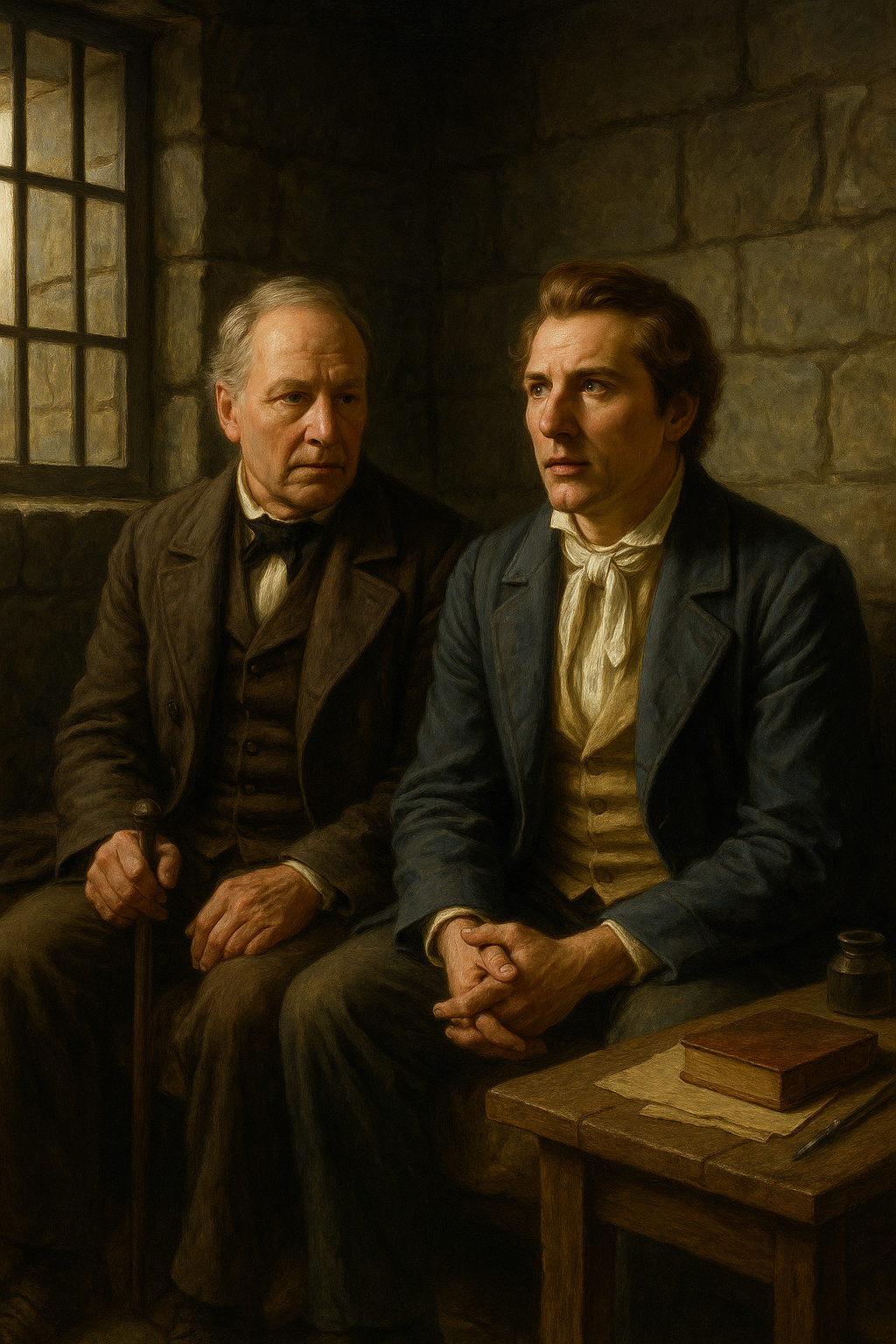
Carthage Conspiracy – Historical Overview
This reconstruction presents only historical information, source analysis, and documentary context regarding the deaths of Joseph Smith and Hyrum Smith in 1844, the reliability of associated sources, and the methodology used by historians in evaluating alternative theories.
Claims of New Interpretations of the Martyrdom
A recent video has circulated claiming “new forensic evidence” regarding the murders of Joseph and Hyrum Smith at Carthage Jail.
Professional historians—including Latter-day Saint and non-Latter-day Saint scholars—have rejected the film’s claims due to:
- lack of engagement with primary sources
- absence of professional historians, archivists, or forensic specialists
- methodological errors
- incorrect interpretations of 19th-century evidence
The Salt Lake Tribune also noted multiple factual and methodological problems with the production.
Historical Methodology Used in Evaluating the Martyrdom
Collecting Primary Sources
Including:
- eyewitness accounts
- journals
- letters
- newspapers
- court documents
- minutes from church councils (e.g., Council of Fifty)
Weighing Source Reliability
- contemporary accounts carry more weight
- late reminiscences risk memory distortion
- hostile and friendly sources are both used for comparison
Avoiding Unsupported Conclusions
Historians do not assume:
- hidden motives without documentation
- large-scale conspiracies unsupported by evidence
- conclusions based on absence of evidence
Summary of Alternative Theory Proposed in the Video
The video asserts that:
- Hyrum Smith was shot by someone inside the room
- John Taylor allegedly shot Hyrum
- Willard Richards and John Taylor staged the scene
- Joseph Smith was killed partly by individuals inside
- undocumented pistols were present
- Brigham Young orchestrated a plot to remove Joseph Smith
Historically documented evidence does not support these claims.
None of the contemporaneous sources—hostile or friendly—describe internal execution, internal gunfire directed at Hyrum, or a conspiracy involving Latter-day Saint leaders.
Documented Firearms and Ballistics
Weapons Known to Be Present
Sources confirm:
- Joseph Smith possessed a pepperbox pistol with misfiring chambers
- the mob carried muskets and likely some pistols
- no evidence documents additional pistols inside the room
The Pocket Watch
Modern analysis suggests:
- John Taylor’s watch was crushed as he hit the windowsill
- not struck by a bullet
This conclusion has been accepted by historians for decades.
Black-Powder Variability
19th-century ballistics show:
- powder loads varied
- weapon conditions differed
- projectiles produced widely varying effects
This limits the forensic certainty possible from modern replications.
Hyrum Smith’s Wounds
Contemporary Historical Understanding
Multiple early sources state that:
- a musket ball entered through the wooden door
- struck Hyrum on the left side of the nose
- exited through the back of his head/neck
Sources include:
- Willard Richards’s immediate journal entry
- John Taylor’s published accounts
- Times and Seasons reporting
- statements from Nauvoo witnesses
Claims of Close-Range Shooting
The video claims Hyrum was shot at close range by someone inside the room.
Historians reject this because:
- no primary source supports it
- the claim requires discarding all contemporaneous accounts
- no forensic or documentary basis exists
No Evidence of Internal Execution
No 1844 source describes:
- an internal shooter
- a pistol under the chin
- a struggle inside the room
- internal mutiny or assassination
Did the Mob Enter the Room Again?
One late second-hand account (Thomas Bullock) suggests possible re-entry. However:
- no eyewitness account supports mob re-entry
- most primary sources state the mob fled immediately after the fall
- historians judge re-entry unlikely based on available evidence
The 1845 Trial and Witness Testimony
Trial Context
- jury composed entirely of non-Latter-day Saints
- witnesses faced threats and intimidation
- leaders feared traveling to Carthage
Acquittals
Historians view the trial outcomes as:
- a failure of justice
- influenced by anti-Mormon hostility
- not evidence of a Latter-day Saint conspiracy
Motive Claims Involving Brigham Young and Samuel Smith
The film claims:
- Brigham Young conspired for leadership
- Samuel Smith was poisoned
- Church leaders orchestrated Joseph’s death
Historians note:
- these claims originate in 19th-century dissenting narratives
- no contemporary evidence supports them
- Samuel Smith’s death is documented as illness
- succession records contain no references to plots
Evaluating Conspiracy Theories
Conspiracy narratives rely on:
- ignoring contradictory evidence
- privileging late sources over early ones
- assuming hidden motives
- selective quotation
- rejecting contemporary accounts
Historians oppose this methodology.
Contemporary Sources on the Martyrdom
Dan Jones’s 1847 Account
Dan Jones recorded interactions with the guards. Important details include:
- threats by Sergeant Frank Worrell that Joseph and his companions would be killed
- statements that no one inside the jail would survive until sunset
- threats to shoot Joseph Smith
- references to hanging appear later as shouted threats after militia dismissal
- statements indicate intent to kill, not a peaceful arrest
Willard Richards’s Journal (Immediate Source)
Richards recorded:
- shots fired up the stairway
- a ball passing through the door striking Hyrum
- Joseph obtaining his pepperbox pistol
- multiple shots fired back into the hallway
- Taylor attempting escape through the east window
- Taylor being shot
- Joseph falling from the window
This is the earliest detailed written account of the event.
John Taylor’s Published Accounts
Taylor’s 1844 and 1854 accounts describe:
- musket fire from outside
- Hyrum’s fatal wound
- Joseph firing several shots
- Taylor sustaining multiple wounds
- Joseph falling and being shot from outside
- Richards helping Taylor afterward
Injured Members of the Mob
Independent sources—including anti-Mormon newspapers—reported that mob members were wounded.
This aligns with:
- Joseph firing into the hallway
- return fire from the mob
- exchanges through the door and windows
These accounts contradict theories that claim Joseph fired no shots.
Contemporary Documentation of Visits to Carthage Jail
General Minor Deming wrote on June 26, 1844, that:
- guards had improperly restricted visitors
- visitors were to be allowed per his orders
This explains jail access without implying conspiracy.
Historical Consensus
Professional historians conclude that:
- the mob attacked from outside
- Hyrum was killed by a musket ball passing through the door
- Joseph fired into the hallway
- Taylor was wounded while attempting escape
- Joseph was shot after falling from the window
- Richards survived uninjured
- no internal conspiracy is supported by evidence
- no Church leader was involved in the killings
Summary of Historical Findings
The weight of evidence—eyewitness accounts, journals, court records, hostile sources, ballistic context, and scholarly analysis—supports the traditional historical reconstruction:
Joseph Smith and Hyrum Smith were killed by an armed mob attacking from outside the jail.
John Taylor and Willard Richards were victims, not perpetrators.
Alternative theories lack documentary foundation and contradict earliest primary sources.