
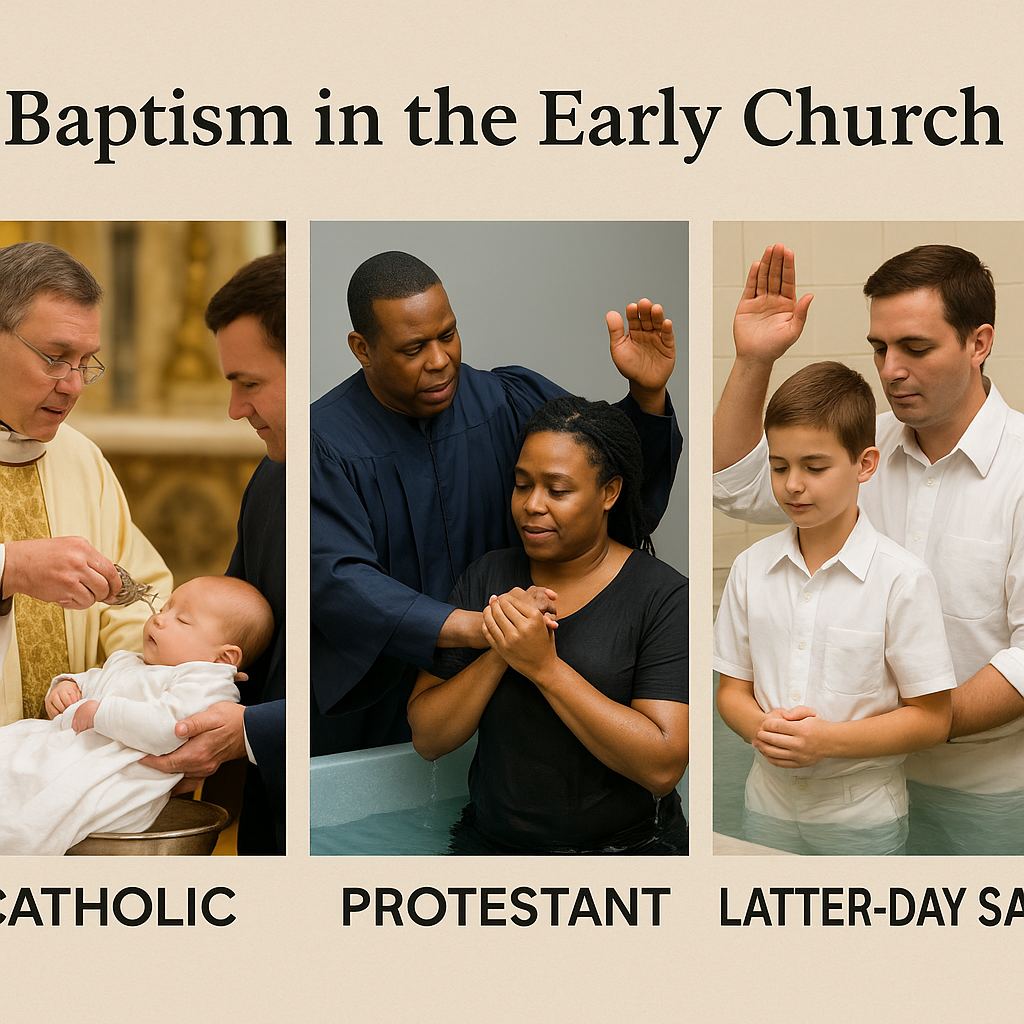
Baptism and Salvation
A Modern Case That Revived an Ancient Debate
In early 2022, international news reported that a Catholic priest in Arizona had performed thousands of baptisms incorrectly for more than 20 years. Instead of saying “I baptize you,” he used the phrase “We baptize you.”
According to Catholic sacramental theology, altering the formula invalidated the baptisms. Families—many involving infants—were asked to repeat the ordinance.
Historically, Catholic doctrine taught that baptism is essential for salvation, which intensified public concern.
Catholic Teachings on Baptism and Salvation
The modern Catechism of the Catholic Church outlines several exceptions that explain when salvation may be possible even without a valid baptism.
Catechumen Exception (Catechism 1259)
Adults preparing for baptism who die before receiving it may be saved through:
- Their explicit desire for baptism
- Repentance
- The grace associated with baptism, received by intention
Ignorance Exception (Catechism 1260)
People who:
- Never knew the gospel
- Sought truth sincerely
- Lived according to their understanding
may also be saved. Catholic teaching presumes they would have desired baptism if they had known its necessity.
Children Who Die Without Baptism (Catechism 1261)
Historically unresolved, this issue led to:
- Speculation such as limbo
- Doctrinal statements that express hope, not certainty, for their salvation
- Confidence in God’s mercy, while refraining from declaring a definitive doctrine
Thus, Catholic teaching upholds the necessity of baptism while acknowledging exceptions rooted in divine compassion.
Protestant Views: Baptism as Symbol, Not Salvation
Most Protestants believe:
- Salvation comes through faith alone, not sacraments
- Baptism is an outward symbol of inward commitment
- Ritual errors do not threaten salvation
For Protestant theology, salvation is not dependent on a sacrament being performed perfectly, which contrasts sharply with Catholic sacramental theology.
Restoration Context: Why Baptism Became Essential in Early Latter-day Saint Thought
Early converts—including Joseph Smith and Oliver Cowdery—came from Protestant backgrounds where:
- Baptism signified faith
- Baptism did not save
- Authority was not considered necessary to perform baptisms
The Book of Mormon transformed their understanding.
3 Nephi 11: Jesus Declares Baptism Essential
The resurrected Christ commands baptism and teaches:
- Belief and baptism are both required for salvation
- The ordinance must be performed with authority
Restoration of Authority
This prompted Joseph and Oliver to ask how salvation could occur without proper baptism. Their inquiry led to:
- The appearance of John the Baptist
- The conferral of the Aaronic Priesthood
- A command to baptize each other
Interestingly, priesthood authority was restored before either man had been baptized—showing a degree of early procedural flexibility.
First Baptismal Question in the Early Church
Must Converts Be Re-baptized?
Two weeks after the Church’s organization on April 6, 1830, new converts—likely Baptists—asked whether their previous baptisms were valid.
Their reasoning:
- Baptism was symbolic
- They had already expressed faith
- Therefore, rebaptism seemed unnecessary
This led to Doctrine and Covenants 22, which teaches:
- Baptisms performed without priesthood authority “avail nothing”
- All who enter the Church must be baptized again by proper authority
This marked a major doctrinal shift from Protestantism.
Second Question: Should Infants Be Baptized?
Doctrine and Covenants 74
Immediately after resolving the rebaptism issue, another question emerged: infant baptism.
Historical Clarification
Modern research, including examination of early manuscripts, shows:
- D&C 74 was received in 1830 in Wayne County, New York
- It was not received during the 1832 New Testament translation, as earlier believed
Context and Interpretation
The revelation responds to debates surrounding 1 Corinthians 7:14, historically used to justify infant baptism.
It teaches:
- Paul was addressing conflicts over circumcision, not baptizing infants
- Children are holy through Christ’s atonement
- They do not require baptism
The Book of Mormon’s Direct Teaching
Moroni 8
Moroni 8 reinforces and intensifies this teaching:
- Infant baptism is a denial of Christ’s atonement
- Children are born innocent
- Baptism applies only to those capable of accountability
Later, accountability was defined as age eight, shaping modern Latter-day Saint practice.
Development of Latter-day Saint Baptismal Doctrine
As the belief grew that baptism is essential for salvation, several doctrines developed.
1. Authority
- Valid baptisms require priesthood authority
- Baptisms without it are invalid regardless of sincerity
2. Proper Form
- Immersion and prescribed wording became standard
- Minor technical errors do not condemn individuals, as God judges intent
3. Salvation of the Dead
- Proxy baptism ensures salvation remains accessible after death
- This resolved ancient Christian concerns over the unbaptized
4. Children and Salvation
- Children under eight are saved in the celestial kingdom
- Proxy baptisms are not performed for them
These doctrines set the Restoration apart from both Catholic and Protestant traditions.
Historical Revision of Doctrine and Covenants 74
2013 Edition
The 2013 Doctrine and Covenants edition corrected earlier assumptions by:
- Re-dating the revelation based on earliest manuscripts
- Showing that baptismal questions—including infant baptism—arose in the Church’s first year
Summary: Baptismal Doctrine in the Early Church
Early Latter-day Saint history shows rapid clarification around baptism:
- Baptism is essential for salvation and requires priesthood authority
- Prior baptisms without authority are insufficient
- Infants and children are saved through Christ, not through baptism
- Proper form and intent matter, but unnoticed errors are not spiritually fatal
- Proxy baptism resolves the fate of those who died unbaptized
These developments differentiate the Restoration from Catholic and Protestant traditions and address long-standing debates about authority, salvation, and the nature of baptism.