
Introduction
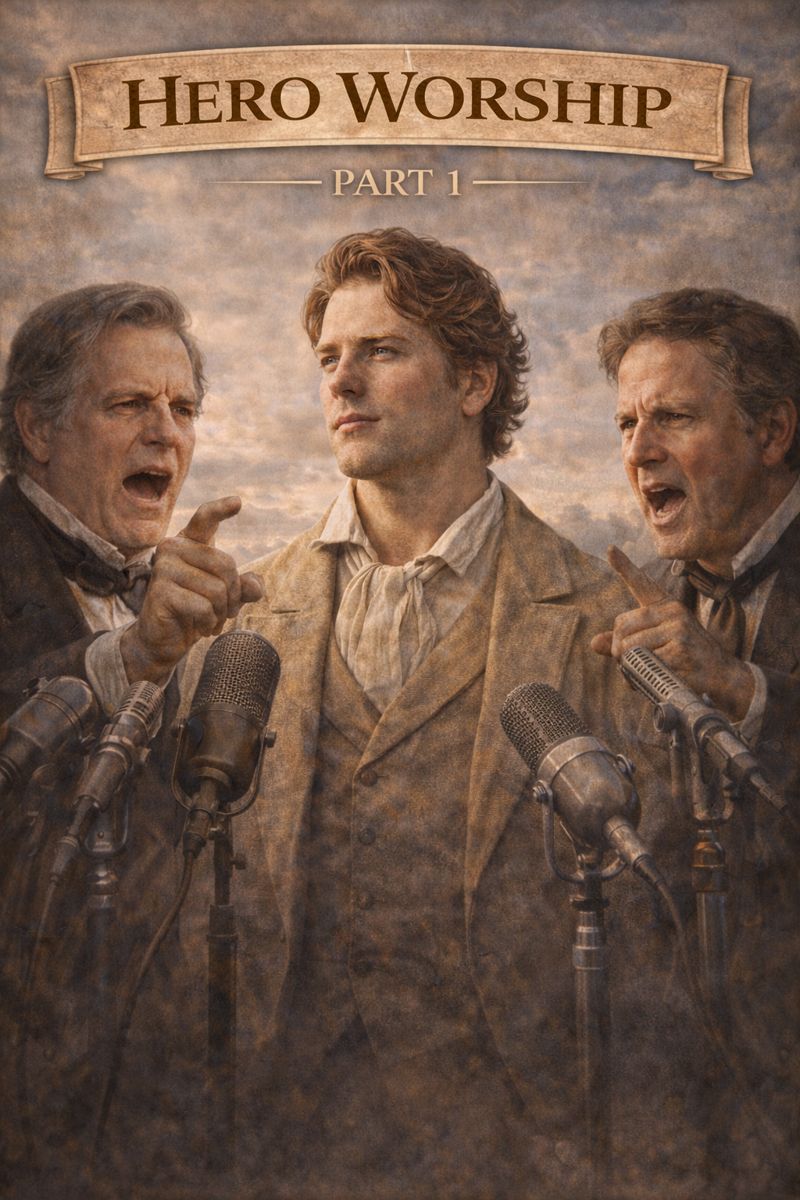
This episode begins with a listener’s question about whether animals have an afterlife and eventually transitions into a doctrinal exploration of hero worship, prophetic authority, apostasy, and the Lord’s revealed system for preventing spiritual deception. Although these subjects seem unrelated at first glance, both center on foundational Latter-day Saint teachings about the nature of spirits, the resurrection, the structure of divine authority, and the dangers that arise when mortal voices are elevated above Christ or His appointed prophets.
Animals, Spirits, and Resurrection
The first topic addressed is the doctrinal question of whether animals possess spirits and whether they will be resurrected. Doctrine and Covenants 77 makes this point unambiguously clear. The Lord explains that the spirit of man was created in the likeness of his physical body, and then adds that this is equally true “of the spirit of the beast, and of every other creature which God has created.” The revelation further teaches that animals have spiritual forms resembling their physical forms, that they were created spiritually before they were created physically, and that they will enjoy “eternal felicity” in the world to come. The Prophet Joseph Smith confirmed this interpretation. Teaching in April 1843, he declared that the beasts John saw in heaven were real animals, actually living in the presence of God. Their presence in John’s heavenly vision demonstrates that animals participate in the immortal world just as humans do. Modern Church teachings remain fully consistent with the revelations of Joseph Smith. An official Church article in Gospel Living affirms that animals have spirits and will “enjoy eternal happiness and joy in their resurrected bodies.” Thus, according to revealed doctrine, animals exist eternally, are resurrected, and participate joyfully in the celestial future.
Christ as the Only True Object of Devotion
The second major doctrinal theme is hero worship. The discussion draws upon Bishop W. Christopher Waddell’s General Conference message “More Than a Hero,” which warns of the dangers of elevating any mortal figure—whether a politician, celebrity, athlete, musician, influencer, religious commentator, or online personality—above the Savior or His living prophets. The fundamental truth is that Christ alone deserves complete devotion. Any mortal “hero” who displaces Christ or distracts from prophetic teachings becomes a spiritual stumbling block, much like the golden calf crafted in the wilderness by ancient Israel. Modern culture provides endless opportunities to replace divine loyalty with human fascination, and the prophets warn that this form of idolatry can subtly corrode discipleship.
Apostasy and the Danger of Aspiring Men
Joseph Smith frequently warned the Saints about ambitious individuals—“aspiring men”—whose charisma or personal confidence caused them to elevate themselves above divine authority. The Nauvoo Relief Society Minutes record Joseph’s concern that certain “great big elders” had caused serious trouble among the Saints. He described the pattern: such men received private instruction from him, and then, instead of acknowledging the prophetic source, they proclaimed Joseph’s teachings as if they were personal revelations. Their goal was not to build Zion, but to elevate themselves. Joseph warned the Saints that “we have a subtle devil to deal with,” and that only humility can restrain the adversary’s influence. In the Council of Fifty, Joseph expanded on this theme. He taught that councils must exhaust their own wisdom in order to recognize their dependence on God; otherwise, men begin to imagine themselves “as wise as God,” eventually placing their “foot on the necks of others.” Joseph identified this as the root of countless apostasies throughout history, remarking that “there has always been some man saying, ‘I am the great I.’”
The Revealed Pattern of Prophetic Authority — Doctrine and Covenants 43
The Lord provided the definitive doctrinal safeguard against deception in Doctrine and Covenants 43. The revelation declares that only the living prophet—the one appointed by God—receives commandments and revelations for the entire Church: “There is none other appointed unto you to receive commandments and revelations until he be taken.” Even in the event of the prophet’s removal, “none else shall be appointed… except it be through him.” This eliminates the possibility of unauthorized spiritual movements rising in competition with prophetic leadership. No visionary claimant, charismatic teacher, political personality, podcaster, blogger, or online commentator can receive revelation for the Church. No angelic visitation to a separate individual can override the Lord’s order of revelation. The purpose of this system is stated plainly: “that you may not be deceived.” The Lord establishes a precise, orderly, protective structure to preserve unity and prevent ambitious individuals from leading disciples astray.
Modern Application of These Principles
These principles apply directly to modern spiritual challenges. Some members today elevate public personalities, commentators, ideological figures, or intellectual influencers above prophetic counsel. This can occur across political, social, and ideological lines. Others attach themselves emotionally to secondary voices and become critical of the Church when prophetic teachings contradict their preferred worldview. Some groups even claim new prophets or new revelations through private visions—precisely the pattern forbidden in Doctrine and Covenants 43. The Lord’s law remains absolute: no one receives revelation for the Church except the living prophet, and no private spiritual experience can override prophetic authority. Discipleship requires anchoring faith in Christ and His prophets, not in personalities or alternative spiritual voices.
Conclusion
The doctrinal teachings of this episode reaffirm several foundational truths. First, animals have spirits and will be resurrected, as revealed in Doctrine and Covenants 77 and confirmed by Joseph Smith and modern Church teachings. Second, Christ alone is worthy of complete devotion; elevating mortal figures above Him is a subtle form of spiritual idolatry. Third, apostasy follows a consistent pattern throughout history: aspiring individuals use charisma and personal influence to elevate themselves above prophetic authority. Fourth, the Lord has established a precise order of revelation—only the living prophet receives commandments for the Church, ensuring that members are not deceived. And fifth, discipleship requires humility, submission, and unwavering loyalty to Christ and His prophets, not to cultural heroes or ideological movements.
Hero Worship (Part 2)
Hero Worship as a Spiritual Threat
The doctrinal center of the conversation focuses on Bishop W. Christopher Waddell’s General Conference teaching “More Than a Hero.” He warns that reverence for public figures—whether political leaders, commentators, activists, influencers, or entertainers—can easily become a form of idolatry. Any loyalty that displaces or distorts allegiance to Jesus Christ creates spiritual danger. The golden calf in Exodus remains the symbolic example of this error: people replacing divine guidance with a mortal object of fascination. The only rightful recipient of absolute devotion is Christ.
Joseph Smith’s Warnings About Aspiring Men
Joseph Smith’s teachings reveal that apostasy has a clear and repeating pattern. Throughout early Church history, certain men—educated, charismatic, or politically ambitious—believed themselves more qualified to direct the Church than the prophet. These “aspiring men,” as Joseph called them, repeatedly attempted to undermine prophetic authority. In the Nauvoo Relief Society Minutes, Joseph described how such individuals received private instruction from him and then proclaimed those teachings publicly as if they were their own revelations. He warned the Saints that ambition, self-elevation, and pride were persistent dangers, and that only humility could curb the “subtle devil” who instigates such spiritual rebellion.
The Council of Fifty and Insights on Apostasy
In the Council of Fifty, Joseph provided further doctrinal clarity. He taught that councils must deliberately exhaust their own human wisdom in order to recognize its limits. If they did not, they risked repeating Lucifer’s ancient error—believing themselves “as wise as God.” Some men, Joseph said, inevitably try to place their “foot on the necks of others,” attempting to dominate or direct the Church according to their personal judgments. He summarized the recurring pattern with a simple observation: “There has always been some man saying, ‘I am the great I.’” This historical insight explains why apostasy continually emerges on the margins of the Church.
The Doctrinal Foundation — Revelation Through the Prophet Alone
Doctrine and Covenants 43 provides the doctrinal foundation governing revelation within the Church. The Lord declares that there is only one appointed to receive commandments and revelations for the entire Church, and that no one else may be appointed except through that prophet. This permanently excludes all rival claimants—charismatic teachers, activists, influencers, bloggers, podcasters, political leaders, or self-proclaimed prophets who claim private revelations for the Church. Even claims of angelic visitations cannot circumvent this revealed order. The purpose, the Lord says, is “that you may not be deceived.” The law of revelation is protective, preventing the Saints from being misled by ambitious or persuasive personalities.
Modern Application: Politics and Ideology
The doctrinal principles extend directly into modern political and ideological environments. Strong political loyalty or social passion can tempt members to value their political identity above prophetic counsel. When prophetic teachings contradict a beloved ideology or political figure, some disciples experience spiritual conflict and may even turn against the Church. Hero worship—whether of politicians, commentators, or ideological leaders—creates a competition between discipleship and secular loyalty. The spiritual test is clear: when prophetic direction conflicts with personal ideology, whom do disciples follow?
Brigham Young’s Counsel During Political Conflict (1848)
A historical example illuminates this principle. In 1848, as the Saints were scattered across Iowa on their westward migration, political tensions arose between Orson Hyde, a Whig, and Almon Babbitt, a Democrat. Their political conflict escalated into a Church dispute, prompting Hyde to discipline Babbitt. Brigham Young responded sharply. He declared that the Church cared “not one groat” for political differences and insisted that no one must ever bring “priesthood into political Gentile warfare.” To Brigham, the unity of the Saints mattered more than political victory. He taught that political systems are corruptible and that it is better for a political system to fail than for even one Saint to be spiritually harmed.
Joseph Smith on Political Ambition and Divine Calling
Joseph Smith’s teachings in 1843 reinforce the same doctrine. He wrote that he would never compromise his prophetic calling for political influence. “Shall I who have communed with angels stoop to be a political hypocrite? No, verily no.” Joseph warned that political ambition could corrupt spiritual identity and lead prophets or disciples to become tools of political manipulation—“a monkey’s catspaw.” He insisted that he confronted the “errors of ages” with uncompromising “diamond truth.” In a message to governments and rulers, Joseph declared that the only path to divine favor is to “execute justice and judgment, that God may bless you.”
The Test of Discipleship — January 1844
In January 1844, Joseph Smith taught that many Saints collapse spiritually when revelations challenge their traditions. “They will fly to pieces like glass as soon as anything comes contrary to their traditions.” This doctrinal insight reveals that true discipleship requires willingness to abandon prior beliefs when the Lord reveals greater truth. Joseph tied this principle to exaltation: “Any person who is exalted must abide the whole celestial law.” Thus discipleship demands sacrifice—not merely of sins, but of cherished opinions, political loyalties, intellectual pride, and deeply rooted cultural assumptions.
Sacrifice of Personal Will
The doctrinal message of the episode concludes with Christ’s requirement that disciples sacrifice their personal wills. Submission to prophetic counsel is a demonstration of loyalty to the Savior. Discipleship demands trust, humility, and willingness to place the kingdom of God above every earthly affiliation. Christ taught this principle in Luke 9:24: “Whosoever will lose his life for my sake, the same shall save it.” The Lord calls on His followers to anchor their lives not in cultural or ideological heroes, but in His living prophets and in His eternal gospel.
Listen to the full podcast here:
https://www.youtube.com/@standardoftruthpodcastllc