
Introduction
This episode addresses several historical and doctrinal questions posed by participants on a Church history tour. The focus is on clarifying early Church history events, priesthood restoration timelines, Latter-day Saint marriage norms in the 19th century, offshoot movements after Joseph Smith’s death, and how faithful historians process difficult or unfamiliar historical information.
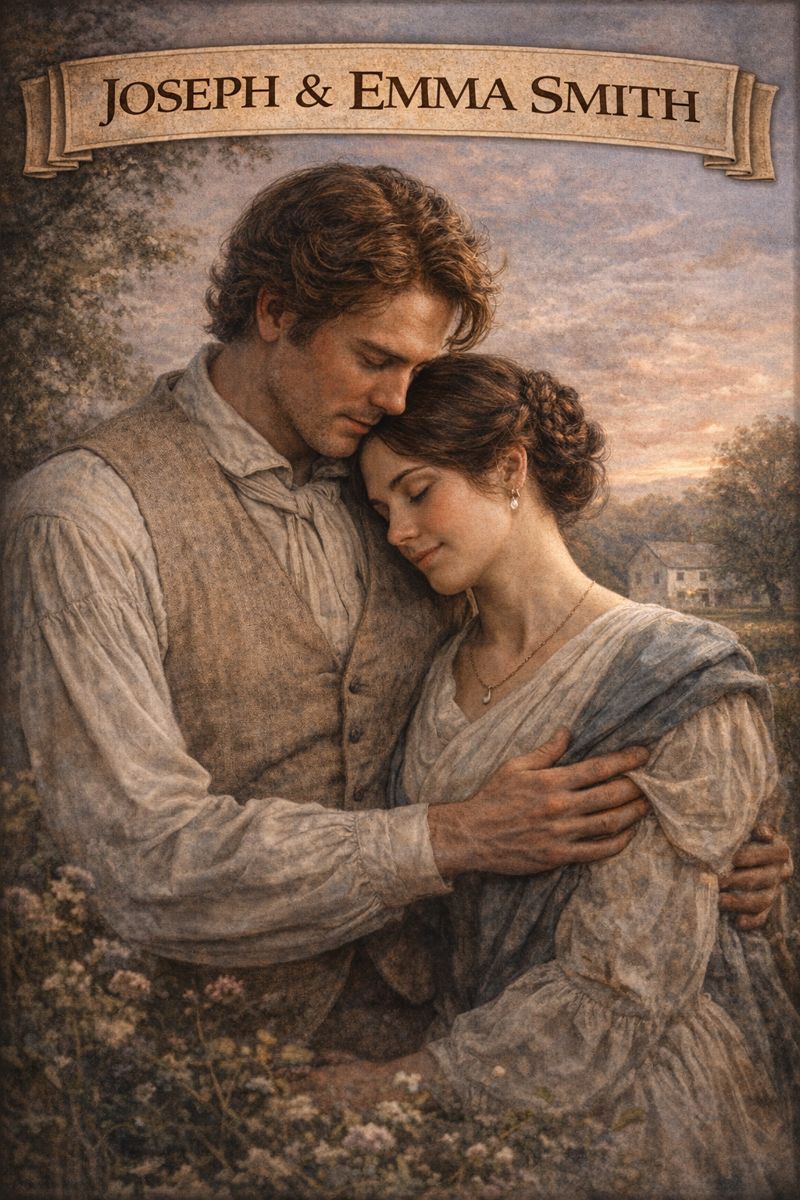
Joseph and Emma Smith’s Relationship (1827–1841)
Marriage Context
In the 19th century, marriage was typically based less on romantic idealism and more on shared values, religious compatibility, stability, and family considerations.
Expressing romantic affection publicly was uncommon and considered improper.
Emma later stated that when Joseph proposed, she “had no intention of marrying when I left home,” but that “preferring him to any other man I knew, I accepted.”
This reflects the norms of the time and is not a joke or minimization of affection.
Shared Trials
Joseph and Emma’s shared hardships significantly strengthened their bond.
Their letters show deep affection and emotional reliance on one another.
Difficult experiences (persecution, poverty, loss of children, displacement) contributed to profound mutual devotion.
Restoration of the Priesthood: Aaronic and Melchizedek
Aaronic Priesthood
The Aaronic Priesthood was restored by John the Baptist on May 15, 1829.
The date is known because Oliver Cowdery recorded it in a letter.
No independent Joseph Smith record survives giving this date.
Melchizedek Priesthood
The exact date of the Melchizedek Priesthood restoration (by Peter, James, and John) is not known.
This is due to the lack of daily documentation from that period.
What We Do Know
From Doctrine and Covenants 27 and 128:
Peter, James, and John ordained Joseph and Oliver as apostles.
They conferred upon them:
The Keys of the Kingdom
Authority of the dispensation of the fulness of times
Apostolic authority
Priesthood necessary to organize and lead the Church
Location
D&C 128 specifies the event occurred:
“in the wilderness between Harmony, Susquehanna County, and Colesville, Broome County, on the Susquehanna River.”
Timing
Traditional assumptions place it between May 15 and early June 1829, but this is not certain.
Joseph often traveled between Harmony and Fayette that year, and the historical record for 1829 is sparse.
Additional Related Event
Joseph and Oliver also experienced a manifestation in the Whitmer home in Fayette, where the voice of the Lord instructed them to ordain each other as elders.
This event is connected to the unfolding restoration of the Melchizedek Priesthood (D&C 128:21).
Conclusion
The exact date cannot be determined, but the restoration clearly occurred before the organization of the Church on April 6, 1830, since apostolic authority was required to organize the Church.
Early Latter-day Saint Offshoot Movements After Joseph Smith’s Death
Numerous groups formed after Joseph Smith’s death, though defining how many depends on criteria—some emerged immediately, others developed years later.
Major Early Claimants (1844)
Sidney Rigdon
Claimed the right to lead as a surviving member of the First Presidency.
James Strang
Claimed a letter of appointment and attracted many members, especially outside Nauvoo.
William Marks
Briefly formed a faction but did not sustain a lasting movement.
William Smith
Eventually organized his own church after leaving the main body.
Other Notable Groups
Lyman Wight
Led a group to Texas, initially with permission to travel but later broke away.
Alpheus Cutler
Formed the “Cutlerites” after disagreements at Winter Quarters.
Later movements (e.g., RLDS/Community of Christ, fundamentalist offshoots) descend from earlier disputes but are not all immediate 1844 branches.
Summary
There were dozens of offshoots, most small and short-lived.
Many drew converts from branches outside Nauvoo, where members were less familiar with Nauvoo teachings such as temple ordinances and plural marriage.
How a Faithful Historian Processes New or Difficult Information
Joseph Smith taught and exemplified that faith requires:
patience,
continued seeking,
willingness to accept revelation not yet fully understood (see D&C 21).
Faith Does Not Require Perfect Historical Knowledge
New information—controversial or unfamiliar—does not nullify prior spiritual experiences.
Belief in Joseph Smith’s calling is grounded in revelation from the Holy Ghost, not in possessing exhaustive historical data.
Historical Gaps Are Normal
Early Church records are incomplete, especially 1828–1830.
The absence of a record does not imply the absence of an event.
Historical Context Matters
Some troubling accounts disappear once examined in original context.
Many anti-Church sources quote documents inaccurately or without context.
The Brigham Young Example
Brigham Young struggled deeply with the “Vision” (D&C 76), stating he:
“did not reject it, but I could not understand it.”
He prayed and sought revelation until he received confirmation of its truth.
Faithful Inquiry
A faithful historian:
examines sources carefully,
acknowledges uncertainty,
seeks answers where possible,
accepts that not all things are revealed yet,
and holds to truths confirmed by the Spirit.
Faith remains anchored in spiritual revelation, not in the absence of unanswered questions.
Listen to the full podcast here:
https://www.youtube.com/@standardoftruthpodcastllc