
Latter-day Saint Doctrine of Angels in Historical Context
Latter-day Saint doctrine teaches that angels are not a separate class of beings but human beings at different stages of eternal progression—either resurrected or awaiting resurrection. From Moroni’s visit in 1823 to Doctrine and Covenants 129, Joseph Smith clarified that angels are “resurrected personages” or “spirits of just men made perfect.” Moroni himself exemplified this teaching as an ancient prophet appearing as a glorified being. The Restoration thus affirmed that angels are real humans in a perfected state, not symbolic or mythic figures.
Traditional Christian Views of Angels
In contrast, the mainstream Christian tradition inherited from early creeds and church fathers maintains a sharp division between angels and humans. In that worldview, angels are an entirely separate order of creation, made by God out of nothing, never mortal, and never embodied in the way humans are. Humanity belongs to one order of beings, and angels to another, with no overlap possible. The idea that a deceased prophet such as Moroni could appear as a heavenly messenger is entirely foreign to traditional theology. This difference explains why Latter-day Saint claims about angelic visitations sounded so unusual to Joseph Smith’s contemporaries: nothing comparable existed within their doctrinal structures.
Premortal Life and the Nature of Spirits
Latter-day Saint doctrine teaches a premortal existence in which all humans lived as spirit children of God, including Jesus Christ and Lucifer. The “war in heaven” was thus a rebellion among premortal spirits, not a conflict among a separate class of angels. Traditional Christianity rejects this framework, viewing Jesus as the uncreated God and Satan as a created angel. As a result, Christians oppose the idea that Jesus and Lucifer are “brothers,” while in the Restoration worldview the term simply reflects shared premortal parentage.
Joseph Smith’s Teachings Concerning Angels
Joseph Smith continually expanded the doctrine of angels, teaching that resurrected angels have tangible bodies, as Christ taught after His resurrection. Many heavenly messengers of the Restoration—such as Moroni, John the Baptist, and Peter, James, and John—were resurrected beings. He also taught that some angelic ministers are righteous spirits not yet resurrected, who minister without deception and do not take the hand of mortals. Joseph contrasted these with evil spirits, which can appear as angels of light. He recounted an encounter with Lucifer near the Susquehanna River that was exposed by Michael the Archangel, shaping his teachings on discerning spirits.
Discerning True Angels from False Manifestations
Doctrine and Covenants 129 reflects Joseph’s practical instruction on identifying angelic visitors. A resurrected angel will take the hand of a mortal, and the contact will be physical and unmistakable. A righteous spirit will refuse to take the hand, for such spirits do not possess bodies and will not attempt deception. An evil spirit, however, will extend the hand and produce no physical sensation. This test grew out of Joseph’s encounters with false spiritual manifestations and established the principle that genuine heavenly beings do not disguise themselves nor imitate the divine in deceptive ways.
Angels Assigned to This Earth
Further revelation clarified that all angels ministering to this earth are beings who belong to it. Doctrine and Covenants 130:5 declares that no angel ministers here except those who have lived, or will yet live, upon this earth. This doctrine situates humanity within one eternal family and positions angelic ministry as part of the ongoing work of God conducted by His children. Every angel who participated in the Restoration—from Moroni to John the Baptist to Peter, James, and John—was tied to the human family of this world.
Historical Depictions of Angels in Early Christianity
Historical evidence from early Christian art reinforces the Latter-day Saint understanding that angels were originally depicted as humanlike beings. Studies of third- and fourth-century Christian artwork show that early Christians portrayed angels without wings, indistinguishable from ordinary men except through context. Wings appeared only after Christianity became widely established and visually symbolic needs arose, particularly for a largely illiterate population. What had once been understood as radiant human messengers became represented through winged imagery, not because early Christians believed angels literally had wings, but because wings provided a practical artistic shorthand.
Summary: Two Divergent Theologies of Angels
The Latter-day Saint doctrine of angels presents a coherent and interconnected framework: angels are resurrected or premortal/postmortal humans; they belong to this earth; priesthood keys are restored by resurrected beings; and angelic ministrations continue into the modern era. Traditional Christianity, shaped by creeds and centuries of theological development, views angels as a separate creation altogether, with no relation to the human family and no possibility of human beings ever becoming angels. These contrasting theologies illuminate why the Restoration’s claims—particularly Joseph Smith’s assertion that ancient prophets appeared to him—were so theologically disruptive to the Christian world of the nineteenth century.
Listen to the full podcast here:
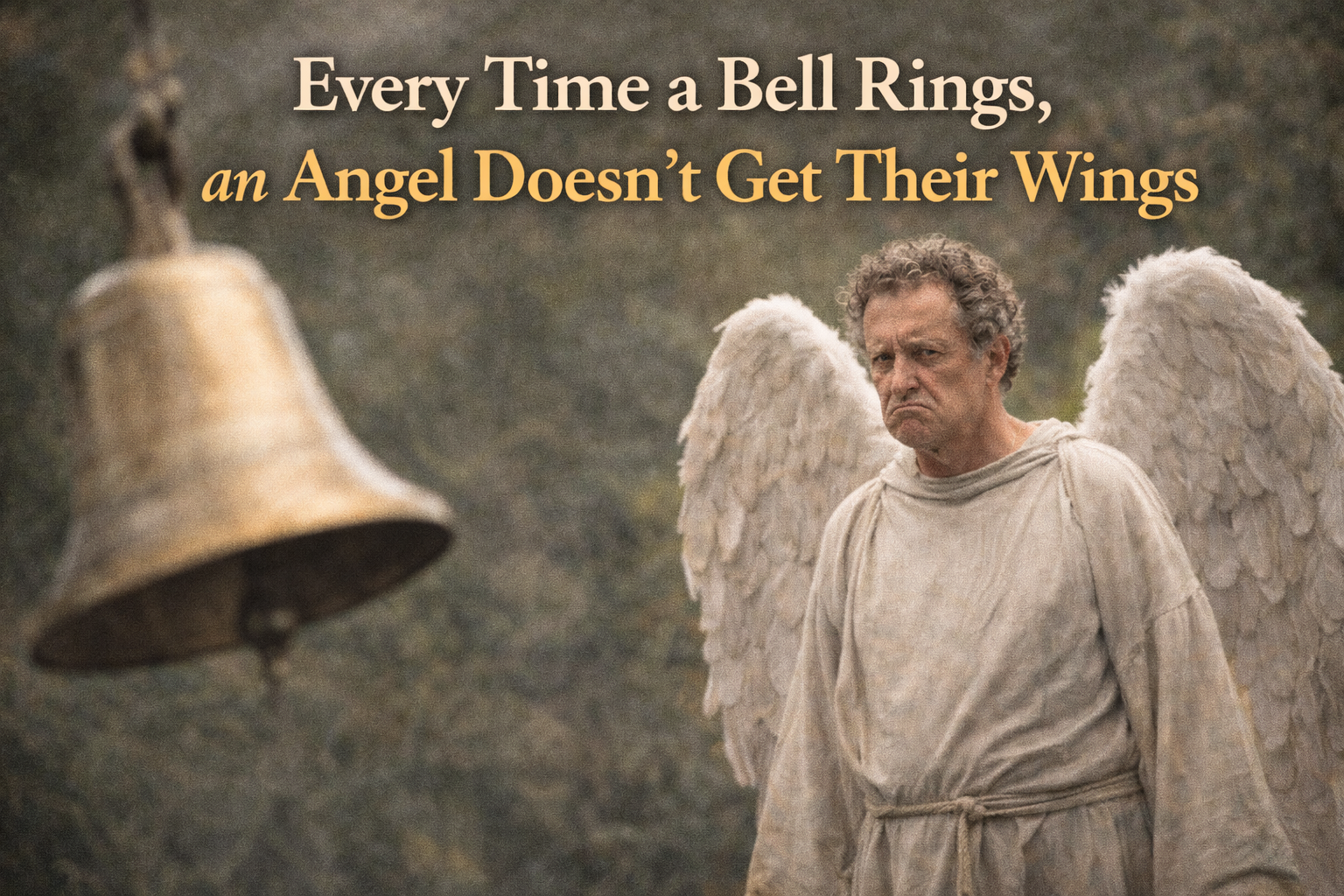
Season 3, Bonus Episode 4 – Every Time A Bell Rings, An Angel Doesn’t Get Their Wings