
Continuing Revelation and Prophetic Authority in Early Latter-day Saint History
Early Crises of Revelation (1830–1831)
In the first year after the organization of the Church of Jesus Christ of Latter-day Saints (April 1830–April 1831), church leaders faced repeated crises over revelation and prophetic authority.
This example demonstrates continuing revelation in early church history.
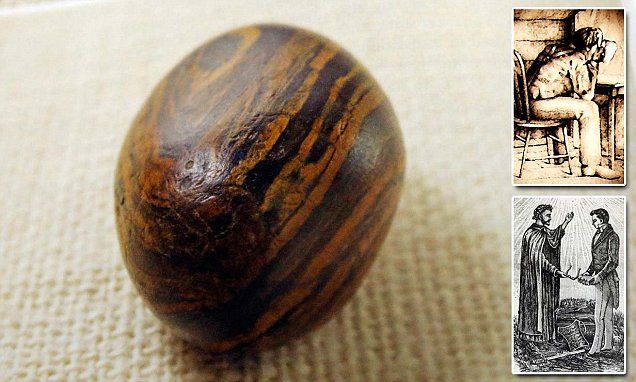
One early instance involved Hiram Page, who used a seer stone and believed he was receiving revelations for the church. Members of the Whitmer family and other close associates accepted these revelations as genuine and circulated them. According to later sources, Page’s writings included directions that contradicted Doctrine and Covenants 20 and gave specific claims about the location of the city of Zion.
Doctrine and Covenants 28 and the Hiram Page Stone
Doctrine and Covenants 28 was received in this context. In that revelation, the Lord declared that the revelations Page was receiving through his stone were not from God but from Satan, and reaffirmed that only Joseph Smith was appointed to receive commandments and revelations for the church.
Page submitted to the correction, his revelations were burned, and, in a highly symbolic act described by Emer Harris, the stone itself was crushed so it could no longer be used. Hiram Page remained a member of the church for some time thereafter and only later left with members of the Whitmer family during later controversies in Kirtland and Missouri.
The Case of Leman (Liza) Hubble and Doctrine and Covenants 43
Not long after, when the Saints gathered in Ohio, a similar difficulty arose with a woman commonly identified as Leman (or Liza) Hubble. She professed to be a prophetess, claimed many revelations, and sought to become a teacher in the Church of Christ.
John Whitmer recorded that she deceived some members who could not detect her hypocrisy. Joseph Smith’s history describes her as a woman who came with “great pretensions” to revealing commandments, laws, and other matters, which led him to inquire of the Lord. The result was Doctrine and Covenants 43.
Doctrine and Covenants 43 further clarified that commandments and revelations for the church would come only through “him whom [the Lord had] appointed,” and that no other person would be appointed to that role except through Joseph Smith himself, even in the event that Joseph were taken or fell.
Revelation Must Come Through the Appointed Prophet
The revelation commanded the Saints that they were not to receive the teachings of any who claimed revelations or commandments for the church unless they came through the Lord’s appointed prophet. It established that one who is truly ordained of God “shall come in at the gate” and teach the revelations already given and those that would be received through the appointed prophet.
The Brewster Family and the “Lost Books of Esdras”
Other episodes followed the same pattern. In Kirtland, the Brewster family claimed that their son was receiving by revelation the “lost books of Esdras” of the Bible. They wrote out these supposed revelations and persuaded many who were eager for more scripture.
According to Joseph Smith’s journal, after meeting with the boy and examining the claims, Joseph concluded that the Brewster boy “never had any revelation,” identifying these productions as false.
Lorenzo Snow’s Personal Revelation — A Contrast
A contrasting historical example of personal revelation is found in the life of Lorenzo Snow.
Early in his church experience, he received a powerful impression that God had once been a man and that humans could become like God. At the time, this idea was considered deeply blasphemous in broader Christian thought, where the doctrine of the aseity of God held that God had always been God, with no period of “becoming.”
Snow shared this impression privately with his sister, Eliza R. Snow, and otherwise kept it to himself, recognizing it was not his place to declare new doctrine for the church.
Later, when Joseph Smith publicly taught this doctrine, Snow felt immense relief, finally hearing from the prophet what he had previously received only as a private impression.
Revelation and Authority in Benson, Vermont (1833)
A similar issue of authority and order in revelation arose in Benson, Vermont, in 1833.
Jared Carter shared the Book of Mormon with his brother John Carter, a minister. John accepted the message, preached it, and most of his congregation joined the church, forming a large branch in rural Vermont.
Problems began when Jane Sherwood claimed to receive visions and revelations. At first, her visions affirmed basic truths, but soon she issued directions beyond Joseph Smith’s teachings, including when the branch should move to Zion.
Unsure, John Carter wrote to Joseph Smith.
Joseph Smith’s 1833 Letter Clarifying Revelation
Joseph’s reply laid out key principles:
- The church is not “bound to receive any revelation from any one man or woman” unless they are legally appointed to that authority.
- It is “contrary to the economy of God” for members to receive instruction for those above them.
- Any genuine heavenly vision is for the individual’s benefit — not for directing the church.
- “The fundamental principles, government, and doctrine of the church” reside in those who hold the keys.
Orson Hyde’s Teachings on Jesus’ Marriage
Another example concerns Orson Hyde, apostle and sometime president of the Quorum of the Twelve.
In the nineteenth century, Hyde taught that Jesus had been married. Though some early Saints accepted it as logical, it never became official doctrine. Later leaders did not continue the teaching, illustrating that not every statement by church leaders becomes binding doctrine.
Prophetic Clarification and the Word of Wisdom
Historical questions about the Word of Wisdom also reveal how prophetic clarification works.
The revelation (Doctrine and Covenants 89) uses the phrase “hot drinks” without naming tea or coffee. In the nineteenth century, some members tried alternate interpretations.
Brigham Young clarified that in their culture “hot drinks” referred specifically to tea and coffee. Over time, prophetic and apostolic teaching consistently emphasized abstaining from alcohol, tobacco, tea, coffee, and harmful drugs — the interpretation followed today.
Samuel the Lamanite and Scriptural Patterns of Rejecting Prophets
The Book of Mormon also provides patterns.
Helaman 13 recounts Samuel the Lamanite preaching against the Nephites’ wickedness. Samuel condemned them for rejecting prophets while claiming they would not have slain earlier prophets.
Samuel declared that if a true prophet testified of their sins, they would call him false and try to destroy him — but if a flattering teacher told them to “do whatsoever [their] heart desireth,” they would receive and honor him.
Central Theme: Revelation Belongs to the Prophet
Across these episodes — Hiram Page, Leman Hubble, the Brewster boy, Jane Sherwood, Lorenzo Snow’s insight, Orson Hyde’s speculation, and Samuel the Lamanite — the historical record returns to one central theme:
- Revelation for the entire church comes only through the prophet who holds the keys of the kingdom.
- Personal revelation is real but applies to the individual, not the church.