
Two Main Topics in the Episode
This episode examines:
The historical background of the second anointing, a sacred temple-related ordinance occasionally mentioned in early journals.
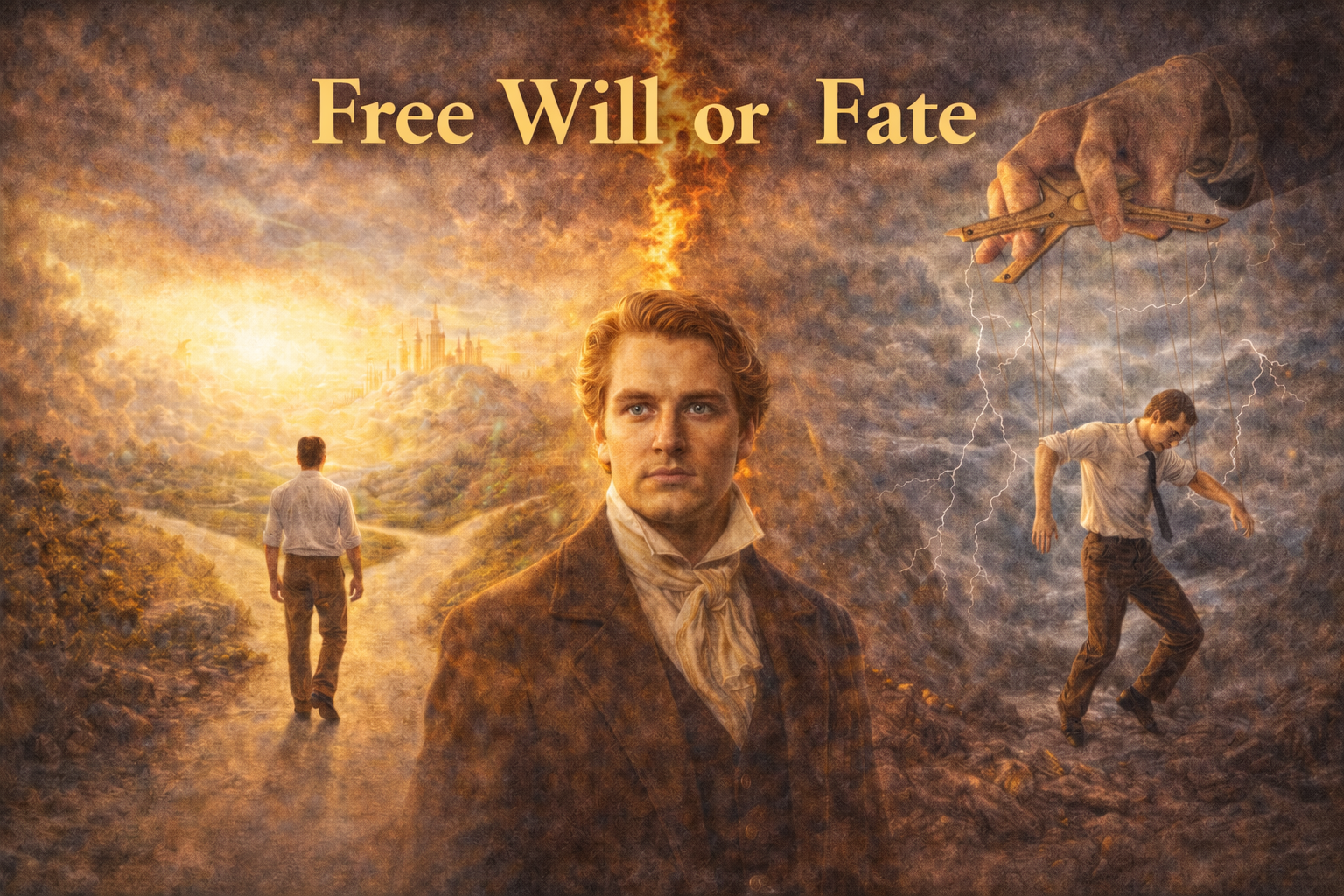
The relationship between God’s foreknowledge and human agency, and how Restoration doctrine addresses questions long debated in Christian theology.
The discussion relies on historical sources and prophetic teachings, without revealing any sacred ritual details.
The Second Anointing in Early Church History
Early evidence, especially from Nauvoo, shows that:
Joseph Smith introduced additional temple ordinances for a small group of trusted Latter-day Saints.
These ordinances were recorded in private journals of leaders like Wilford Woodruff.
Examples (summarized from Woodruff’s journal, early 1844)
Entries note meetings of the Twelve where individual apostles (e.g., Orson Hyde, Orson Pratt) “received [their] second anointing.”
Historical conclusions
The ordinance was real and historically practiced.
It was selective and sacred, not widespread.
Knowledge of it today comes largely from preserved personal journals, not from public discourse at the time.
Misuse by Critics and Apostate Groups
Some critics and breakoff movements:
Publicize references to the second anointing to:
Suggest the Church is hiding “secret” ordinances, or
Argue that leaders have changed or corrupted original practice.
Claim they possess the authority to administer such ordinances independently.
These arguments:
Rest on partial information and speculative assumptions.
Contradict the established order of priesthood keys and authority in the restored Church.
The episode emphasizes that such uses are misrepresentations of a historical, sacred ordinance.
Sacredness and Appropriateness of Public Discussion
Temple ordinances:
Are sacred, not secret for entertainment or controversy.
Are not topics for detailed public explanation.
Are governed by priesthood keys held by living prophets and apostles.
Doctrinal reassurance
No ordinance essential for salvation or exaltation will be permanently withheld from any faithful child of God.
God is perfectly just; all necessary ordinances will be made available—either in mortality or in the spirit world.
Therefore, members do not need to fear that some hidden ceremony might block their eternal progression.
Historical Christian Debate: Free Will vs. Divine Foreknowledge
For many centuries, Christian thinkers wrestled with questions such as:
If God knows everything in advance, are human choices still real?
Is salvation predetermined, or can people genuinely choose to accept Christ?
Key Reformation figures
Martin Luther argued strongly for God’s absolute sovereignty and minimized human free will.
Later Calvinist theology developed ideas like:
Unconditional election
Predestination
Limited human freedom regarding salvation
Others, like Desiderius Erasmus, insisted that some genuine human freedom must exist, even alongside God’s perfect knowledge. The argument remained unresolved within traditional Christianity.
Restoration Teachings on Agency and Foreknowledge
Eternal Agency
Agency existed before this life (see Abraham 3).
A third part of the spirits in heaven rebelled and followed Lucifer by their own choice.
Agency is therefore an eternal reality, not something God temporarily grants and withdraws.
God’s Knowledge vs. Human Choice
God’s omniscience includes perfect foreknowledge of our choices.
However, His knowing the outcome does not cause those choices.
Prophets such as Elder Neal A. Maxwell taught that God’s foreknowledge “does not impinge upon our free agency.”
Scriptural and Prophetic Clarifications
Laman and Lemuel as an Example of Agency
They witnessed miracles, angelic rebukes, and prophetic instruction.
Despite overwhelming evidence, they repeatedly chose rebellion.
This shows that even powerful manifestations do not override agency.
Joseph Smith on Predestination
Joseph Smith taught:
The apostles in the New Testament did not preach unconditional predestination.
God “predestines” the plan of salvation, not specific individuals to salvation or damnation.
All who freely accept Christ and His gospel are destined—by the plan—to receive the blessings attached to that choice.
Original Sin and Accountability
Joseph also rejected the idea that people are condemned for Adam’s transgression:
Individuals are judged for their own sins, not for circumstances they did not choose.
God’s judgment is perfectly fair and based on each person’s genuine agency and opportunity.
Summary of the Latter-day Saint View of Fate and Freedom
In Restoration doctrine:
God
Knows all things perfectly.
Has complete foreknowledge of every choice and event.
Humans
Possess real, uncoerced agency.
Can repent, change, and grow; no one is locked into a fixed, hopeless fate.
Predestination
Applies to the plan of salvation (what blessings follow which choices).
Does not mean that specific individuals are irresistibly compelled to a particular eternal outcome.
Every child of God will receive a fully fair and adequate opportunity to accept or reject Christ and the ordinances of exaltation.
Final Summary
On the Second Anointing
Historically real, selectively given, documented in early leader journals.
Sacred, not intended for public detail or polemical use.
Frequently misrepresented by critics and apostate movements.
Not evidence of hidden, unattainable requirements for exaltation—God withholds no essential saving ordinance from the faithful.
On Free Will and Fate
The Restoration resolves long-standing Christian disputes by affirming both:
God’s perfect foreknowledge, and
Genuine human agency.
Predestination describes God’s plan, not compulsory individual destiny.
Repentance and change remain possible throughout mortality and, through Christ’s atonement, in the spirit world as well.