
Introduction
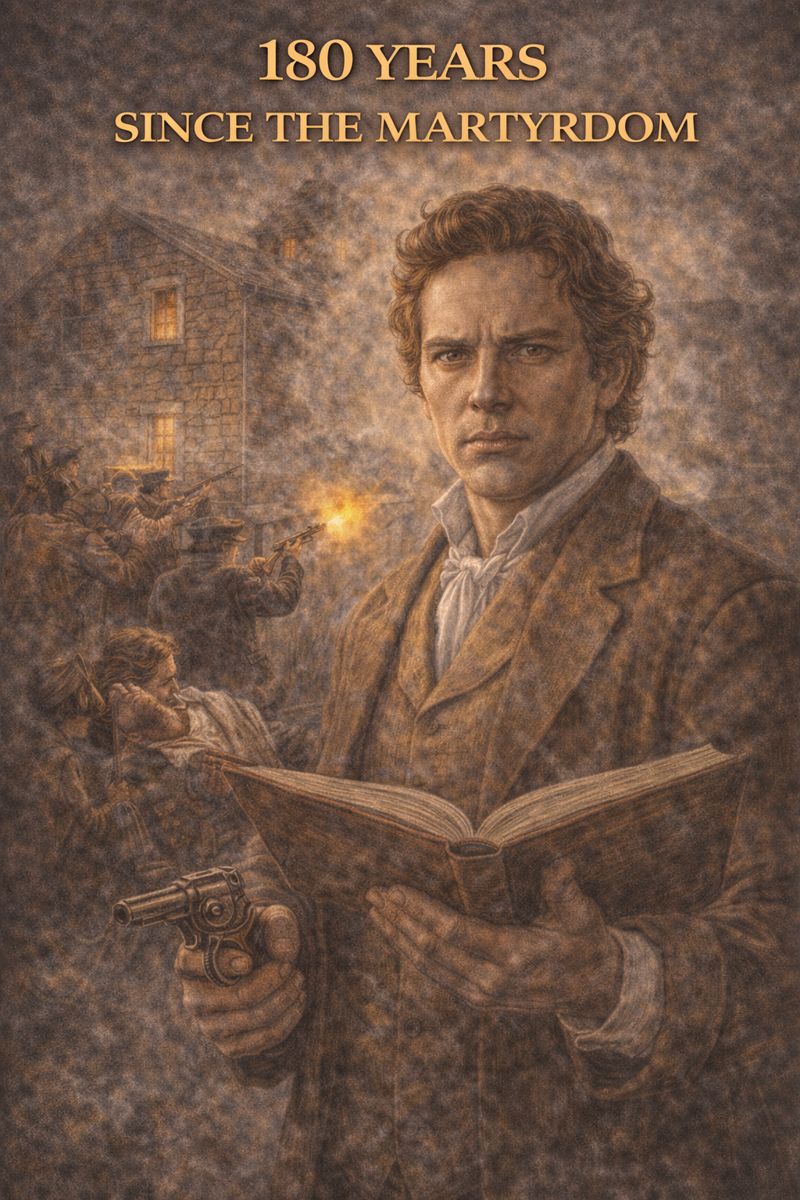
On June 27, 1844, Joseph Smith and his brother Hyrum were murdered at Carthage Jail by an armed mob. One hundred eighty years later, the episode reflects upon the historical testimonies preserved by those who were present with the Prophet in his final days. Among the most valuable preserved documents are the accounts collected by Wilford Woodruff, including the detailed recollection written by John Fulmer, who stood with Joseph and Hyrum during the last hours of their lives. Through these contemporary witnesses, we catch a glimpse of the spiritual resolve, sorrow, and foreknowledge that surrounded the martyrdom.
John Fulmer’s Account from Carthage
Fulmer’s narrative begins with Joseph and Hyrum surrendering themselves to the law, trusting the assurances of Governor Thomas Ford that they would be protected. The brothers first faced the minor charge of riot, but once they arrived in Carthage they were unexpectedly arrested again—this time for treason, a capital offense. Fulmer describes the tense moment when a militia posse arrived and marched the prisoners down the jailhouse stairs into a line of soldiers standing with fixed bayonets. Permission was eventually granted for Joseph and Hyrum to gather witnesses for their defense, and they were returned to the jail.
Fulmer reveals that he had quietly smuggled a small pistol to Joseph for protection, a gesture made in fear of mob violence. Throughout the night, Joseph, Hyrum, Willard Richards, John Taylor, Stephen Markham, and others remained together in the small room of the jail. Joseph refused to sleep on the bed and instead lay on the floor beside the men who had chosen to stay with him. Fulmer recalls Joseph speaking softly late into the night, expressing an unspoken longing to address the Saints in Nauvoo once more—words filled with a solemn weight Fulmer did not fully understand until the tragedy that followed.
The morning brought new uncertainties. Governor Ford departed Carthage and postponed the hearing while the militia was withdrawn—decisions that left the jail increasingly unprotected. Fulmer set out for Nauvoo to collect witnesses, but along the road he encountered a rider shouting the dreadful news: Joseph and Hyrum had been killed. As the word spread through Nauvoo, Fulmer described a grief unparalleled in the community’s history, a moment of sorrow and shock that marked the beginning of the Saints’ long and difficult exodus.
Teachings at the Heart of Joseph Smith’s Ministry
The episode turns from the events of the martyrdom to the teachings Joseph delivered throughout his life—doctrines that reshaped the Saints’ understanding of God and the purpose of mortality. Joseph taught that humanity are literal children of Heavenly Parents, possessing divine potential and premortal existence. He described Adam and Eve not as failures but as heroic figures who initiated the plan of salvation. He proclaimed the availability of salvation for all God’s children, including the billions who died without knowledge of Christ.
Through revelations such as Doctrine and Covenants 76, Joseph introduced degrees of glory in the resurrection, expanding the Christian landscape far beyond the traditional heaven-or-hell divide. He taught the reality of ordinance work for the dead and opened the way for temple covenants to bless those on both sides of the veil. His teachings on the spirit world were later reaffirmed in Joseph F. Smith’s 1918 revelation, confirming the ongoing labor of the righteous dead in bringing salvation to all.
Joseph’s ministry rested on his constant testimony that he had seen the Savior, spoken with Him, and received revelation directly from Him. His life ended beside his brother, but the doctrines he delivered—rooted in personal visions and divine encounters—became the foundation of the Restoration that continued after his death.
Listen to the full podcast here:
https://www.youtube.com/@standardoftruthpodcastllc
Season 4, Bonus Episode 6 – Bonus 6 – 180 Years Since the Martyrdom