
Introduction
This episode explores the origins, development, and doctrinal meaning of the Hosanna Shout in Latter-day Saint tradition. The discussion traces the ancient scriptural foundations of the word “Hosanna,” follows its early use among the Latter-day Saints, and examines how the ceremonial Hosanna Shout became part of temple dedications and significant events in the Restoration. Through the experiences of Joseph Smith, early Church leaders, and modern prophets, the Hosanna Shout emerges as one of the most sacred, symbolic, and unifying expressions of praise in the restored gospel.
The Scriptural Foundation of “Hosanna”
The word “Hosanna” comes from ancient Jewish worship, particularly from the Feast of Tabernacles. Its meaning—“Save us, we pray” or “Save us, we beseech thee”—is rooted deeply in Psalm 118, a psalm associated with rejoicing, thanksgiving, and divine deliverance. In the New Testament, the term becomes central during Christ’s triumphal entry into Jerusalem. As Jesus rides into the city, the crowds cry, “Hosanna! Blessed is he that cometh in the name of the Lord… Hosanna in the highest” (Mark 11:8–10). This cry was both a plea and a proclamation, expressing joy, acknowledgment of divine authority, and anticipation of redemption. These scriptural foundations later shaped the Latter-day Saint understanding of the Hosanna Shout as a sacred declaration directed to God and the Lamb.
Early Use of “Hosanna” in Latter-day Saint Revelation
The earliest significant use of the word in Latter-day Saint scripture appears in Doctrine and Covenants 19, given in the summer of 1829. At a moment when Martin Harris was struggling to move forward with financing the printing of the Book of Mormon, the Lord instructed him to preach repentance and to do so “with a sound of rejoicing, crying Hosanna, hosanna, blessed be the name of the Lord God.” This early command shows that “Hosanna” was understood as both a reverent plea and a joyful cry tied to divine intervention and major moments in the unfolding Restoration. It prepared the Saints to recognize Hosanna as an expression of sacred gratitude and deliverance.
The Kirtland Temple and the Origin of the Latter-day Saint Hosanna Shout
The ceremonial Hosanna Shout as it is known today originates in the Kirtland Temple period of 1836. In January of that year, as Church leaders were completing the temple and preparing for the endowment of priesthood quorums, the Twelve Apostles, the Presidents of the Seventy, and other priesthood leaders received anointings. Joseph Smith recorded that after these blessings were administered, the Saints lifted their hands and shouted, “Hosanna, hosanna, hosanna to God and the Lamb. Amen, amen, and amen.” This appears to be the earliest instance of the Hosanna Shout being performed in the structured, repeated form used in temple dedications today.
On March 27, 1836, during the dedication of the Kirtland Temple, Joseph Smith offered the dedicatory prayer now canonized as Doctrine and Covenants 109. In this prayer, he asked that the Saints might mingle their voices “singing Hosanna to God and the Lamb.” Following the prayer, Sidney Rigdon led the assembled Saints in the Hosanna Shout, repeated three times in solemn unison. This moment established the Hosanna Shout as a sacred ritual associated with temple worship, divine manifestation, and major moments in the continuing Restoration.
Heber C. Kimball’s Explanation of the Hosanna Shout
Heber C. Kimball, writing in 1862, explained that the Hosanna Shout had been revealed to Joseph Smith in connection with the Kirtland Temple endowment and that similar sacred ceremonies existed among ancient prophets and apostles. He emphasized that the shout was performed after all priesthood quorums had received anointings and were assembled in order. Kimball taught that the purpose of the Hosanna Shout was to produce unity, spiritual power, and divine protection. He stated that the shout brought blessings, invited angelic presence, and reflected the harmony of the Saints as they worshiped God together. This explanation is one of the earliest doctrinal commentaries on the meaning and significance of the Hosanna Shout.
The Salt Lake Temple Capstone Ceremony
On April 6, 1892, the Saints gathered for the laying of the Salt Lake Temple capstone, marking a major milestone in the construction of the temple. Lorenzo Snow explained that the Hosanna Shout originated with Joseph Smith and was to be used only on extraordinary occasions. He instructed the Saints to offer it with full hearts, deep gratitude, and reverence. He publicly rehearsed the words so that all might shout in complete unity.
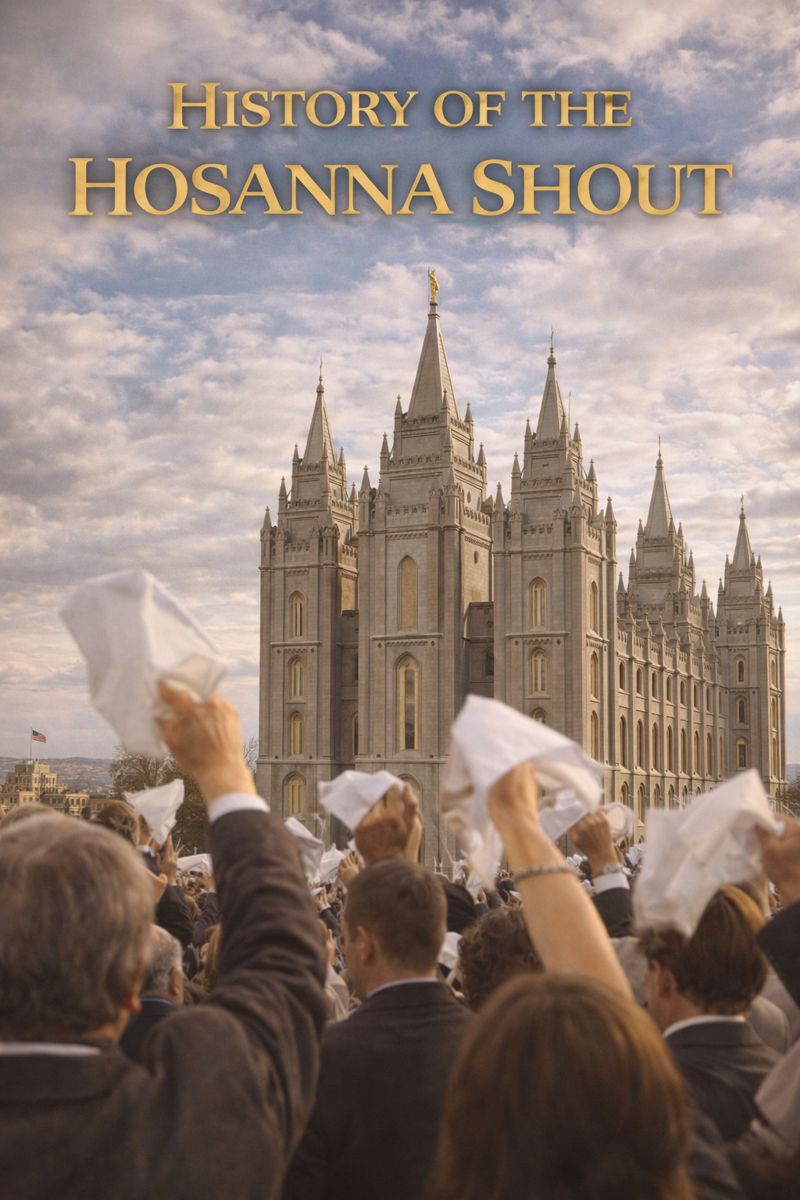
At the exact moment the capstone was lowered into place, tens of thousands of Saints raised their white handkerchiefs and shouted, “Hosanna, Hosanna, Hosanna to God and the Lamb! Amen, Amen, Amen,” repeating the sequence three times. Historical accounts describe the overwhelming spiritual unity of the moment. Snow also provided specific instruction on when to wave the handkerchiefs—on the three “Hosannas” and on the three “Amens,” but not during the phrase “God and the Lamb.” The ceremony became one of the most iconic Hosanna Shout events in Latter-day Saint history.
Wilford Woodruff’s Testimony of the Shout
President Wilford Woodruff taught that if any earthly scene draws the attention of heaven, it is the Hosanna Shout offered at the dedication of a temple. He declared that the shout reaches the eternal worlds and is heard by God, angels, and departed prophets. Woodruff testified that Joseph Smith, Brigham Young, Heber C. Kimball, and many others rejoiced in the Hosanna Shout at the dedication of the Salt Lake Temple. He emphasized the profound connection between the Hosanna Shout and the work for the dead, stating that temple ordinances for the departed constitute the most important labor of the Church. Through the shout, the Saints participate in a ritual that links heaven and earth.
The Development of the Handkerchief Tradition
Eyewitness accounts from the 1892 capstone ceremony reveal that Saints used handkerchiefs of various colors. In time, the Church standardized the use of white handkerchiefs, likely to symbolize purity and to create visual unity. Today, the waving of white handkerchiefs during the shout is a defining part of the ritual, reinforcing its solemnity and sacred symbolism.
Modern Practice of the Hosanna Shout
The Hosanna Shout continues to be reserved for only the most sacred events in modern Church practice. These occasions include temple dedications, major Restoration commemorations, and exceptional events such as the dedication of the Conference Center. Modern prophets, including Gordon B. Hinckley and Russell M. Nelson, have emphasized the sacred nature of the Hosanna Shout. It stands as a symbol of unity, a reenactment of ancient praise, a testimony of Jesus Christ, and a declaration of faith in the Restoration.
Doctrinal Purpose and Meaning
The Hosanna Shout holds deep theological significance. It honors Jesus Christ—“God and the Lamb”—and focuses the Saints’ worship on His atoning mission. It creates unity among the Saints as they shout in perfect unison. It symbolizes deliverance, echoing ancient pleas for salvation. It marks extraordinary revelatory moments in the Restoration, as the Kirtland Temple dedication demonstrated with heavenly manifestations. It links ancient Israel, early Latter-day Saint worship, and modern temple practices into one continuous tradition. And as President Woodruff taught, the shout reaches beyond mortality and is heard in the eternal world, connecting past, present, and future in a single act of sacred praise.