
Doctrine and Covenants 76 in Early Latter-day Saint Thought
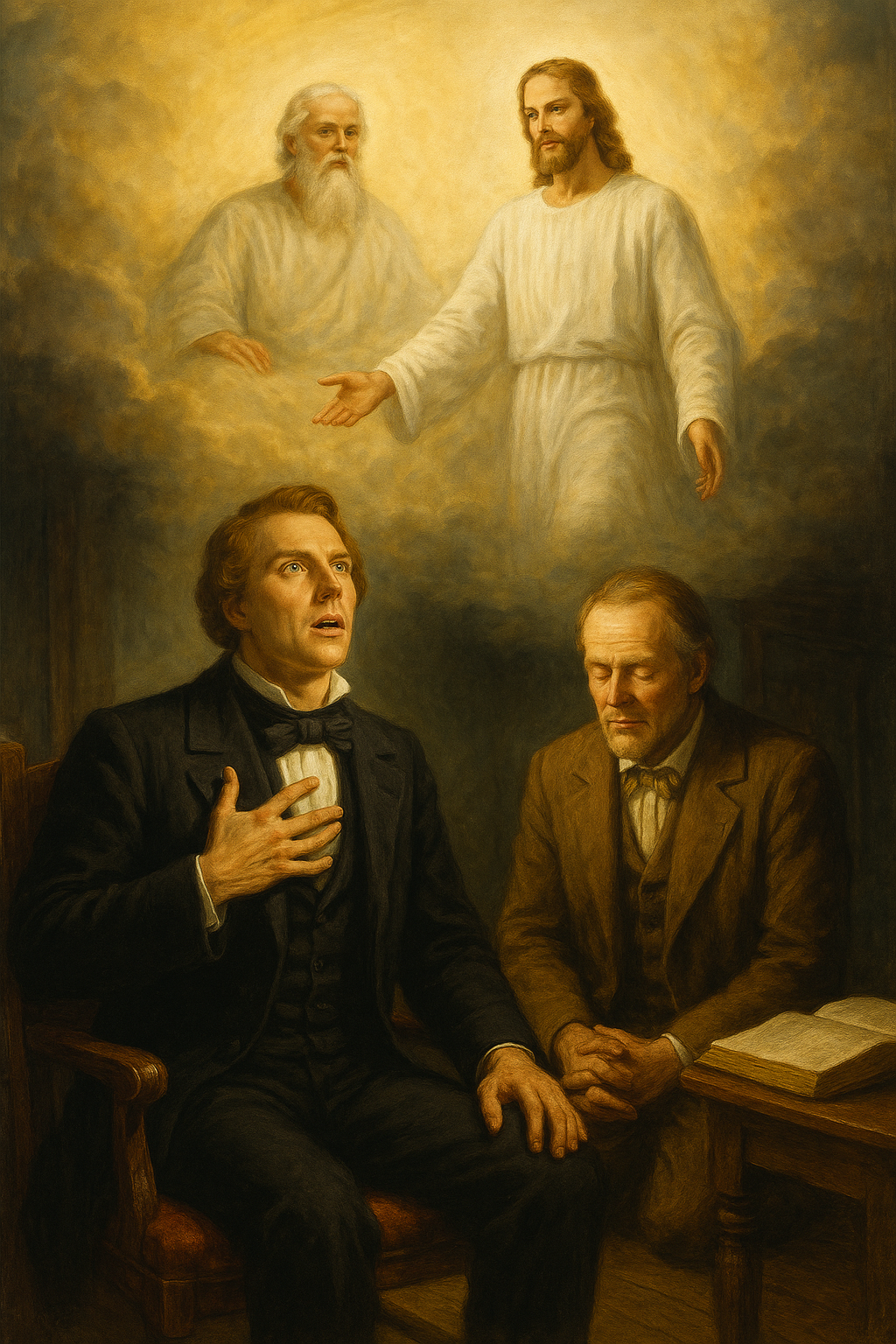
Doctrine and Covenants 76, known among early Latter-day Saints simply as “the Vision,” was regarded as one of the most important revelations ever received by Joseph Smith. In Joseph’s time, when people said “Joseph Smith’s vision,” they were usually not referring to the First Vision, but to this 1832 revelation about the afterlife, the degrees of glory, and the fate of the wicked.
The Vision is a shared revelation in which Joseph Smith and Sidney Rigdon together saw and commented on what was revealed to them. It unfolds doctrines that radically reshaped Latter-day Saint understanding of heaven, hell, and the destiny of God’s children.
Testimony of Christ in Doctrine and Covenants 76
Doctrine and Covenants 76 contains one of Joseph Smith’s most powerful testimonies of Jesus Christ:
“While we meditated upon these things, the Lord touched the eyes of our understanding and they were opened, and the glory of the Lord shone round about.
And we beheld the glory of the Son, on the right hand of the Father, and received of his fulness;
And saw the holy angels, and them who are sanctified before his throne, worshiping God, and the Lamb, who worship him forever and ever.
And now, after the many testimonies which have been given of him, this is the testimony, last of all, which we give of him: That he lives!
For we saw him, even on the right hand of God; and we heard the voice bearing record that he is the Only Begotten of the Father—
That by him, and through him, and of him, the worlds are and were created, and the inhabitants thereof are begotten sons and daughters unto God.”
This testimony sits at the heart of the Vision: Christ lives, and through Him the worlds are created and their inhabitants may become sons and daughters of God.
Satan, Lucifer, and a Real Adversary
Doctrine and Covenants 76 also teaches that Satan is a real being, not merely a symbol or abstraction of evil:
“There was an angel of God who was in authority in the presence of God, who rebelled against the Only Begotten Son, whom the Father loved and who was in the bosom of the Father, and was thrust down from the presence of God and the Son,
And was called Perdition, for the heavens wept over him—he was Lucifer, a son of the morning.
Wherefore, he maketh war with the saints of God, and encompasseth them round about.”
This reflects a consistent Latter-day Saint doctrine: a real adversary, a premortal being, seeks to destroy souls. The Book of Mormon warns that one of Satan’s tactics is to persuade people that “there is no devil,” making them less vigilant against his influence.
Degrees of Glory and Deification
Doctrine and Covenants 76 sets out three degrees of glory—celestial, terrestrial, telestial—and then outer darkness.
Regarding those who inherit the celestial kingdom, the revelation says:
“Wherefore, it is written, they are gods, even the sons of God—
Wherefore, all things are theirs, whether life or death, or things present, or things to come, all are theirs and they are Christ’s, and Christ is God’s.”
Here is an early, strong revelation of deification: men and women who receive all ordinances, are sealed by the Holy Spirit of Promise, and are faithful, may become “gods, even the sons of God,” inheriting all that the Father has.
The Terrestrial Kingdom
Doctrine and Covenants 76 also describes the terrestrial kingdom:
“These are they who are honorable men of the earth, who were blinded by the craftiness of men;
These are they who received not the testimony of Jesus in the flesh, but afterwards received it…
These are they who are not valiant in the testimony of Jesus.”
The Telestial Kingdom
The telestial kingdom is discussed below in connection with hell and punishment.
Protestant Hell in Joseph Smith’s America
Most Protestants in early America were heavily shaped by Calvinist theology, which taught:
- Humanity is totally depraved and deserves damnation.
- Salvation is only by grace through faith in Christ.
- Faith itself is a gift given only to those whom God has chosen (the elect).
- Almost everyone ends up in hell, except a small number predestined for salvation.
Preachers like Jonathan Edwards vividly described hell as eternal conscious torment:
“God abhors you and is dreadfully provoked… his wrath towards you burns like fire… You are ten thousand times more abominable in his eyes than the most hateful venomous serpent is in ours.”
On hell, Edwards taught:
“It would be dreadful to suffer the fierceness and wrath of Almighty God for one moment; but you must suffer it to all eternity… After you have worn out a long eternity, you will know that it is but a point to what remains.”
In this view:
- Hell is eternal in duration.
- Almost everyone goes there, including those who never had a fair chance to hear of Christ.
- The “plan” of salvation means most of God’s children suffer endless torment.
Even alternative Protestant systems still ended with most of humanity lost.
The Radical Break in Doctrine and Covenants 76
Doctrine and Covenants 76 teaches that the wicked do suffer.
Speaking of those in the telestial kingdom:
“These are they who are liars, and sorcerers, and adulterers, and whoremongers, and whosoever loves and makes a lie.
These are they who suffer the wrath of God on earth.
These are they who suffer the vengeance of eternal fire.
These are they who are cast down to hell and suffer the wrath of Almighty God…”
Then comes the revolutionary word:
“These are they who are cast down to hell and suffer the wrath of Almighty God, until the fulness of times, when Christ shall have subdued all enemies under his feet, and shall have perfected his work.”
Key Points
- Hell is not everlasting in duration for the vast majority.
- Punishment lasts until Christ completes His work.
- After suffering and repentance, they inherit a degree of glory.
Doctrine and Covenants 76 further testifies:
“And thus we saw, in the heavenly vision, the glory of the telestial, which surpasses all understanding;
And no man knows it except him to whom God has revealed it.”
Joseph later described it as a “dominion of bliss.”
Doctrine and Covenants 19 and Suffering for Sin
Doctrine and Covenants 19 clarifies that:
- Those who do not repent must “suffer even as I.”
- The suffering is real and terrible.
- “Endless” and “eternal” punishment refer to God’s nature, not duration.
Thus:
- Punishment is real.
- Eternal, no-exit hell is rejected.
- Punishment is finite for all except sons of perdition.
Sons of Perdition and Outer Darkness
Doctrine and Covenants 76 describes sons of perdition:
“Thus saith the Lord concerning all those who know my power… and deny the truth and defy my power—
They are they who are the sons of perdition… concerning whom I have said there is no forgiveness.”
Joseph Smith later explained:
“They must receive the Holy Ghost, have the heavens opened unto them, and know God, and then sin against Him.”
Key Points
- Not casual disbelief.
- Requires full knowledge and deliberate rebellion.
- These alone inherit outer darkness.
In contrast:
“Jesus Christ will save all except the sons of perdition.”
Pre-Mortal Life and Choosing Christ
A crucial foundation is the pre-mortal existence:
- All humans lived as spirit children before this life.
- In the premortal council, all who came to earth chose Christ.
- This “first estate” explains God’s mercy.
Because we kept our first estate:
- All inherit a kingdom of glory except sons of perdition.
- God can justly redeem most after this life.
Early Reactions to the Vision
Wilford Woodruff
Wilford Woodruff testified:
“The man that advanced that revelation was a prophet of God. I knew it for myself.”
He said the Vision gave more light and truth than any other revelation and explained where we came from and where we are going.
Brigham Young’s Initial Struggle
Brigham Young said:
“I did not reject it, but I could not understand it.”
The Vision overturned:
- Eternal hell for most.
- One heaven / one hell.
- A harsh view of God.
He wrestled until he knew by the Spirit that it was true.
Brigham Young’s Later Praise
Later, Brigham declared:
“That is the greatest vision I ever knew delivered to the children of men.”
He taught that all would be saved except the sons of perdition and rejoiced in God’s mercy.
Joseph Wakefield’s Apostasy
Joseph Wakefield rejected the Vision because it denied permanent hell and later became an opponent of the Church.
Joseph Smith on Salvation and Hell
Joseph Smith taught that:
- God has made provision for every spirit.
- Punishment exists but has an end.
- No one can commit the unpardonable sin without full knowledge.
He declared:
“Jesus Christ will save all except the sons of perdition.”
Conclusion
Doctrine and Covenants 76 transformed Latter-day Saint understanding:
- Degrees of glory replaced eternal hell for most.
- Punishment is real but finite.
- Only sons of perdition face endless separation.
- God’s plan is merciful, just, and redemptive.
For many early Saints this was difficult, but leaders like Brigham Young came to see it as one of the clearest revelations of God’s justice and love.