
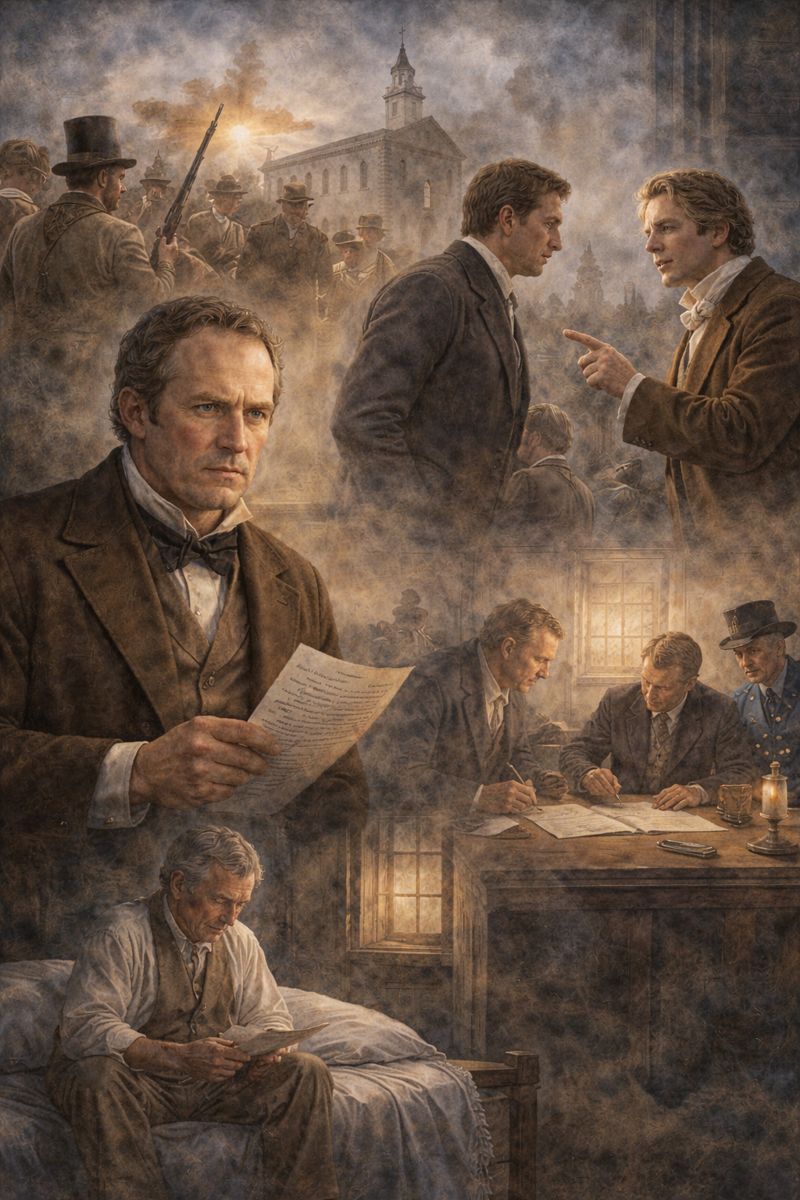
Thomas B. Marsh and Early Leadership Challenges
Thomas B. Marsh served as President of the Quorum of the Twelve Apostles in the early Church of Jesus Christ of Latter-day Saints. A revelation directed to him—now recorded as Doctrine and Covenants 112—acknowledged his prayers and charitable works while also identifying pride and inner conflict that placed him at spiritual risk. The revelation warned Marsh not to rebel against Joseph Smith and reaffirmed that priesthood keys remained with Joseph and would not be taken from him.
Conflict Over Mission Assignments (1837)
In early 1837, Joseph Smith received revelation calling two members of the Twelve to serve missions in England. Marsh objected, believing that as President of the Twelve he should control missionary assignments. Doctrine and Covenants 112 addressed this dispute directly, instructing Marsh and the Twelve not to exalt themselves or resist the prophet.
This correction came shortly before the most severe internal crisis the Church had yet faced.
The Kirtland Apostasy (1837–1838)
The collapse of the Kirtland Safety Society in 1837 produced widespread financial devastation and disillusionment. Several prominent leaders questioned Joseph Smith’s prophetic authority, with some openly declaring him a fallen prophet. Doctrine and Covenants 112 anticipated this rebellion and emphasized that Joseph’s divine authority remained intact despite institutional and personal failures among leaders.
Thomas B. Marsh in Missouri and the 1838 Crisis
After moving to Missouri, Marsh initially remained loyal and presided over disciplinary councils that removed dissenters from Church membership. As tensions between Latter-day Saints and Missouri citizens intensified, however, Marsh himself apostatized.
He signed a sworn affidavit accusing Church leaders of forming an illegal militia, conspiring with Native Americans, and threatening Missouri’s government. This affidavit became a key document used by state authorities and contributed directly to Joseph Smith’s imprisonment in Liberty Jail.
Repentance and Return to the Church
In later years, Thomas B. Marsh sought forgiveness and was rebaptized. A handwritten document preserved in the Church History Library records his reflections on how apostasy might be avoided. Using medical imagery, Marsh described virtues such as faith, common sense, charity, forbearance, and brotherly love as a spiritual “prescription” for remaining faithful—an unusually humble self-assessment from a former senior leader.
Apostasy and Universal Salvation in Latter-day Saint Doctrine
Latter-day Saints affirm a Great Apostasy following the deaths of the New Testament apostles, during which priesthood authority and essential ordinances were lost. Unlike many Christian traditions, however, LDS doctrine teaches that apostasy does not condemn humanity permanently.
All people will have the opportunity to accept the gospel in the next life, and saving ordinances are extended through vicarious temple work. Thus, those who lived during periods of apostasy—or without access to Christian ordinances—are not excluded from salvation.
Sacred Garments in Historical Perspective
Sacred clothing has deep roots in ancient Israelite worship and early Christianity. Over centuries, Christian communities developed ritual vestments symbolizing covenant, authority, and holiness. The Protestant Reformation rejected most ceremonial clothing, viewing it as unnecessary tradition.
This rejection shaped modern Protestant assumptions, making sacred garments appear unusual despite their strong biblical and early Christian precedents.
The “Cult” Label in American Religious History
Throughout American history, religious minorities—including Quakers, Methodists, Pentecostals, and Latter-day Saints—have been labeled “cults” by critics. Such accusations typically arose from unfamiliar theology, unconventional worship, or social anxiety rather than scholarly classification.
For Latter-day Saints, the label often reflected opposition to continuing revelation, additional scripture, and a non-Trinitarian understanding of God—hallmarks of sectarian conflict rather than objective historical analysis.
Early Christian Creeds and Latter-day Saint Distinctions
Early Christian councils such as Nicaea (A.D. 325) and Chalcedon (A.D. 451) defined doctrines of the Trinity and Christ’s nature using philosophical frameworks developed after the New Testament period. Latter-day Saints do not accept these post-biblical creeds and instead interpret the Godhead through modern revelation.
This theological difference has led some Christian denominations to deny LDS Christianity, despite the centrality of Jesus Christ in Latter-day Saint worship, scripture, and doctrine.
Result:
The story of Thomas B. Marsh illustrates how pride, authority disputes, and external pressure can fracture even senior leadership—and how repentance and humility can restore faith. Set within broader Christian history, it also highlights why Latter-day Saint beliefs often appear unusual within modern Protestant frameworks, despite their deep historical and biblical roots.
Listen to the full podcast here:
Season 5, Episode 42 – Prescription to Avoid Apostasy